
How Do I Choose the Right Skills Intelligence Platform for My Team?
Organizations that fail to map their internal talent capabilities are losing ground to competitors who leverage data-driven workforce strategies. According to recent industry analysis, companies with mature skills intelligence frameworks report a 30% faster time-to-fill for critical roles compared to those relying on traditional resume screening. This statistic highlights the urgent need for modern enterprises to adopt robust skills mapping technologies. The Wise Skill provides a foundational approach to this challenge by focusing on recruiting and training that actually works. This guide outlines the critical evaluation criteria for selecting a platform that aligns with your organizational goals. (Report A Nation)
Understanding Skills Intelligence
Before diving into vendor selection, it is essential to define what skills intelligence actually entails. Skills intelligence is the systematic process of identifying, mapping, and analyzing the skills present within an organization and the external labor market. Unlike traditional human resources data, which focuses on job titles and tenure, skills intelligence focuses on the granular capabilities required to perform work. This shift allows organizations to build agile workforces that can adapt to rapid market changes.
The landscape of skills intelligence has evolved from simple keyword matching to complex semantic analysis. Modern platforms use natural language processing to understand the context of skills. For example, knowing that "Python" can refer to both a programming language and a snake is critical for accurate talent mapping. The Wise Skill emphasizes that recruiting and training must be grounded in this precise understanding of capability. Without this clarity, organizations risk investing in training programs that do not address actual skill gaps.
Furthermore, skills intelligence is not a one-time project. It is an ongoing operational discipline. As technology stacks change and new roles emerge, the skills map must be updated continuously. This dynamic nature requires a platform that can ingest real-time data from various sources, including job descriptions, performance reviews, and learning management systems. The goal is to create a living model of your workforce's potential.
Core Evaluation Criteria
When evaluating potential platforms, you must look beyond marketing claims and assess the underlying technology. The first criterion is the depth of the skills ontology. A robust platform should have a comprehensive, standardized taxonomy of skills. This ensures that data from different departments can be compared and aggregated effectively. If one team uses "JavaScript" and another uses "JS," the platform must recognize them as the same entity.
Accuracy is the most critical factor in skills intelligence. Inaccurate data leads to poor hiring decisions and wasted training budgets. You should ask vendors about their data sourcing methods. Do they rely solely on self-reported data from employees, or do they cross-reference with external labor market data? The most reliable platforms combine internal data with external benchmarks to validate skill prevalence and demand. This dual approach provides a more realistic view of your talent landscape.
Another key criterion is the platform's ability to identify transferable skills. In a rapidly changing job market, the ability to move employees between roles is a significant competitive advantage. Look for features that highlight skill adjacency, showing which employees have the potential to transition into new roles with minimal retraining. This capability reduces turnover and internal mobility costs. The Wise Skill platform is designed to facilitate this by focusing on practical recruiting and training outcomes.
Integration and Ecosystem
No skills intelligence platform exists in a vacuum. It must integrate seamlessly with your existing HR tech stack. This includes your Applicant Tracking System (ATS), Human Resources Information System (HRIS), and Learning Management System (LMS). Poor integration leads to data silos, which defeats the purpose of having a centralized skills map. When evaluating vendors, request a detailed integration roadmap. Ask about the availability of APIs and pre-built connectors for major HR platforms.
Consider the user experience for both administrators and end-users. If the platform is difficult to use, employees will not update their skills profiles, leading to stale data. Look for intuitive interfaces that make it easy for employees to self-report skills and for managers to view team capabilities. The Wise Skill demo offers a glimpse into how streamlined these processes can be when designed with user adoption in mind. A successful implementation requires buy-in from all levels of the organization.
Scalability is also a crucial consideration. As your organization grows, the volume of data will increase exponentially. The platform must be able to handle this growth without performance degradation. Cloud-native architectures are generally preferred for their flexibility and scalability. Ensure that the vendor has a proven track record of supporting organizations of your size and complexity. Check for case studies or references from similar industries.
Data Accuracy and Privacy
Data privacy is a paramount concern when dealing with employee skills information. Regulations such as GDPR in Europe and CCPA in California impose strict requirements on how personal data is collected, stored, and processed. The platform you choose must be compliant with these regulations. Ask vendors about their data governance policies and security certifications. Look for ISO 27001 certification or similar standards that demonstrate a commitment to data security.
Transparency is also key. Employees should have control over their own skills data. They should be able to view, edit, and delete their information as needed. This transparency builds trust and encourages accurate self-reporting. The Wise Skill approach to recruiting and training respects this principle by empowering individuals to manage their professional narratives. When employees feel ownership over their data, they are more likely to engage with the platform.
Additionally, consider the platform's approach to data bias. Skills intelligence algorithms can inadvertently perpetuate biases if not carefully designed. Look for vendors that have implemented bias mitigation strategies in their AI models. This includes regular audits of the algorithm's outputs and diverse training data sets. Ensuring fairness in skills assessment is not just an ethical imperative but also a legal requirement in many jurisdictions.
ROI and Scalability
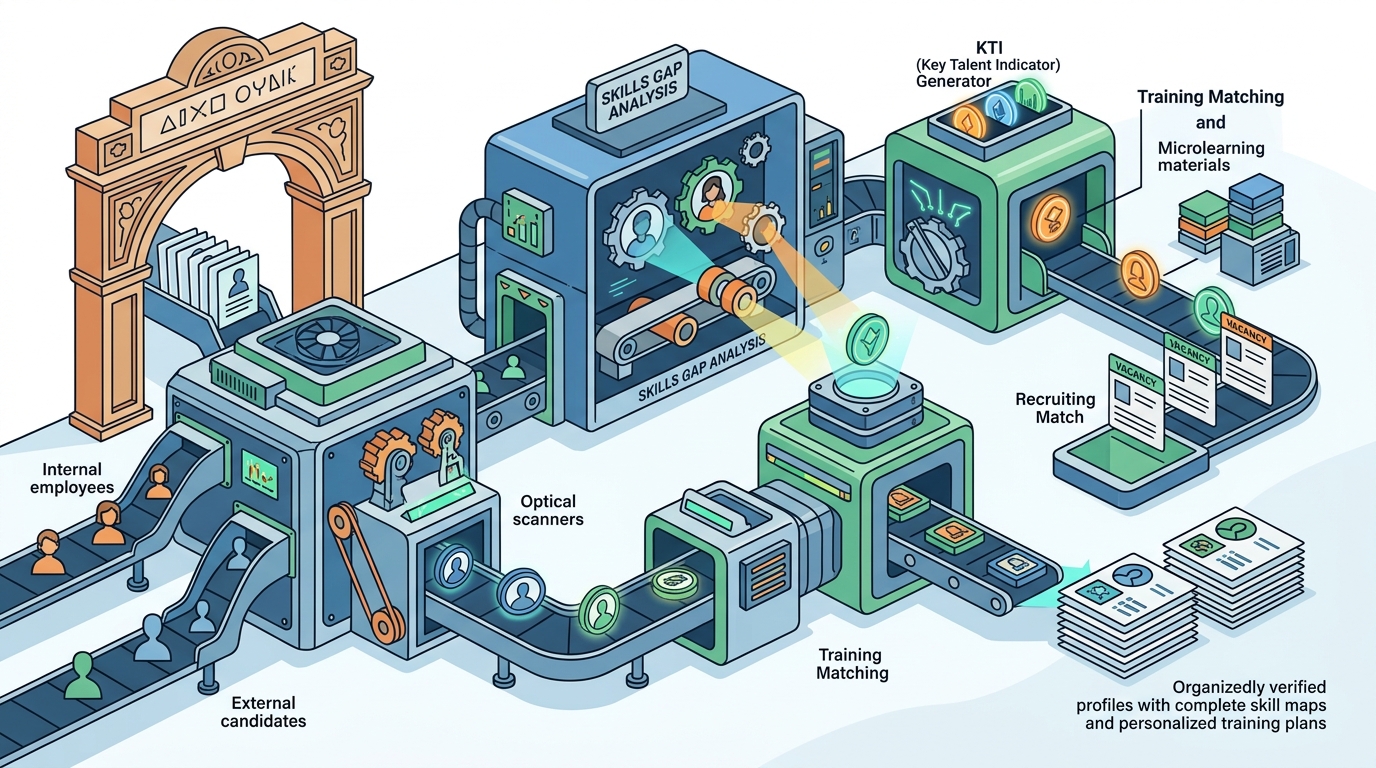
Calculating the return on investment (ROI) for a skills intelligence platform can be challenging but is essential for securing budget approval. The primary benefits include reduced time-to-hire, lower training costs, and improved employee retention. To quantify these benefits, create a model that compares your current costs against the projected savings. For example, calculate the cost of a bad hire and multiply it by the expected reduction in turnover.
Scalability extends beyond technical capacity to include organizational adoption. A platform that works well for a small team may not be suitable for a global enterprise. Consider the platform's ability to support multiple languages, currencies, and regional labor market nuances. The Wise Skill platform is built to handle these complexities, ensuring consistent performance across diverse geographies. This global readiness is a significant advantage for multinational corporations.
Finally, evaluate the vendor's support and customer success programs. Implementation is just the beginning. Ongoing support is crucial for maximizing the value of the platform. Look for vendors that offer dedicated customer success managers, regular training sessions, and proactive updates. The Wise Skill FAQ section provides additional insights into their support structure. A strong partnership with the vendor can significantly enhance your implementation success.
Key Takeaways
- Skills Intelligence Definition: It is the systematic process of identifying, mapping, and analyzing the skills present within an organization and the external labor market.
- Data Accuracy: Accuracy is the most critical factor in skills intelligence, as inaccurate data leads to poor hiring decisions and wasted training budgets.
- Integration Needs: Seamless integration with ATS, HRIS, and LMS is essential to prevent data silos and ensure a unified view of talent.
- Privacy Compliance: The platform must be compliant with GDPR and CCPA, offering employees control over their personal skills data.
- Transferable Skills: Look for features that highlight skill adjacency to facilitate internal mobility and reduce turnover.
- Vendor Support: Strong customer success programs and dedicated support are crucial for long-term platform adoption and value realization.
- Global Scalability: The platform must support multiple languages and regional nuances for multinational organizations.
Frequently Asked Questions
What is the difference between skills mapping and skills intelligence?
Skills mapping is a static snapshot of current skills, while skills intelligence is a dynamic, ongoing process that includes market analysis and predictive capabilities.
How does a skills intelligence platform improve hiring?
It allows recruiters to identify candidates based on actual capabilities rather than just job titles, leading to better cultural and technical fit.
Is skills intelligence suitable for small businesses?
Yes, small businesses can benefit significantly by using skills intelligence to optimize limited resources and identify high-potential employees.
How often should skills data be updated?
Skills data should be updated continuously, ideally in real-time, to reflect the current state of the workforce and market demands.
What are the common challenges in implementing skills intelligence?
Common challenges include data silos, employee resistance to self-reporting, and lack of executive sponsorship for the initiative.
Can skills intelligence replace traditional performance reviews?
No, it complements them by providing data-driven insights that make performance conversations more objective and focused on growth.
How do I measure the ROI of a skills intelligence platform?
Measure ROI by tracking reductions in time-to-hire, training costs, and turnover rates, as well as increases in internal mobility.
What role does AI play in skills intelligence?
AI automates the extraction and classification of skills from unstructured data, making the process scalable and accurate.
Next Steps
Choosing the right skills intelligence platform is a strategic decision that will impact your organization's agility and competitiveness for years to come. By focusing on data accuracy, integration capabilities, and privacy compliance, you can select a solution that delivers tangible value. The Wise Skill offers a proven framework for recruiting and training that finally works. To see how our platform can transform your talent strategy, schedule a demo today. We invite you to explore our about page to learn more about our mission and read our latest insights on workforce development. For more details on our approach, visit our FAQ page or review our legal terms and privacy policy.