
Can I get a skills intelligence platform that fits my mid-sized company's budget?
Mid-sized companies often face a unique dilemma in the talent market. You have the complexity of a large enterprise but lack the unlimited budget of a Fortune 500 firm. According to recent workforce analytics, 72% of mid-market organizations struggle with skills visibility. This gap creates inefficiencies in hiring and internal mobility. The good news is that the market has shifted. Affordable, scalable skills intelligence platforms now exist to bridge this gap without breaking your financial model.
Understanding Skills Intelligence
Before diving into costs, it is vital to define what we are actually buying. A skills intelligence platform is not just a resume parser. It is a system that maps, analyzes, and predicts workforce capabilities. The World Economic Forum reports that half of all employees will need reskilling by 2025. This massive shift requires data-driven insights.
Skills intelligence is the systematic collection and analysis of data regarding employee competencies. It transforms raw HR data into actionable strategic assets. For a mid-sized company, this means moving from guesswork to precision in talent management.
Without this visibility, you risk over-hiring for roles you could have filled internally. You also risk losing top talent to competitors who offer clearer growth paths. The platform acts as the central nervous system for your human capital strategy.
Budget Challenges for Mid-Sized Firms
Mid-sized companies typically have between 250 and 2,000 employees. This size range is often ignored by enterprise vendors who target massive conglomerates. Conversely, small business tools lack the depth required for complex organizational mapping.
The financial pressure is real. According to Gartner HR research, mid-market firms spend 30% less on HR technology than large enterprises. Yet, they face similar compliance and scalability pressures. This creates a "valley of death" in software procurement.
You need a solution that scales with you. You cannot afford a platform that requires a dedicated team of administrators. The total cost of ownership must include implementation, training, and ongoing support. Hidden costs often derail these projects.
Therefore, the search for a budget-friendly platform is not just about the monthly subscription. It is about the efficiency gains that offset the cost. If the platform saves you two weeks of recruiter time per hire, the ROI is immediate.
Key Features to Prioritize
Not all features are created equal. For a mid-sized budget, you must prioritize high-impact tools over nice-to-have extras. Focus on core functionality that drives immediate value.
Skills Ontology is a standardized framework for categorizing and linking job skills. It ensures that everyone in your organization speaks the same language. Without a common ontology, your data becomes siloed and useless.
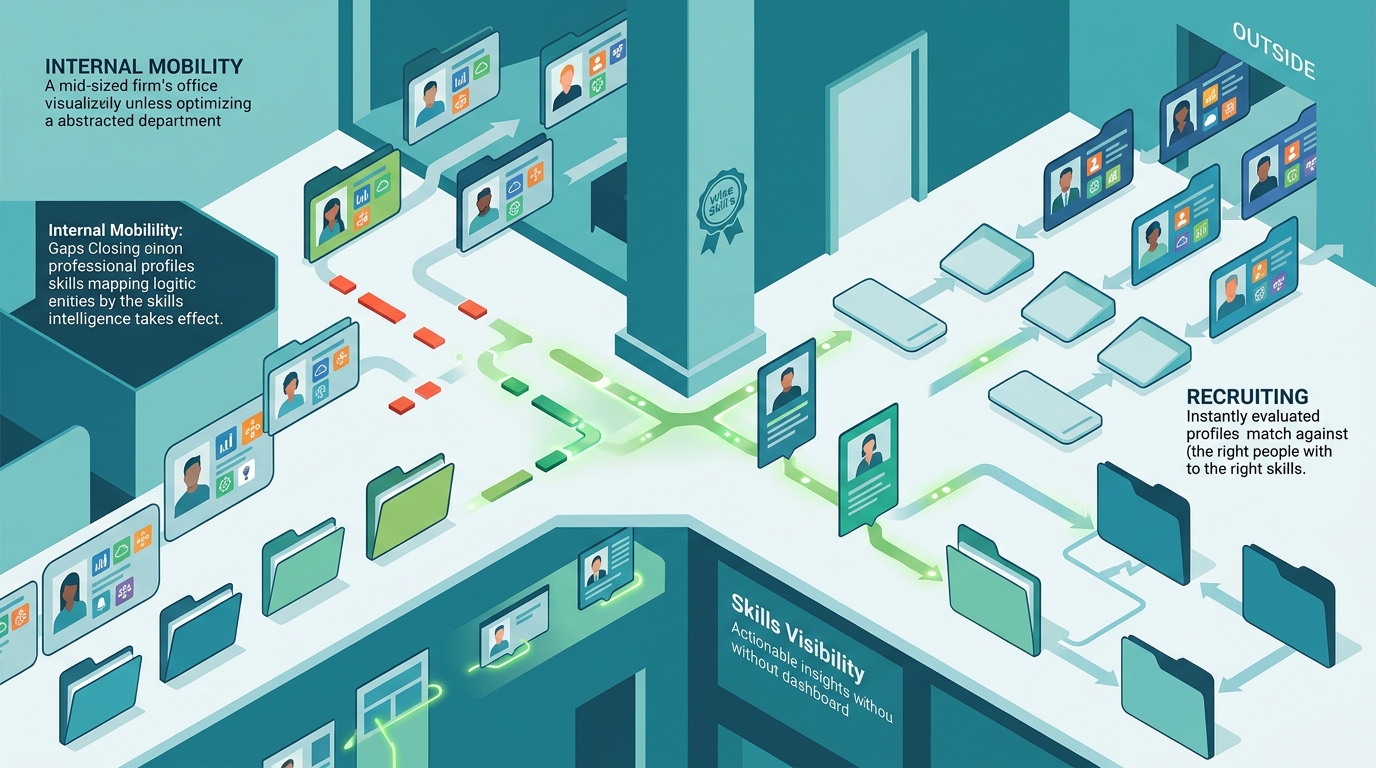
Internal Mobility Matching connects employee profiles with open internal roles. This feature reduces time-to-hire and increases retention. It is often the most cost-effective way to fill critical gaps.
Integration Capabilities are non-negotiable. The platform must connect with your existing HRIS, ATS, and LMS. If it requires manual data entry, adoption will fail. Look for native integrations with tools like Workday, SAP, or BambooHR.
Analytics and Reporting provide the visibility you need to justify the investment. You need dashboards that show skills gaps, diversity metrics, and hiring trends. These insights empower leadership to make data-driven decisions.
Pricing Models Explained
Understanding how vendors price their services is crucial for budgeting. Most platforms use one of three models. Each has pros and cons for mid-sized firms.
Per-Employee Pricing is the most common model. You pay a monthly fee for each active user. This scales linearly with your headcount. It is predictable but can become expensive as you grow.
Flat-Rate Licensing offers a fixed monthly cost regardless of size. This is ideal if you expect rapid growth. However, it may limit the number of features or users available.
Usage-Based Pricing charges based on API calls or data processed. This is flexible but hard to predict. It is best for companies with variable hiring needs.
According to Forrester's workforce analysis, mid-market firms should aim for a total spend of less than 2% of their HR budget on skills technology. This ensures the tool remains a value-add, not a burden.
Platform Comparison
Here is a comparison of typical platform types available in the market. This helps you identify where your needs fit best.
| Platform Type | Best For | Estimated Cost | Scalability |
|---|---|---|---|
| Enterprise Suite | Large corporations with complex needs | $50,000+ annually | High |
| Mid-Market Specialist | Companies with 250-2,000 employees | $10,000 - $30,000 annually | Medium |
| SMB Tool | Small businesses under 250 employees | $1,000 - $5,000 annually | Low |
| Open Source Framework | Technical teams with dev resources | Infrastructure costs only | Variable |
Mid-market specialists often offer the best balance of features and cost. They are designed specifically for your size and complexity. They avoid the bloat of enterprise tools and the limitations of SMB apps.
Implementation Strategy
Choosing the right platform is only half the battle. Implementation determines your success. A poor rollout can waste even the best software.
Start with a Pilot. Select one department or region to test the platform. This allows you to identify issues before a full rollout. It also builds internal champions who can advocate for the tool.
Define Your Ontology. Work with your team to create a skills framework that matches your business. Do not rely solely on the vendor's default list. Customization ensures relevance and adoption.
Train Your Users. Provide comprehensive training for HR, managers, and employees. Adoption drops when users do not understand the value. Make the onboarding process simple and engaging.
Measure ROI. Track metrics like time-to-hire, internal fill rate, and employee satisfaction. Use these data points to refine your strategy and justify continued investment.
According to McKinsey's future of work studies, companies that prioritize skills-based hiring see a 30% increase in hiring efficiency. This metric alone can justify the platform cost.
Key Takeaways
- Mid-sized companies face a unique budget gap between enterprise and SMB solutions.
- Skills intelligence is the systematic analysis of workforce competencies for strategic advantage.
- Per-employee pricing is common but requires careful monitoring of growth costs.
- Internal mobility matching is often the highest ROI feature for mid-market firms.
- Integration with existing HRIS is critical for data accuracy and user adoption.
- A pilot program reduces risk and builds internal support before full deployment.
- Target a total spend of less than 2% of your HR budget for optimal value.
Frequently Asked Questions
What is the average cost of a skills intelligence platform for mid-sized companies?
Most mid-market platforms range from $10,000 to $30,000 annually. This depends on the number of employees and features selected. Per-employee pricing typically falls between $5 and $15 per user per month.
Can a skills intelligence platform integrate with my current HR software?
Yes, most modern platforms offer native integrations with major HRIS providers. Common integrations include Workday, SAP SuccessFactors, and BambooHR. Always verify compatibility during the demo phase.
How long does it take to implement a skills intelligence platform?
Implementation typically takes 3 to 6 months. This includes data migration, ontology customization, and user training. A pilot phase can extend the timeline but improves long-term success.
What is the difference between a skills ontology and a job description?
A skills ontology is a standardized, machine-readable map of skills and their relationships. A job description is a human-readable list of requirements. The ontology allows for dynamic matching and analysis.
How do I measure the ROI of a skills intelligence platform?
Track metrics such as time-to-hire, internal promotion rates, and cost-per-hire. Compare these before and after implementation. A reduction in external hiring costs is a primary indicator of success.
Is skills intelligence only for large enterprises?
No, mid-sized companies benefit significantly. They face similar talent shortages but have less budget. Specialized platforms are designed to address this specific market need.
What happens if my company grows rapidly?
Choose a platform with flexible scaling options. Per-employee pricing allows you to add users seamlessly. Ensure the platform can handle increased data volume without performance degradation.
Next Steps
Stop guessing with your talent strategy. Gain the visibility you need to hire smarter and retain better. The Wise Skill offers tailored solutions for mid-sized companies ready to optimize their workforce.
Schedule a demo today to see how our platform fits your budget and goals. Visit our about page to learn more about our mission. Explore our blog for more insights on skills intelligence. Check our FAQ for common questions. Review our legal terms for transparency. Protect your data with our privacy policy.