
Organizations that fail to map their internal capabilities against market demands face significant operational risks. According to recent industry analysis, nearly 60% of companies report a critical disconnect between their current workforce skills and future business needs. This gap is not merely a hiring issue but a strategic blind spot that can stall innovation and reduce revenue growth. To remain competitive, leaders must adopt a rigorous approach to skills intelligence. This guide outlines the precise methodology for diagnosing these deficits and implementing corrective training protocols.
Defining Skills Intelligence
Before diagnosing gaps, you must understand the core metric. Skills intelligence is the systematic collection, analysis, and application of data regarding the abilities, competencies, and potential of your employees. It transforms subjective performance reviews into objective, actionable data points. Without this clarity, you are managing your workforce based on assumptions rather than evidence.
Effective skills intelligence requires a shift from role-based descriptions to skill-based architectures. This approach allows you to see the actual capabilities available within your organization, regardless of job titles. For more insights on building a robust recruiting and training strategy, visit our blog for detailed resources.
Conducting a Skills Audit
The first step in identifying gaps is a comprehensive audit of your current talent pool. This process involves mapping every employee's verified skills against the skills required for their current and future roles.
Self-Assessment and Manager Validation
Begin by deploying self-assessment surveys. Employees rate their proficiency in specific technical and soft skills. However, self-assessment is often biased. Therefore, manager validation is crucial. Managers must review and adjust these ratings based on observed performance and project outcomes. This dual-layer verification ensures data accuracy.
Performance Data Integration
Integrate historical performance data into your audit. Look for patterns where employees struggle with specific tasks or where projects fail due to capability shortages. This data reveals implicit gaps that surveys might miss. For a deeper dive into effective training methodologies, explore our about page to understand our core philosophy on workforce development.
The Gap Analysis Framework
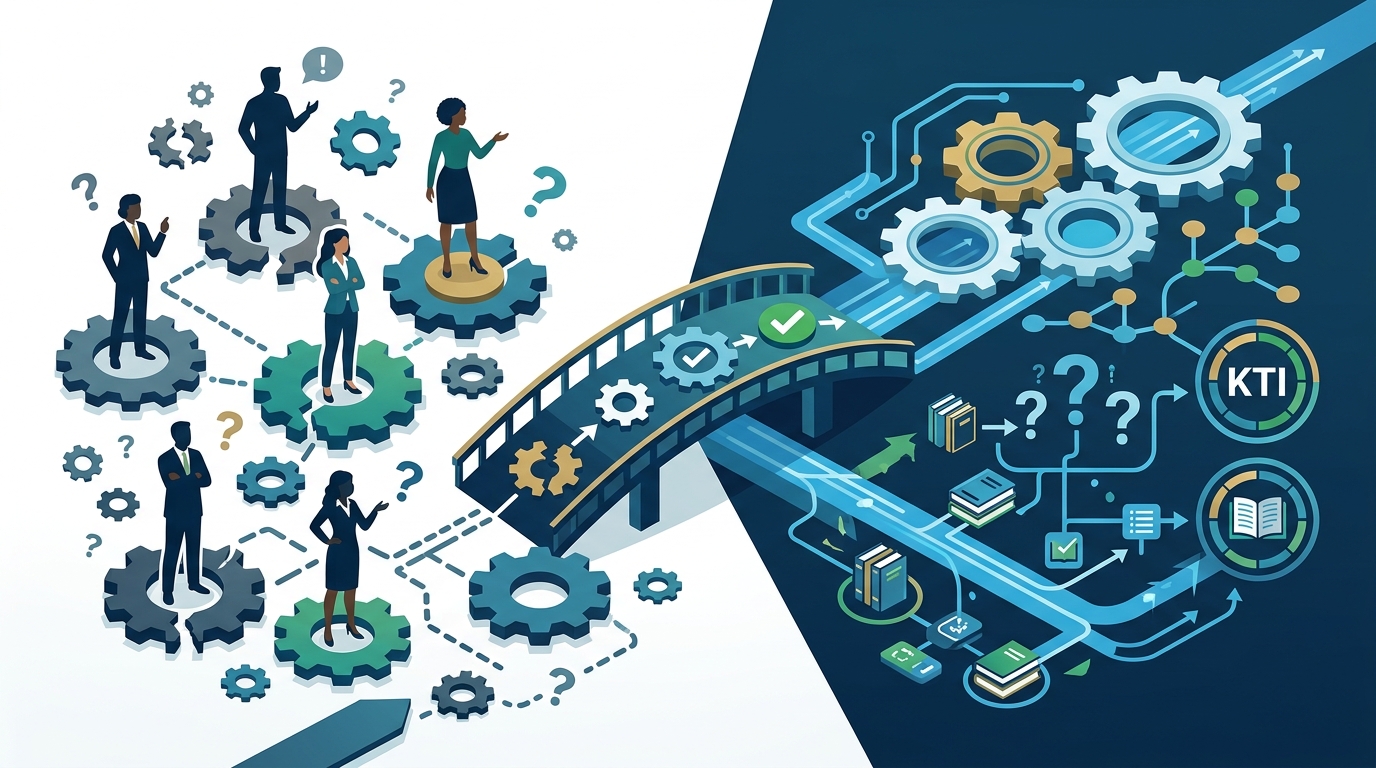
Once you have the current state mapped, you must define the desired state. This comparison creates the gap analysis. The framework typically identifies three types of gaps: proficiency gaps, volume gaps, and future-readiness gaps.
Proficiency Gaps
A proficiency gap exists when employees have the skill but lack the necessary level of expertise. For example, a developer may know Python but lacks the advanced knowledge required for machine learning tasks. Closing these gaps requires targeted upskilling programs.
Volume Gaps
A volume gap occurs when you have the right skills but not enough people to perform them. This is often seen in high-demand areas like cybersecurity or data science. Addressing volume gaps may require internal mobility or strategic hiring. Learn more about our approach to talent optimization through our demo resources.
Future-Readiness Gaps
Future-readiness gaps are the most dangerous. They represent skills that do not yet exist in your workforce but will be required within the next 12 to 24 months. Identifying these requires forecasting based on industry trends and technological adoption rates. According to global workforce trends, companies that proactively address future-readiness gaps see a 30% higher retention rate among top talent.
Leveraging Technology for Visibility
Manual audits are unsustainable for large organizations. You need technology to scale your skills intelligence efforts. Modern talent management platforms use AI to scrape internal project data, certifications, and learning histories to build dynamic skill profiles.
Automated Skill Mapping
Automated tools can continuously update skill profiles as employees complete courses or finish projects. This real-time data provides a live view of your organizational capabilities. It eliminates the lag time associated with annual reviews. For more information on our compliance and legal standards, review our legal page.
Data Privacy and Ethics
When collecting granular employee data, privacy is paramount. Ensure your technology stack complies with GDPR, CCPA, and other regional regulations. Transparency with employees about how their data is used builds trust. You can read our full privacy policy to understand our data handling commitments.
Strategic Intervention and Training
Identifying the gap is only half the battle. You must close it through targeted interventions. The most effective approach combines internal training, external hiring, and internal mobility.
Internal Mobility
Before looking externally, look internally. Employees with adjacent skills can often be upskilled quickly to fill gaps. This boosts morale and reduces recruitment costs. It also retains institutional knowledge. Our FAQ section addresses common concerns about internal career pathways.
Targeted Learning Paths
Create personalized learning paths for employees based on their specific gaps. Use micro-learning modules for quick skill acquisition and longer courses for deep competency building. Track progress rigorously to ensure ROI on training investments.
Comparison of Intervention Strategies
| Strategy | Best For | Implementation Time | Cost Efficiency |
|---|---|---|---|
| Internal Upskilling | Proficiency Gaps | 3-6 Months | High |
| Internal Mobility | Volume Gaps | 1-3 Months | Medium |
| External Hiring | Future-Readiness Gaps | 2-4 Months | Low |
| Contracting | Short-term Projects | Immediate | Medium |
Key Takeaways
- Skill-based architecture is superior to role-based descriptions for identifying true organizational capabilities.
- 60% of companies struggle with the disconnect between current skills and future needs, highlighting the urgency of this issue.
- Manager validation is critical to correct the bias inherent in employee self-assessments.
- Future-readiness gaps require proactive forecasting, not just reactive hiring.
- Internal mobility should be the first option considered before external recruitment to retain talent.
- Technology enablement via AI-driven platforms is necessary for scaling skills intelligence in large organizations.
- Data privacy must be integrated into the skills audit process to maintain employee trust and legal compliance.
Frequently Asked Questions
What is the difference between a skills gap and a proficiency gap?
A skills gap refers to the absence of a specific skill entirely within the workforce. A proficiency gap means the skill exists but at an insufficient level of expertise to meet business requirements.
How often should a skills audit be conducted?
While annual audits are common, quarterly or bi-annual audits are recommended in fast-changing industries like technology. Continuous data collection via software tools allows for real-time monitoring.
Can AI completely replace human judgment in skills assessment?
No. AI can process data and identify patterns, but human judgment is essential for contextualizing soft skills, leadership potential, and cultural fit. The Wise Skill emphasizes a hybrid approach.
What are the most common future-readiness skills?
Currently, data literacy, AI fluency, and digital transformation expertise are the most critical future-readiness skills across most industries.
How do I measure the ROI of closing skills gaps?
Measure ROI by tracking improvements in project delivery times, reduction in error rates, and increased employee retention after training interventions.
Is it better to hire for skills or attitude?
While attitude is important, skills gaps are often easier to close through training than to fill through hiring. Prioritize hiring for cultural add and learning agility, then train for specific skills.
What role does leadership play in skills intelligence?
Leadership must champion the data-driven approach. If leaders ignore skills data in favor of intuition, the initiative will fail. Leadership buy-in is the primary driver of success.
Ready to Close Your Skills Gaps?
Identifying skills intelligence gaps is the first step toward building a resilient, future-proof workforce. Do not let blind spots hinder your growth. Partner with experts who understand the nuances of recruiting and training. Visit our demo page to see how The Wise Skill can help you transform your talent strategy. For more detailed guidance, check our frequently asked questions or explore our blog for ongoing insights.