
Organizations are facing a critical inflection point in talent management. According to recent industry analyses, companies that fail to adopt skills-based talent strategies risk losing significant market share to more agile competitors. The shift from role-based to skills-based hiring is no longer optional; it is a strategic imperative driven by the rapid pace of technological change. This article compares traditional human resources models with modern skills intelligence platforms to help leaders make informed decisions. (Qui nes somos Skill)
The Limitations of Traditional HR Models
Traditional human resources frameworks rely heavily on static job descriptions and historical performance data. This approach assumes that past success predicts future performance, a premise that is increasingly flawed in dynamic markets. Job titles often obscure the actual capabilities required for a role, leading to misalignment between talent and business needs. (Skill Intelligence Blog Insights)
One major drawback is the reliance on intuition over evidence. Recruiters and managers often make hiring decisions based on resume keywords rather than verified competencies. This leads to high turnover rates and increased costs associated with bad hires. Furthermore, traditional models struggle to scale across large organizations, creating silos of talent information that are difficult to navigate. (Identificar Gaps de Skills)
Another critical issue is the lack of real-time data. Traditional HR systems update infrequently, meaning the organization's understanding of its workforce is often outdated by the time it is reviewed. This lag prevents proactive workforce planning and leaves companies vulnerable to sudden skill gaps.
Defining Skills Intelligence
Skills intelligence is the systematic measurement and mapping of employee capabilities against business objectives. It moves beyond job titles to focus on the specific knowledge and abilities that drive performance. This approach allows organizations to see talent as a dynamic asset rather than a static resource.
At its core, skills intelligence involves continuous assessment and validation. It uses adaptive testing to measure the actual level of each employee, providing a clear picture of current capabilities and potential gaps. This data-driven approach enables more accurate talent decisions, from hiring to promotion.
The platform also facilitates a common language for talent across the organization. By standardizing skills taxonomies, it ensures that HR, management, and employees are aligned on what matters most. This alignment reduces ambiguity and accelerates decision-making processes.
Key Comparison Metrics
When evaluating traditional HR against skills intelligence, several key metrics emerge as critical differentiators. These metrics highlight the operational and strategic advantages of adopting a skills-first approach.
| Feature | Traditional HR Model | Skills Intelligence Platform |
|---|---|---|
| Data Source | Resumes and Job Titles | Adaptive Assessments and Evidence |
| Update Frequency | Annual or Ad-hoc | Real-time and Continuous |
| Decision Basis | Intuition and Experience | Quantifiable Metrics |
| Scalability | Low to Medium | High via Automation |
| Integration | Siloed Systems | Unified HRIS/LMS Ecosystem |
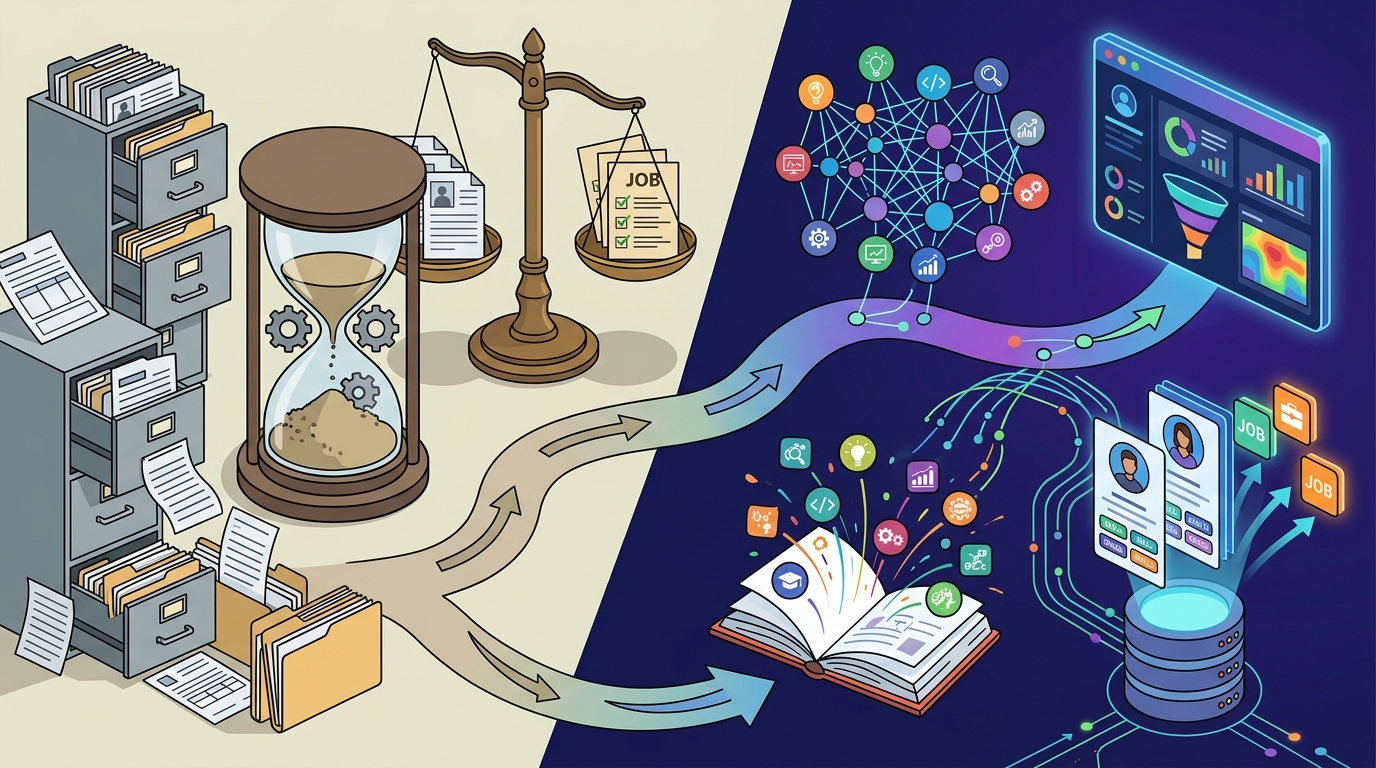
The table above illustrates the fundamental shift in how talent is managed. Traditional models rely on subjective inputs, while skills intelligence platforms provide objective, auditable evidence. This shift is crucial for organizations seeking to optimize their workforce efficiency.
Accuracy and Precision
Accuracy is the primary driver of effective talent management. Traditional methods often suffer from bias and inconsistency, leading to unfair evaluations. Skills intelligence platforms use standardized assessments to ensure that every employee is measured against the same criteria. This consistency enhances the reliability of talent data and supports fairer career progression.
Speed of Insight
Time-to-insight is another critical factor. In fast-moving industries, waiting for annual reviews is no longer viable. Skills intelligence platforms provide immediate visibility into workforce capabilities, allowing leaders to respond quickly to changing business needs. This agility is a competitive advantage in today's market.
Implementation and Integration
Implementing a skills intelligence platform requires careful planning and integration with existing systems. The goal is to create a seamless flow of data that enhances rather than disrupts current workflows. Successful implementation involves mapping existing roles to the new skills taxonomy and validating the data with stakeholders.
Integration with Learning Management Systems (LMS) and Human Resource Information Systems (HRIS) is essential for maximizing the value of skills data. This connectivity ensures that talent decisions are informed by up-to-date information and that development opportunities are aligned with identified gaps. The Wise Skill platform offers robust integration capabilities to support this process.
Change management is also a key component of implementation. Employees need to understand the benefits of skills-based management and how it supports their career growth. Transparent communication and training are necessary to drive adoption and ensure that the platform is used effectively across the organization.
Security and Compliance
Data security and regulatory compliance are paramount when handling employee information. Skills intelligence platforms must adhere to strict standards to protect sensitive data and ensure ethical use of AI. Certifications such as ISO 27001 and ISO 42001 demonstrate a commitment to security and responsible AI practices.
Compliance with regulations like GDPR and the EU AI Act is also critical. These frameworks govern how personal data is collected, processed, and stored. Platforms that prioritize privacy by design ensure that employee rights are respected and that data is used only for its intended purpose. This trust is foundational to the success of any talent management initiative.
Key Takeaways
- Traditional HR relies on static data, while skills intelligence offers real-time insights.
- Skills-based hiring reduces bias and improves the quality of talent decisions.
- Adaptive assessments provide more accurate measurements of employee capabilities.
- Integration with existing HRIS and LMS systems is crucial for scalability.
- Security certifications like ISO 27001 ensure data protection and compliance.
- Skills intelligence supports proactive workforce planning and reskilling strategies.
- The shift to skills-based management is driven by the need for agility and precision.
Frequently Asked Questions
What is the main difference between traditional HR and skills intelligence?
Traditional HR focuses on job titles and historical data, whereas skills intelligence measures actual capabilities and real-time competencies.
How does skills intelligence improve hiring accuracy?
It uses objective assessments to verify skills, reducing reliance on resume keywords and subjective interviews.
Is skills intelligence compatible with existing HR systems?
Yes, modern platforms integrate seamlessly with HRIS and LMS systems to provide a unified view of talent.
What are the security benefits of using a skills intelligence platform?
Platforms certified with ISO 27001 and ISO 42001 ensure high standards of data protection and AI ethics.
How long does it take to implement a skills intelligence solution?
Implementation time varies, but many platforms can map initial skills and begin assessments within weeks.
Can skills intelligence help with employee retention?
Yes, by providing clear career paths and targeted development opportunities based on actual skills gaps.
What role does AI play in skills intelligence?
AI automates the mapping of skills, analyzes assessment data, and identifies patterns that inform talent strategy.
Next Steps
Ready to transform your talent management strategy? Discover how The Wise Skill can help you map skills, evaluate talent, and close critical gaps. Schedule a demo today to see the platform in action and learn how to build a future-ready workforce.