
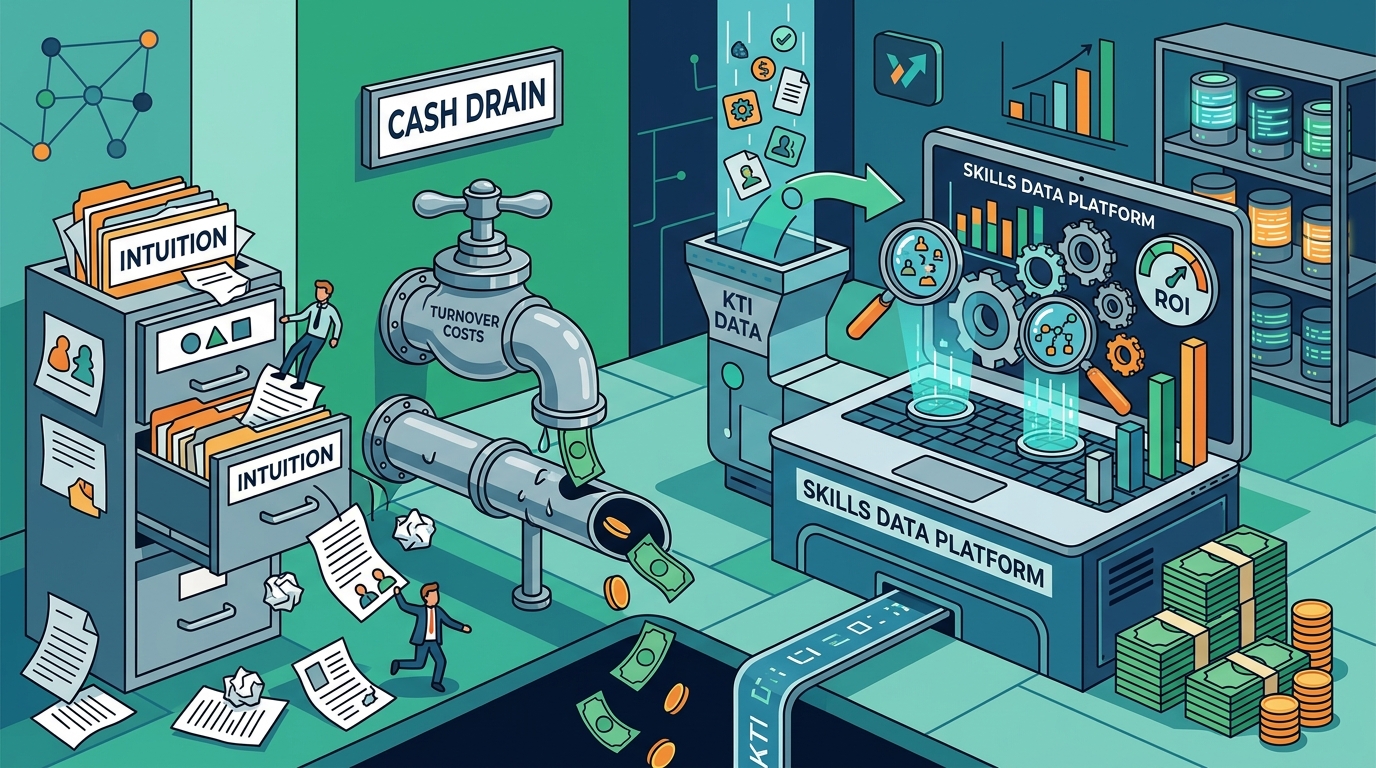
Organizations that rely on intuition for talent management often face hidden financial drains that erode profitability. According to recent industry analyses, the cost of replacing an employee can range from 50% to 200% of their annual salary, depending on the role's seniority and complexity. This statistic highlights why modern enterprises are shifting toward data-driven talent strategies. By implementing a skills data platform, companies can transform vague workforce challenges into measurable, actionable insights. This guide explores how leveraging precise skill intelligence directly impacts the bottom line by reducing turnover and optimizing internal mobility. (Qui nes somos Skill)
Understanding the True Cost of Turnover
Turnover is not merely a human resources metric; it is a critical financial liability. When an employee leaves, the organization incurs direct costs such as recruitment fees, onboarding expenses, and lost productivity during the vacancy period. However, the indirect costs often outweigh the direct ones. These include the loss of institutional knowledge, decreased team morale, and the disruption of project timelines.
Research indicates that high turnover rates can significantly impact a company's revenue growth. Companies with high employee retention rates often report higher customer loyalty and profitability. The key to mitigating these costs lies in understanding the root causes of departure. Often, employees leave not because of salary alone, but due to a lack of career progression, unclear role expectations, or a mismatch between their skills and their current position.
By quantifying these costs, leadership can justify the investment in talent intelligence tools. The goal is to shift from reactive hiring to proactive retention. This requires a fundamental change in how organizations view their workforce: not as static roles, but as dynamic collections of skills and potential.
How Skills Data Reduces Employee Churn
A skills data platform provides the visibility needed to retain top talent. Skill Intelligence is the systematic measurement and analysis of employee capabilities to drive strategic workforce decisions. Unlike traditional performance reviews, which often rely on subjective manager opinions, skill assessments offer objective, data-backed insights into an employee's actual competencies.
When employees feel that their skills are recognized and valued, engagement increases. A skills data platform enables this by creating a clear map of individual capabilities against organizational needs. This transparency helps managers identify development opportunities before an employee becomes disengaged. For instance, if an employee's skills are underutilized, the platform can suggest internal projects that align with their strengths, preventing boredom and stagnation.
Furthermore, skills data helps in identifying flight risks early. By monitoring changes in skill acquisition and engagement metrics, organizations can detect when an employee is falling behind or feeling unchallenged. This allows for timely interventions, such as personalized training plans or role adjustments, which are far more cost-effective than replacing the employee later.
The platform also supports fair and transparent promotion processes. When promotions are based on verified skills rather than tenure or favoritism, trust in the organization increases. This fairness is a critical factor in employee retention, as it ensures that career advancement is achievable for everyone.
The ROI of Internal Mobility vs. External Hiring
Internal mobility is one of the most effective strategies for reducing turnover costs. When employees move into new roles within the company, they retain their institutional knowledge and cultural fit, while the company avoids the high costs of external recruitment. A skills data platform is the engine that makes internal mobility scalable and efficient.
Without a skills database, identifying internal candidates for new roles is a manual, time-consuming process. Managers often rely on who they know rather than who is best qualified. A skills platform automates this matching process by analyzing the skills of existing employees against the requirements of open positions. This reduces the time-to-hire for internal roles and increases the likelihood of a successful placement.
The financial impact is substantial. Consider the following comparison of costs associated with internal versus external hiring:
| Cost Factor | Internal Mobility | External Hiring |
|---|---|---|
| Recruitment Fees | Minimal (Internal Job Board) | High (Agency Fees, Ads) |
| Onboarding Time | Short (Cultural Fit Known) | Long (Training & Integration) |
| Productivity Ramp-up | Fast (Existing Knowledge) | Slow (Learning Curve) |
| Retention Risk | Lower (Career Growth Shown) | Higher (New Hire Uncertainty) |
By facilitating seamless internal moves, companies can retain high-potential employees who might otherwise leave to find growth opportunities elsewhere. This not only saves money but also boosts overall organizational agility.
Strategic Skills Mapping for Retention
Strategic skills mapping is the process of identifying the critical skills needed for current and future business objectives and assessing the current workforce's capability to meet those needs. This process is essential for proactive talent management. Talent Mapping is the visualization of workforce capabilities to identify gaps and opportunities for development.
When organizations conduct regular skills assessments, they can identify skills gaps that could lead to project failures or employee burnout. For example, if a team lacks a specific technical skill required for an upcoming project, the manager can proactively upskill existing members or hire for that specific gap. This prevents the stress and inefficiency that come from understaffing or mismatched skill sets.
Moreover, skills mapping supports personalized learning and development (L&D) programs. Instead of offering generic training courses, companies can use skills data to recommend specific learning paths that address individual gaps. This targeted approach ensures that L&D investments yield a higher return by directly improving job performance and employee confidence.
The Wise Skill platform exemplifies this approach by providing a dynamic skills taxonomy that evolves with the market. This ensures that the skills being measured are relevant and aligned with industry standards. By using a living taxonomy, organizations can stay ahead of technological changes and workforce trends, ensuring that their talent strategy remains robust and future-proof.
Measuring Platform Impact on Retention
To justify the investment in a skills data platform, organizations must track specific key performance indicators (KPIs) related to retention and turnover. These metrics provide tangible evidence of the platform's value and help refine the talent strategy over time.
Key metrics to monitor include:
- Internal Fill Rate: The percentage of open positions filled by internal candidates. A higher rate indicates effective internal mobility.
- Time-to-Productivity: The time it takes for an employee to reach full productivity in a new role. Skills data can reduce this time by ensuring better role-fit.
- Employee Engagement Scores: Correlating skills development activities with engagement survey results to identify positive trends.
- Turnover Rate by Department: Monitoring turnover rates in departments that actively use skills data versus those that do not.
By analyzing these metrics, HR leaders can demonstrate the direct link between skills intelligence and reduced turnover costs. This data-driven approach builds trust with executive leadership and secures ongoing support for talent initiatives.
Additionally, the platform should provide detailed reports on skills gaps and development progress. These reports can be used to inform strategic workforce planning and budget allocation for L&D. The ability to show a clear return on investment for talent development programs is crucial for sustaining long-term retention strategies.
Key Takeaways
- Turnover costs can range from 50% to 200% of an employee's annual salary, making retention a financial priority.
- Skill Intelligence provides objective data that replaces subjective performance reviews, leading to fairer and more effective talent decisions.
- Internal mobility, facilitated by skills data, is significantly more cost-effective than external hiring.
- Strategic skills mapping helps identify and close critical skill gaps before they impact business outcomes.
- The Wise Skill platform offers a dynamic taxonomy with over 35,000 skills and 3,200 professional profiles for accurate assessment.
- Tracking KPIs like internal fill rate and time-to-productivity is essential for measuring the ROI of skills platforms.
- Personalized learning paths derived from skills data increase employee engagement and reduce burnout.
Frequently Asked Questions
How does a skills data platform reduce turnover?
It reduces turnover by identifying skill gaps and development opportunities early, allowing for proactive interventions such as training or role adjustments that keep employees engaged and growing.
What is the difference between skills mapping and talent mapping?
Skill Intelligence focuses on the specific capabilities of individuals, while Talent Mapping visualizes the broader workforce structure and capabilities to identify strategic gaps and opportunities for the organization.
Can skills data improve internal mobility?
Yes, by providing a clear view of employee skills, it enables HR and managers to match internal candidates to open roles more accurately and quickly, reducing the need for external hiring.
How is the ROI of a skills platform calculated?
ROI is calculated by comparing the cost of the platform against the savings from reduced turnover, lower recruitment fees, and increased productivity from better role-fit and faster onboarding.
What are the key metrics to track for retention?
Key metrics include internal fill rate, time-to-productivity, employee engagement scores, and turnover rate by department, all of which provide insights into the effectiveness of talent strategies.
Is skills data secure and private?
Reputable platforms prioritize data privacy and security, often adhering to standards like ISO 27001 and GDPR, ensuring that sensitive employee information is protected and used ethically.
How often should skills assessments be conducted?
Regular assessments, such as quarterly or bi-annually, help keep skills data current and allow for timely identification of gaps and development needs as business requirements evolve.
Transform Your Talent Strategy Today
Stop losing top talent to unclear career paths and skill mismatches. Discover how The Wise Skill can help you map, measure, and retain your most valuable asset. Schedule a free demo to see the platform in action and start reducing your turnover costs today.