
Essential Features to Evaluate in a Skills Intelligence Platform for Mid-Market Teams
Mid-market organizations are currently facing a critical inflection point in talent management. According to recent industry analysis, skills-first hiring has become a primary strategy for over 60% of large enterprises, a trend rapidly accelerating among mid-market firms seeking agility. The traditional resume-based approach is no longer sufficient for identifying internal mobility or closing critical capability gaps. To navigate this shift, leaders must evaluate platforms that offer more than static job descriptions. This guide outlines the essential features required to build a resilient, data-driven talent strategy. (Qui nes somos Skill)
Dynamic Skills Mapping and Taxonomy
The foundation of any effective skills intelligence platform is its ability to define and structure organizational talent. Static job descriptions are obsolete because they fail to capture the evolving nature of work. A robust platform must utilize a living taxonomy that updates in real-time with market trends. (The Wise Skill Del)
Zero-Touch Data Ingestion
Mid-market teams often lack the resources to manually input thousands of data points. The ideal platform allows you to start with just your company name. The system then reconstructs departments, profiles, and required skills automatically. This eliminates the need for complex initial data preparation. You review a draft rather than starting from a blank slate. (Eventos de Skill Intelligence)
Unified Language Across Departments
Skills intelligence creates a common vocabulary between HR, management, and business units. When everyone uses the same framework, decisions about promotions and hiring become objective. This alignment reduces bias and ensures that talent strategies support broader business goals. The World Economic Forum highlights that skills-based organizations are significantly more agile in responding to market changes. (Identificar Gaps de Skills)
Adaptive Assessment Technology
Defining skills is only half the battle. You must measure the actual proficiency of your workforce. Traditional surveys and long questionnaires suffer from low completion rates and poor accuracy. Modern platforms use adaptive testing to solve this.
Intelligent Question Selection
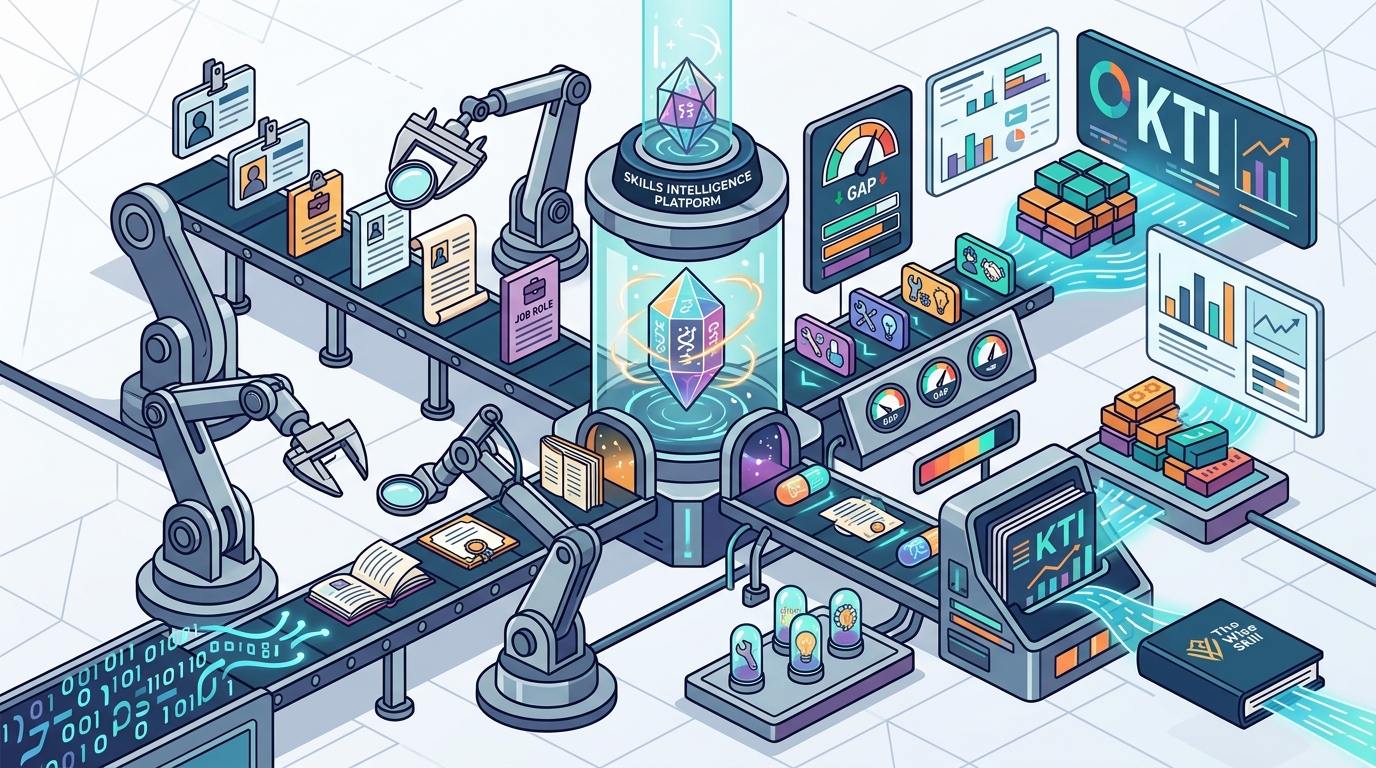
An adaptive engine selects each question based on the previous answer. It continues until it reaches statistical confidence. This means fewer questions are needed to get a reliable result. The process mirrors professional certification exams but is tailored to your specific internal roles. SHRM reports that adaptive testing reduces assessment time by up to 50% while increasing precision.
Continuous Improvement Metrics
The platform should provide individual reports that include a development plan. This shifts the focus from grading to growth. Employees see their strengths and clear paths for improvement. Managers gain visibility into team capabilities without conducting manual reviews. This continuous feedback loop installs a culture of improvement.
AI-Driven Automation and Integration
For mid-market teams, efficiency is paramount. The platform must act as an agent that executes tasks, not just a tool that suggests them. AI integration is the differentiator between a static database and a dynamic intelligence engine.
Automated Campaign Management
The system should automatically launch assessment campaigns to relevant employees. It tracks completion rates and follows up with those who have not participated. This removes the administrative burden from HR teams. You define the criteria, and the agent handles the execution. This ensures that data remains current without constant manual intervention.
Seamless HRIS and LMS Connectivity
Data silos are the enemy of skills intelligence. The platform must integrate directly with your existing Human Resources Information System (HRIS) and Learning Management System (LMS). Changes in employment status, such as hires or role changes, should sync automatically. This ensures that your skills map is always accurate. Gartner notes that integrated talent tech stacks reduce operational costs by streamlining data flows.
Strategic Gap Analysis and Reskilling
The ultimate goal of skills intelligence is to close the gap between current capabilities and future needs. This requires a clear methodology for identifying and addressing deficits.
Impact-Based Gap Prioritization
Not all skills gaps are equal. The platform must rank gaps by their impact on business objectives. This allows leaders to prioritize reskilling efforts where they matter most. You can identify which roles are secure, which can be augmented by AI, and which require complete retraining. This strategic view prevents wasted investment in low-impact areas.
Personalized Reskilling Itineraries
Once gaps are identified, the system should generate personalized learning paths. These itineraries connect specific skills to relevant training content. This targeted approach ensures that employees learn what they need to know. It also provides a clear return on investment for training budgets. McKinsey research indicates that companies with robust reskilling programs see higher employee retention and faster role fulfillment.
AI Impact Measurement
As AI transforms job roles, understanding its impact is crucial. The platform should calculate which tasks in each role are automatable. This provides a maturity level for each profile. It helps leaders decide whether to upskill employees to work alongside AI or to reconvert roles entirely. This data-driven approach reduces uncertainty in workforce planning.
Security, Privacy, and Compliance
Handling sensitive employee data requires the highest standards of security. Mid-market companies are increasingly targeted by cyber threats and must adhere to strict regulatory frameworks.
Enterprise-Grade Certifications
Look for platforms that are certified ISO 27001 and ISO 42001. These certifications demonstrate rigorous information security and AI management practices. GDPR readiness is also essential for operating in global markets. Privacy must be built into the architecture, not added as an afterthought.
Transparent Data Usage
Employees must have access to their own data. Transparency builds trust and encourages participation in assessments. The platform should clearly explain how data is used for talent decisions. This alignment with the EU AI Act ensures that automated decisions are fair and explainable.
Key Takeaways
- Dynamic Taxonomy: The platform must update skills and profiles automatically, reflecting real-time market changes rather than relying on static job descriptions.
- Adaptive Testing: Use AI-driven assessments that adjust question difficulty in real-time to reduce assessment time while maintaining statistical accuracy.
- Zero-Touch Onboarding: Start with just your company name to auto-generate a skills map, eliminating manual data entry and accelerating time-to-value.
- Impact-Based Prioritization: Prioritize reskilling efforts by measuring the business impact of skills gaps, not just their frequency.
- Seamless Integration: Ensure the platform syncs automatically with your HRIS and LMS to maintain data currency without manual intervention.
- AI Automation: The system should autonomously launch campaigns and track completion, freeing HR teams from administrative burdens.
- Security Compliance: Verify ISO 27001 and ISO 42001 certifications to ensure data protection and responsible AI usage.
Frequently Asked Questions
What is a skills intelligence platform?
A skills intelligence platform is a software system that maps, measures, and manages the capabilities of a workforce. It replaces traditional resume-based hiring with data-driven insights into actual employee skills and potential.
How does adaptive assessment work?
Adaptive assessment uses AI to select questions based on previous answers. It continues until it reaches a statistically confident result, requiring fewer questions than traditional tests while providing higher accuracy.
Why is dynamic taxonomy important?
A dynamic taxonomy updates skills and roles in real-time to reflect market trends. This ensures that your talent strategy remains relevant and aligned with industry standards.
Can a skills platform integrate with my existing HRIS?
Yes, modern platforms offer seamless integration with major HRIS and LMS providers. This allows for automatic data synchronization, ensuring your skills map is always current.
How does AI impact job roles?
AI can automate specific tasks within a role. A skills platform calculates this impact to help leaders decide whether to upskill employees to work with AI or to reconvert the role entirely.
What are the security standards for these platforms?
Look for ISO 27001 and ISO 42001 certifications. These ensure rigorous information security and responsible AI management, protecting sensitive employee data.
How long does it take to see results?
With zero-touch onboarding, you can generate a skills map in minutes. Full implementation and cultural adoption typically take a few weeks, depending on organizational size.
Next Steps
Transform your talent strategy from intuition to evidence. Schedule a demo to see how The Wise Skill can map your skills, evaluate your team, and detect gaps in minutes. Visit our demo page to get started.