
Common Pitfalls in Skills-Based Hiring Implementation and How to Avoid Them
Organizations attempting to shift from degree-based to skills-based hiring often face significant friction during the transition phase. According to recent workforce analysis, nearly 60% of companies struggle to maintain consistency when moving away from traditional credentialing. This shift is not merely a policy change but a fundamental restructuring of how talent is identified, measured, and developed. Without a robust technical infrastructure, these initiatives frequently collapse under the weight of subjective bias and inconsistent evaluation criteria.
The Credentialing Trap and Bias
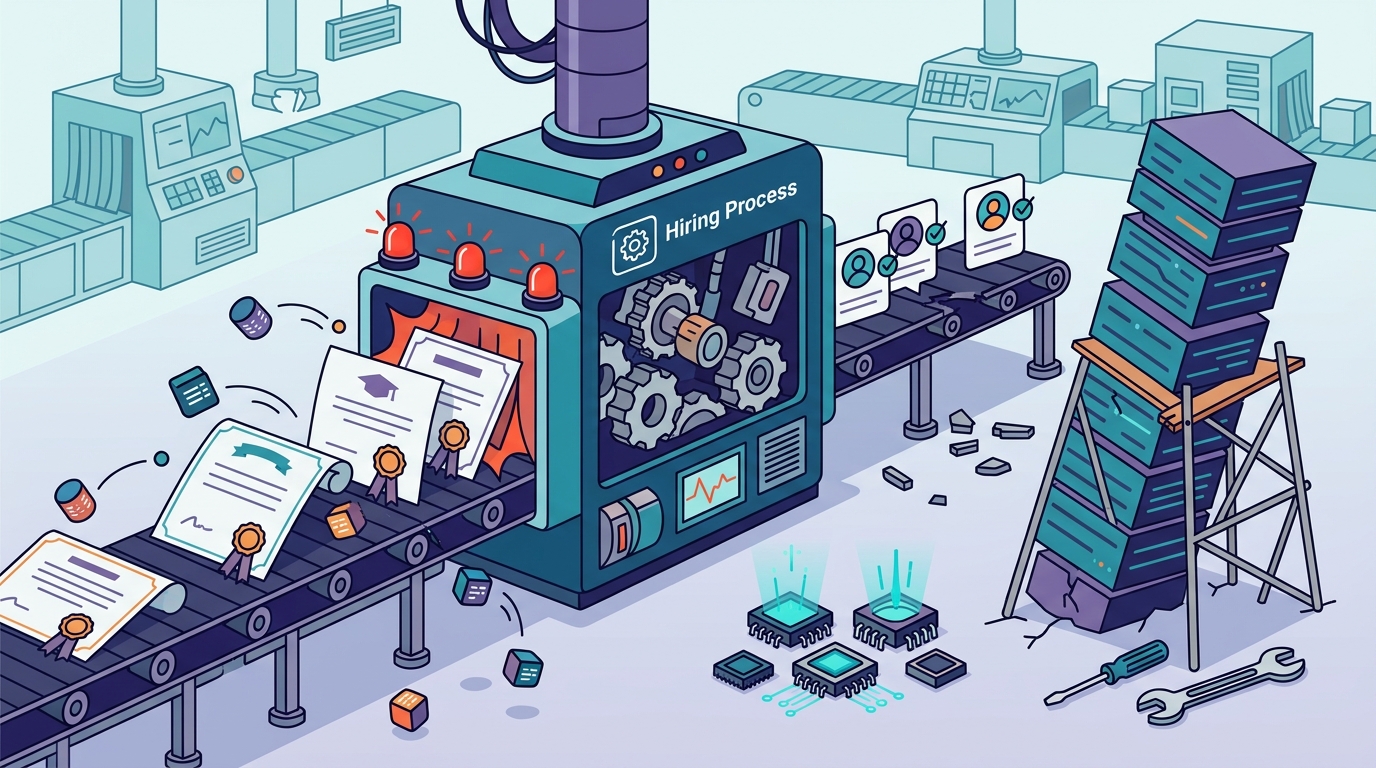
The most common initial failure is the superficial adoption of skills-based hiring. Organizations often remove the degree requirement from job descriptions but continue to rely on implicit biases during the screening process. This creates a "credentialing trap" where candidates with non-traditional backgrounds are filtered out by algorithms or recruiters conditioned to look for specific university names.
To avoid this, companies must define skills with absolute precision. Skill Intelligence is the systematic measurement and mapping of capabilities within an organization. By focusing on the actual tasks required for the role rather than the path taken to acquire them, you eliminate the noise of pedigree. This approach ensures that the talent pool is diverse and capable, rather than just credentialed.
For more insights on how to structure your talent strategy, explore our approach to talent mapping.
Inconsistent Skill Taxonomies
Without a unified language, different departments interpret "leadership" or "technical proficiency" in vastly different ways. Marketing might define leadership as creative direction, while engineering defines it as technical mentorship. This fragmentation leads to a broken hiring process where candidates are evaluated against moving goalposts.
The solution lies in establishing a living taxonomy. A living taxonomy is a dynamic framework of skills that evolves with market demands and organizational needs. This framework must be validated against real-world job performance data. When every department uses the same definitions, the hiring process becomes equitable and efficient.
Learn how to build this framework by visiting our skills mapping resources.
Lack of Objective Measurement
Many organizations identify the right skills but fail to measure them accurately. Relying on self-reported resumes or unstructured interviews introduces significant error. A candidate may claim proficiency in a tool but lack the practical ability to use it effectively. This gap between claimed and actual skill is the primary driver of bad hires.
Objective measurement requires adaptive assessment engines. These tools adjust the difficulty of questions in real-time based on the candidate's previous answers, providing a statistically valid score of their actual capability. This method removes the "halo effect" where a charismatic candidate overshadows a more competent but less expressive one.
Discover how our talent evaluation technology ensures precision in every assessment.
Ignoring Internal Mobility
A critical pitfall is treating skills-based hiring as solely an external recruitment tool. Organizations often fail to apply the same rigorous skills mapping to their existing workforce. This creates a blind spot where internal talent is overlooked for external hires because their skills are not formally documented or recognized.
Effective implementation requires a dual focus. You must map external talent against your needs while simultaneously auditing internal skills to identify gaps and opportunities for reskilling. This approach reduces time-to-hire and increases employee retention by providing clear career pathways.
Explore our strategies for reskilling and upskilling to bridge internal gaps.
Failure to Integrate with HRIS
Skills data often lives in silos, separate from the main Human Resources Information System (HRIS). When skills data is not integrated, it becomes stale and irrelevant. Recruiters cannot access real-time skill profiles, leading to duplicate efforts and inconsistent decision-making across the organization.
Seamless integration is non-negotiable. The skills engine must sync automatically with your HRIS to reflect promotions, role changes, and new hires in real-time. This ensures that the talent map is always current and actionable for both HR and business leaders.
See how our platform connects with your existing infrastructure in our demo overview.
Neglecting Manager Enablement
Even the best technology fails if hiring managers are not trained to use it. Managers often revert to intuitive hiring practices because they lack confidence in data-driven decision-making. They may distrust the assessment results or fail to understand how to interpret the skill gaps identified.
Enablement involves more than just training; it requires a cultural shift. Managers must be empowered to have difficult conversations about skill gaps and development plans. This includes providing them with clear, evidence-based reports that justify hiring decisions and development needs.
Join our community to learn more about talent strategy events and best practices.
Strategic Implementation Comparison
The following table outlines the differences between traditional hiring pitfalls and the skills-based approach.
| Pitfall Area | Traditional Approach Failure | Skills-Based Solution |
|---|---|---|
| Screening | Keyword matching on degrees | Adaptive skill assessment |
| Definition | Vague job descriptions | Living skill taxonomy |
| Measurement | Unstructured interviews | Statistically valid evaluations |
| Integration | Siloed data systems | HRIS synchronization |
| Development | Generic training programs | Targeted reskilling plans |
Key Takeaways
- Define Skills Precisely: Use a living taxonomy to ensure consistency across departments.
- Measure Objectively: Implement adaptive assessments to verify actual capability over claimed experience.
- Integrate Systems: Connect your skills engine directly with your HRIS for real-time data accuracy.
- Enable Managers: Train hiring managers to interpret data and conduct evidence-based conversations.
- Focus on Internal Mobility: Apply skills mapping to existing employees to identify reskilling opportunities.
- Eliminate Bias: Remove degree requirements and focus on task-based evaluations.
- Validate Continuously: Regularly update your skill database to reflect market changes.
Frequently Asked Questions
What is the biggest barrier to skills-based hiring?
The biggest barrier is often the lack of a standardized skill taxonomy. Without a common language, different teams evaluate candidates differently, leading to inconsistent and biased hiring outcomes.
How do you measure skills objectively?
Objective measurement is achieved through adaptive assessment engines that adjust question difficulty in real-time. This provides a statistically valid score of a candidate's actual proficiency, removing subjective bias.
Can skills-based hiring replace traditional resumes?
Yes, skills-based hiring replaces the resume as the primary screening tool. Instead of relying on past job titles or degrees, candidates are evaluated on their ability to perform specific tasks relevant to the role.
How does skills mapping help internal mobility?
Skills mapping creates a visible inventory of employee capabilities. This allows organizations to identify internal candidates for new roles based on demonstrated skills rather than tenure, fostering a culture of growth and retention.
What role does AI play in skills-based hiring?
AI automates the mapping of skills to job roles and powers the adaptive assessment engine. It ensures that evaluations are consistent, scalable, and aligned with the latest industry standards.
How long does it take to implement skills-based hiring?
Implementation time varies, but organizations using automated talent mapping tools can establish a baseline skills framework in weeks rather than months. The key is starting with a pilot program for high-volume roles.
Is skills-based hiring compliant with data privacy regulations?
Yes, when implemented correctly. Platforms that prioritize privacy-by-design, such as those compliant with ISO 27001 and GDPR, ensure that sensitive employee and candidate data is protected throughout the assessment process.
Start Your Skills-Based Transformation
Avoiding the pitfalls of skills-based hiring requires more than just good intentions; it demands a robust technical foundation and a strategic mindset. By focusing on precise definitions, objective measurement, and seamless integration, you can build a talent engine that drives real business results.
Ready to transform your hiring process? Schedule a demo today to see how The Wise Skill can help you map, measure, and manage talent with precision.