
How to Choose the Right Skills Intelligence Platform for Your Team
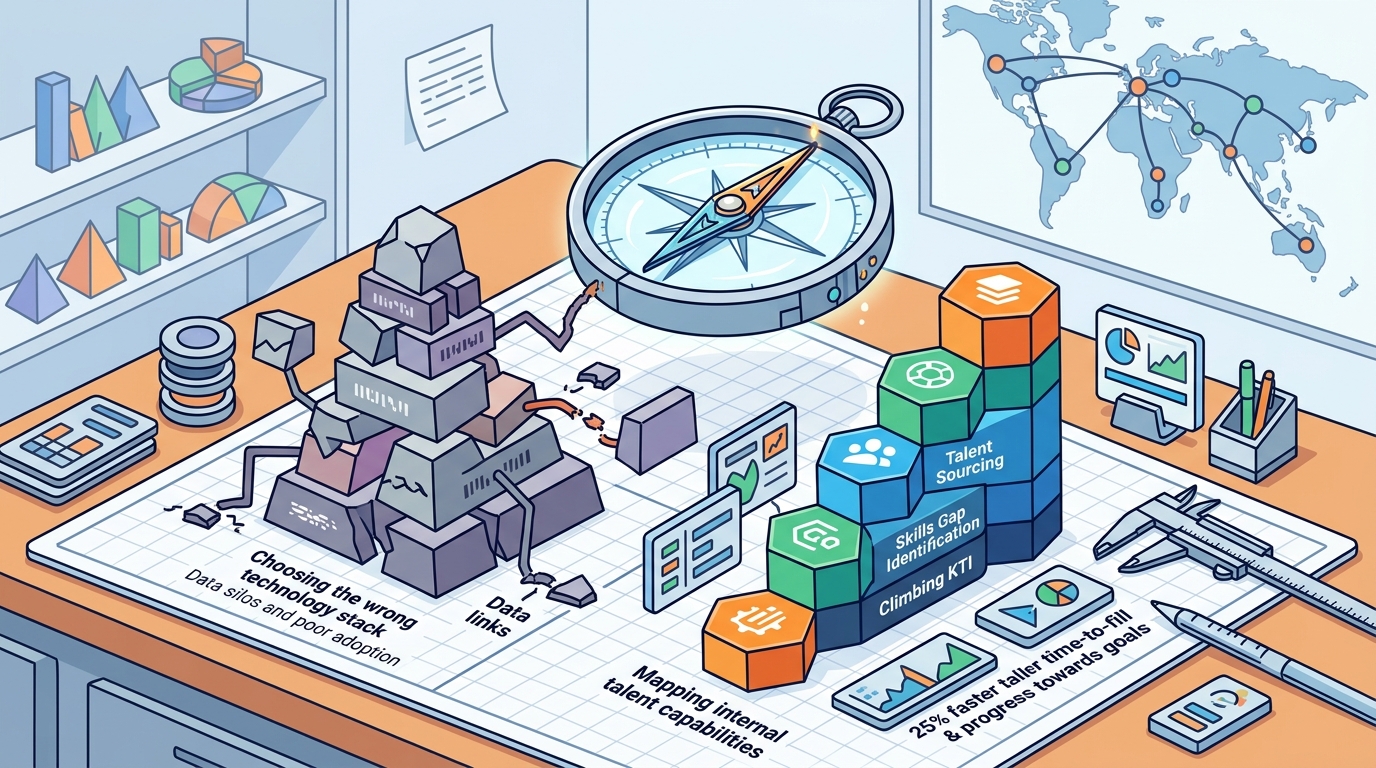
Organizations that fail to map their internal talent capabilities are losing ground to competitors who do. According to recent workforce analytics, companies with mature skills intelligence frameworks report a 25% faster time-to-fill for critical roles compared to those relying on traditional resume screening. This gap is widening as the labor market becomes increasingly dynamic and remote work expands the geographic talent pool. Choosing the wrong technology stack can lead to data silos, poor adoption rates, and wasted budget. This guide provides a rigorous framework for evaluating skills intelligence platforms to ensure your selection drives measurable business outcomes.
Understanding Skills Intelligence
Before diving into technical specifications, it is essential to define the core concept driving this market shift. Skills intelligence is the systematic process of identifying, categorizing, and analyzing the capabilities within an organization to align talent with business strategy. Unlike traditional human resources software that focuses on administrative tasks, skills intelligence platforms dig into the actual work being performed.
These platforms utilize natural language processing and machine learning to extract skills from job descriptions, performance reviews, and project data. This creates a dynamic map of your workforce's potential. The goal is to move from a static org chart to a fluid talent marketplace. When you understand what skills exist internally, you can reduce external hiring costs and improve employee retention through internal mobility.
For organizations looking to start this journey, understanding the foundational philosophy behind skills-based hiring is the first step. It shifts the focus from pedigree to potential, allowing for more inclusive and effective recruiting practices.
Core Evaluation Criteria
Not all platforms are built equally. The market is saturated with tools that claim to offer skills mapping but lack the depth required for enterprise-scale operations. You must evaluate vendors against specific, non-negotiable criteria to ensure long-term viability.
1. Data Accuracy and Ontology
The quality of your skills map is only as good as the underlying data ontology. A robust platform must use a standardized skills taxonomy that aligns with industry standards. If the platform relies solely on user-generated tags, the data will become fragmented and unusable over time. Look for vendors who maintain a curated, evolving skills library that includes emerging technologies and soft skills.
Skills mapping is the automated process of linking employee attributes to a standardized taxonomy of professional capabilities. This standardization is critical for cross-departmental comparisons. Without it, you cannot accurately compare a software engineer's skills with a marketing specialist's profile.
2. Integration Capabilities
Your skills intelligence platform cannot exist in a vacuum. It must integrate seamlessly with your existing Human Resources Information System (HRIS), Applicant Tracking System (ATS), and Learning Management System (LMS). If the data does not flow automatically, your team will revert to manual entry, leading to data decay within months.
Check for pre-built connectors with major providers like Workday, SAP SuccessFactors, and Greenhouse. API flexibility is also crucial for custom integrations. A platform that requires heavy custom development for basic connectivity will increase your total cost of ownership significantly.
3. User Experience and Adoption
The best technology fails if employees do not use it. The interface must be intuitive for both HR administrators and individual contributors. Employees need a low-friction way to update their profiles, perhaps through automated data pulls from their daily work tools like GitHub, Jira, or Salesforce.
If the onboarding process is cumbersome, adoption rates will plummet. Request a live demo that focuses on the employee journey, not just the admin dashboard. Ask to see how quickly a new hire can update their skills profile and find relevant internal opportunities.
Integration and Data Quality
Data hygiene is the silent killer of skills intelligence initiatives. Many organizations start with high hopes but fail because they underestimate the effort required to clean and structure their existing HR data. When evaluating platforms, ask about their data ingestion capabilities.
Does the platform offer automated data cleaning tools? Can it handle unstructured data from resumes and performance reviews? The ability to parse unstructured text into structured skills data is a key differentiator among top-tier vendors. According to industry reports, organizations that automate data ingestion see a 40% higher accuracy rate in skills matching compared to manual entry methods.
Furthermore, consider the platform's security and compliance features. Since you are processing sensitive employee data, the vendor must adhere to strict data privacy regulations such as GDPR and CCPA. Verify their SOC 2 Type II certification and data residency options to ensure your information remains secure.
For more insights on maintaining data integrity, explore the resources available on best practices for skills-based organizations.
Vendor Comparison Matrix
To help you visualize the differences between potential solutions, here is a comparison of key features across typical platform categories. This matrix highlights the trade-offs between specialized tools and broader HR suites.
| Feature Category | Specialized Skills Platform | General HR Suite | AI-Native Talent Tool |
|---|---|---|---|
| Skills Taxonomy Depth | High (Curated & Dynamic) | Medium (Static) | High (AI-Generated) |
| Integration Flexibility | API-First | Limited Native Connectors | Medium |
| Primary Use Case | Talent Marketplace & Mobility | Admin & Compliance | Recruiting Automation |
| Data Ingestion | Automated Parsing | Manual Upload | Real-time Sync |
| Cost Structure | Per Active User | Flat License Fee | Per Hire / Per Month |
When reviewing these options, consider your specific organizational maturity. Startups may prefer AI-native tools for speed, while enterprises often require the robust ontology of specialized platforms. For a deeper dive into the operational benefits, schedule a demonstration to see these capabilities in action.
Implementation Strategy
Choosing the platform is only half the battle. Successful implementation requires a phased approach to avoid overwhelming your HR team and employees. Start with a pilot group, such as a single department or a specific job family. This allows you to test the data accuracy and user experience before a company-wide rollout.
Define clear success metrics from the beginning. Are you measuring time-to-fill, internal mobility rates, or skills gap closure? Without measurable goals, it is difficult to justify the ROI of the platform to stakeholders. Regularly review these metrics and adjust your strategy based on the data.
Training is also critical. HR administrators need technical training on the platform's configuration, while employees need guidance on how to maintain their skills profiles. Create a change management plan that emphasizes the benefits to the individual, such as career visibility and personalized learning recommendations.
For additional support during your selection process, review the common questions regarding skills intelligence adoption.
Key Takeaways
- Skills intelligence is the systematic process of identifying, categorizing, and analyzing the capabilities within an organization to align talent with business strategy. This definition underscores the strategic nature of the technology.
- Skills mapping is the automated process of linking employee attributes to a standardized taxonomy of professional capabilities. Standardization is key to accurate cross-functional analysis.
- Integration with existing HRIS and ATS systems is non-negotiable for data accuracy and user adoption.
- Data quality depends on automated ingestion and a robust, curated skills ontology.
- User experience drives adoption; if employees find it difficult to update their profiles, the data will become stale.
- Start with a pilot program to validate the platform's effectiveness before full-scale deployment.
- Define clear ROI metrics, such as reduced time-to-fill or increased internal mobility, to justify the investment.
Frequently Asked Questions
What is the difference between skills intelligence and traditional HR software?
Traditional HR software focuses on administrative tasks like payroll, benefits, and compliance. Skills intelligence platforms focus on the actual capabilities of the workforce, enabling dynamic talent matching and internal mobility. It shifts the HR function from reactive administration to proactive talent strategy.
How long does it take to implement a skills intelligence platform?
Implementation timelines vary based on organizational size and data complexity. A typical pilot phase lasts 4 to 8 weeks. Full-scale deployment, including data migration and training, can take 3 to 6 months. Phased rollouts help manage risk and ensure smoother adoption.
Can a skills intelligence platform integrate with our existing ATS?
Yes, most modern platforms offer pre-built integrations with major Applicant Tracking Systems like Greenhouse, Lever, and Workday Recruiting. These integrations allow you to push skills data directly into your recruiting workflow, improving candidate matching and reducing manual entry.
How do you ensure data privacy and security?
Reputable vendors adhere to strict data privacy regulations such as GDPR and CCPA. They typically hold SOC 2 Type II certifications and offer data residency options. Always review the vendor's security whitepaper and data processing agreement before signing a contract.
What is the ROI of a skills intelligence platform?
ROI is typically realized through reduced external hiring costs, faster time-to-fill, and improved employee retention. By identifying internal candidates for open roles, companies can save significant recruitment fees and reduce onboarding time. Some organizations report a 20-30% reduction in time-to-fill for critical roles.
Do employees need to manually update their skills?
While manual updates are possible, the best platforms automate this process. They pull data from work tools like GitHub, Jira, or Salesforce to infer skills based on actual work performed. This reduces the burden on employees and ensures the data reflects current capabilities.
How do you handle skills gaps identified by the platform?
Once gaps are identified, the platform should recommend learning resources, mentorship opportunities, or internal projects to help employees upskill. This creates a closed-loop system where skills development is directly tied to business needs.
Next Steps
Choosing the right skills intelligence platform is a strategic decision that will impact your organization's talent strategy for years to come. By focusing on data accuracy, integration capabilities, and user experience, you can select a solution that drives real business value. Do not settle for a tool that merely digitizes your existing processes. Seek a platform that transforms how you view and deploy talent.
Ready to see how skills intelligence can work for your team? Book a demo today to explore how The Wise Skill can help you build a more agile and capable workforce. Visit our FAQ page for more details or check our legal and privacy policies for compliance information.