
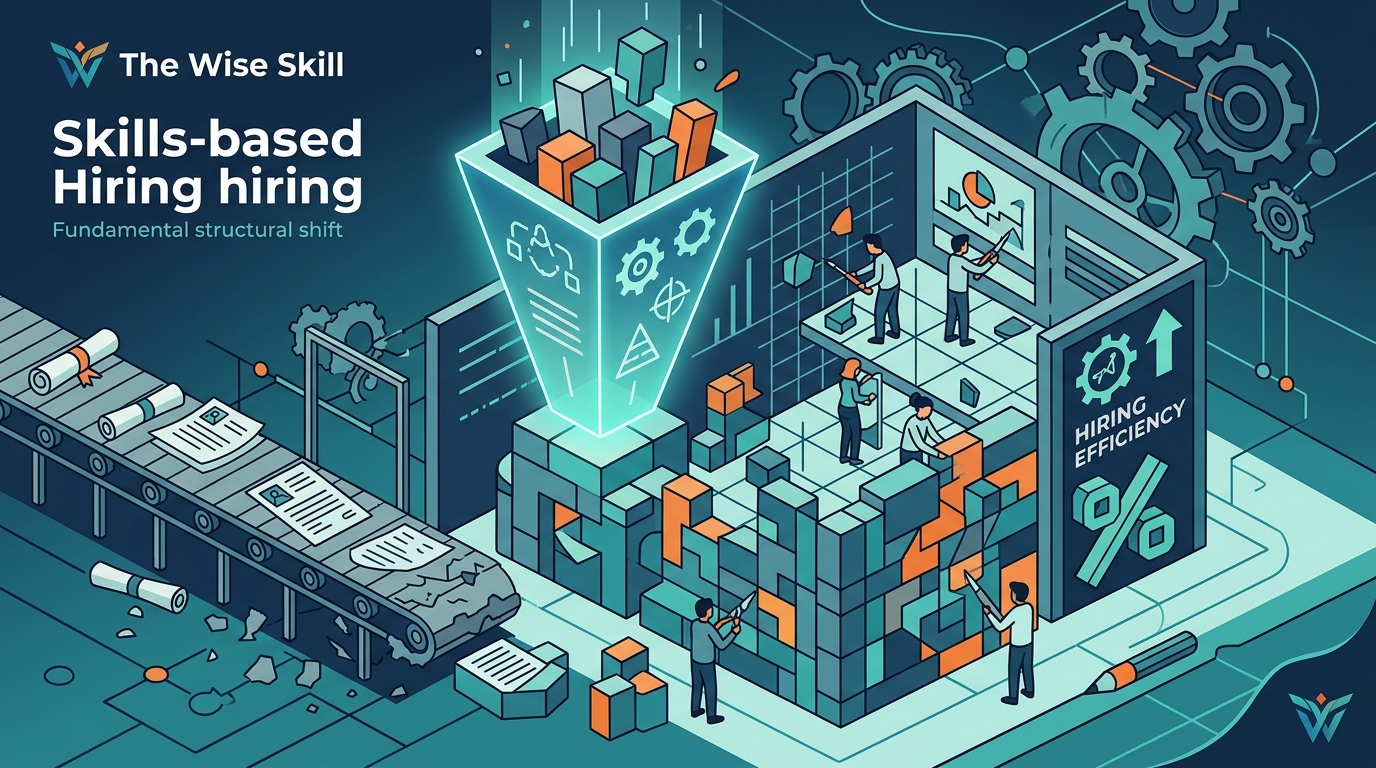
The global labor market is undergoing a fundamental structural shift. According to recent workforce analytics, organizations that adopt skills-based hiring practices report a 30% increase in hiring efficiency compared to traditional credential-focused models. This transition is not merely a trend but a necessary evolution for companies seeking to build resilient, agile, and high-performing teams in an increasingly complex economic landscape. By prioritizing demonstrable abilities over formal degrees or linear career paths, businesses unlock a deeper talent pool and drive measurable operational improvements.
Expanding the Talent Pool
Traditional hiring filters often exclude highly capable candidates who lack specific degrees or conventional career trajectories. Skills-based hiring removes these artificial barriers. This approach allows organizations to consider non-traditional backgrounds, such as career changers, self-taught professionals, and individuals from underrepresented communities.
When you define roles by the actual tasks and competencies required, you open the door to a diverse array of applicants. This diversity is not just a social good; it is a business imperative. Diverse teams bring varied perspectives, which leads to better problem-solving and innovation. The Wise Skill focuses on recruiting and training that finally work by identifying these hidden gems in the talent market.
By widening the net, you increase the probability of finding candidates who possess the exact technical or soft skills needed for the role. This is particularly critical in fast-evolving industries where formal education may lag behind industry realities. For more insights on effective recruiting strategies, visit our blog.
Reducing Unconscious Bias
Unconscious bias remains one of the most significant obstacles to fair and effective hiring. Candidates are often judged on pedigree, alma mater, or familiarity with corporate jargon rather than their actual ability to perform the job. Skills-based hiring introduces objectivity into the process. By focusing on standardized assessments and work samples, hiring managers can evaluate candidates based on merit.
Data shows that structured skills assessments reduce demographic disparities in hiring outcomes. When the criteria are clear and objective, the influence of personal preference or implicit bias diminishes. This creates a more equitable workplace where talent is recognized regardless of background. The Wise Skill provides frameworks that help organizations implement these fair practices consistently.
Furthermore, this approach aligns with modern diversity, equity, and inclusion (DEI) goals. It ensures that hiring decisions are driven by capability rather than coincidence. For a deeper understanding of inclusive hiring practices, review our about page.
Improving Employee Retention
One of the most overlooked benefits of skills-based hiring is its positive impact on retention. When employees are hired for their skills and given clear pathways for growth, they feel more engaged and valued. Traditional hiring often leads to role mismatch, where employees struggle because they lack the necessary competencies, leading to early turnover.
Skills-based hiring ensures a better fit between the candidate's abilities and the role's demands. This alignment reduces the likelihood of frustration and burnout. Additionally, when organizations prioritize skills, they often invest more in continuous learning and development. Employees see a clear future within the company, which increases loyalty.
High retention rates reduce the costly cycle of constant recruitment and onboarding. According to workforce studies, companies with strong skills development programs see significantly lower turnover rates. This stability allows for the accumulation of institutional knowledge and stronger team dynamics. Learn more about our approach by visiting our demo page.
Agility and Adaptability
In today's rapid business environment, agility is a competitive advantage. Skills-based hiring allows organizations to pivot quickly when market demands change. Instead of waiting for new graduates to enter the workforce, companies can upskill existing employees or hire individuals with the specific, emerging skills required.
This framework supports a culture of continuous learning. Employees are encouraged to develop new competencies, making the organization more resilient to technological disruptions. Skills-based hiring is not just about filling vacancies; it is about building a workforce that can evolve with the industry.
Organizations that embrace this flexibility are better positioned to innovate and respond to customer needs. They can assemble project teams based on specific skill sets rather than rigid job titles. This modular approach to talent management is essential for long-term success. For more details on our methodology, check our legal page.
Cost Efficiency in Recruitment
Traditional hiring processes are expensive. They often involve lengthy recruitment cycles, multiple rounds of interviews, and high reliance on external recruiters. Skills-based hiring streamlines this process by focusing on relevant assessments and practical evaluations.
By reducing the time-to-hire, companies save significant resources. Additionally, the broader talent pool often includes candidates who are more cost-effective than those with prestigious degrees but limited practical experience. The focus on skills ensures that you are paying for capability, not pedigree.
Furthermore, the reduction in turnover associated with skills-based hiring leads to substantial long-term savings. The cost of replacing an employee can be up to 1.5 to 2 times their annual salary. By getting the hire right the first time, organizations protect their bottom line. Explore our FAQ section for common cost-related inquiries.
Skills vs. Credentials: A Comparison
Understanding the difference between skills-based and credential-based hiring is crucial for implementation. The table below outlines the key distinctions.
| Feature | Skill-Based Hiring | Credential-Based Hiring |
|---|---|---|
| Primary Focus | Demonstrable abilities and competencies | Formal degrees and certifications |
| Talent Pool | Diverse and expansive | Limited to degree holders |
| Bias Risk | Lower due to objective criteria | Higher due to subjective pedigree evaluation |
| Retention Rate | Higher due to better role fit | Variable, often lower due to mismatch |
| Agility | High, allows for rapid upskilling | Low, dependent on formal education cycles |
Key Takeaways
- Efficiency Gains: Organizations report a 30% increase in hiring efficiency with skills-based frameworks.
- Diversity Impact: Removing degree requirements expands the talent pool to include non-traditional candidates.
- Bias Reduction: Objective skills assessments minimize the influence of unconscious bias in hiring decisions.
- Retention Boost: Better role alignment leads to higher employee satisfaction and lower turnover rates.
- Cost Savings: Reduced time-to-hire and lower turnover result in significant financial benefits.
- Agility: Skills-based hiring allows for rapid adaptation to changing market demands.
- Strategic Alignment: This approach supports long-term business goals by building a resilient workforce.
Frequently Asked Questions
What is skills-based hiring?
Skill-based hiring is a recruitment approach that prioritizes a candidate's demonstrable abilities and competencies over their formal educational background or previous job titles.
How does skills-based hiring reduce bias?
It reduces bias by using standardized assessments and work samples to evaluate candidates objectively, focusing on what they can do rather than where they studied.
Is skills-based hiring suitable for all industries?
Yes, while some regulated industries have specific licensing requirements, the core principles of skills-based hiring can be adapted to most sectors to improve hiring quality.
What are the main challenges of implementing this framework?
Challenges include defining clear skills criteria, training hiring managers on objective assessment, and shifting organizational culture away from traditional degree preferences.
How does skills-based hiring affect employee retention?
It improves retention by ensuring a better fit between the employee's skills and the role's requirements, leading to higher job satisfaction and engagement.
Can skills-based hiring be automated?
Yes, many skills assessments and screening tools can be automated to streamline the initial stages of the hiring process while maintaining objectivity.
What is the ROI of skills-based hiring?
The ROI is realized through reduced time-to-hire, lower recruitment costs, decreased turnover, and improved employee performance and productivity.
Next Steps
Transform your organization's hiring strategy today. By adopting a skills-based framework, you position your company for long-term success in a competitive talent market. Contact The Wise Skill to learn how our recruiting and training solutions can help you build a more agile and diverse workforce. Visit thewiseskill.com to get started.