
How to Choose the Right Skills Intelligence Platform for Your Team
Organizations that leverage skills intelligence see a 20% increase in internal mobility success rates compared to those relying on traditional job descriptions. This shift is not merely a trend but a fundamental restructuring of how talent is acquired, developed, and retained in the modern workforce. As the gap between existing employee capabilities and future business needs widens, selecting the correct technology partner becomes a critical strategic imperative. The following guide outlines the essential criteria for evaluating these platforms effectively.
Understanding Skills Intelligence
Skills intelligence is the systematic process of identifying, categorizing, and analyzing the capabilities within an organization. It moves beyond static job titles to create a dynamic map of what employees can actually do. This approach allows companies to fill gaps internally rather than relying solely on external hiring. According to recent workforce studies, internal hiring is significantly faster and more cost-effective than external recruitment. The platform you choose must serve as the central nervous system for this data.
Without a clear definition, skills intelligence is the continuous monitoring and analysis of workforce capabilities to align talent with business goals. This definition highlights the active nature of the process. It is not a one-time audit but an ongoing operational requirement. Your team needs a tool that updates in real-time as employees acquire new certifications or complete projects.
Core Evaluation Criteria
When assessing potential vendors, you must look beyond marketing claims. The technology must handle complex data structures and provide actionable insights. Here are the primary areas that demand your attention during the selection process.
1. Data Granularity and Standardization
Not all skills are created equal. A robust platform must distinguish between hard skills, soft skills, and emerging competencies. It should also map these skills to industry-standard taxonomies. This standardization ensures that a "Python developer" in one department is recognized as the same role in another. Without this consistency, your internal mobility data becomes fragmented and unreliable.
2. AI-Driven Discovery
Manual entry of skills is a recipe for failure. Employees rarely update their profiles with the same diligence they apply to their daily tasks. Therefore, the platform must use artificial intelligence to infer skills from resumes, performance reviews, and project histories. This automated discovery reduces administrative burden and increases data accuracy. The system should continuously learn and refine its mappings over time.
3. User Experience and Adoption
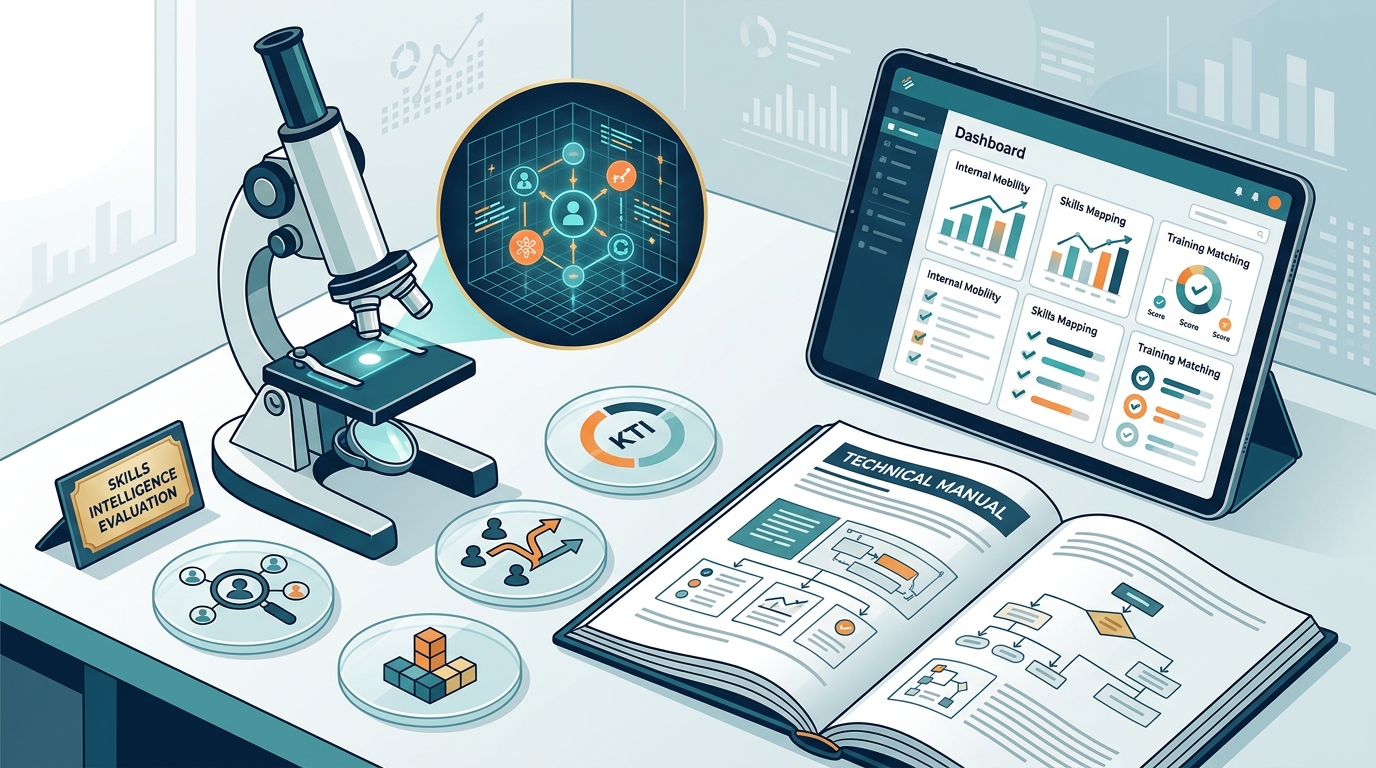
The best technology is useless if no one uses it. The interface must be intuitive for both HR professionals and individual contributors. If the process of updating skills is cumbersome, data quality will degrade rapidly. Look for platforms that offer seamless mobile access and simple update workflows. High adoption rates are directly correlated with the ease of use.
Data Accuracy and Mapping
Data integrity is the foundation of any skills intelligence initiative. You must verify how the vendor sources their external skill taxonomies. Do they rely on public standards like O*NET or create their own proprietary frameworks? The latter may offer more customization but could lack industry recognition. A hybrid approach is often ideal, allowing you to map internal roles to external benchmarks.
Furthermore, consider the platform's ability to handle skill decay. Skills become obsolete quickly in technical fields. The system should flag skills that have not been used or updated in a specific timeframe. This feature helps identify training needs before they become critical business risks. According to industry reports, proactive skills management reduces the cost of bad hires by up to 30%. This statistic underscores the financial impact of accurate data.
Integration and Ecosystem
Your skills platform cannot exist in a vacuum. It must integrate with your existing Human Resources Information System (HRIS), Learning Management System (LMS), and Applicant Tracking System (ATS). These integrations allow for a seamless flow of data across the employee lifecycle. For example, a new certification completed in the LMS should automatically update the skills profile in the HRIS.
Open APIs are essential for custom integrations. Your IT team may need to connect the platform to internal project management tools or performance review software. Ensure the vendor provides comprehensive documentation and technical support for these connections. A lack of integration capability can lead to data silos and reduced ROI.
Vendor Comparison
Selecting the right partner requires a structured comparison. Below is a summary of key considerations when evaluating different providers in the market.
| Feature | Priority Level | Why It Matters | Recommended Action |
|---|---|---|---|
| AI Skill Extraction | High | Reduces manual entry and improves accuracy. | Request a live demo to test extraction speed. |
| Integration Capabilities | High | Ensures data flows across your tech stack. | Check vendor documentation for API specs. |
| Custom Taxonomies | Medium | Allows alignment with unique business roles. | Ask about customization limits during sales calls. |
| Reporting & Analytics | Medium | Provides insights for strategic workforce planning. | Review FAQ for reporting features. |
| Security Compliance | Critical | Protects sensitive employee data. | Verify legal and compliance standards. |
When reviewing vendors, pay close attention to their approach to data privacy. Employee skills data is sensitive. Ensure the platform complies with GDPR, CCPA, and other relevant regulations. This compliance is non-negotiable for any enterprise organization.
Key Takeaways
- Internal Mobility ROI: Organizations using skills intelligence report a 20% increase in successful internal placements.
- Automation is Essential: Manual data entry leads to rapid data decay and low user adoption rates.
- Integration Depth: Seamless connections with HRIS and LMS systems are critical for real-time data accuracy.
- Taxonomy Standards: Platforms must support both industry-standard and custom skill mappings for flexibility.
- Security First: Data privacy compliance is a baseline requirement, not a nice-to-have feature.
- User Experience: Intuitive interfaces drive the high adoption rates necessary for system success.
- Strategic Alignment: The platform must align with long-term business goals, not just immediate hiring needs.
Frequently Asked Questions
What is the difference between skills mapping and skills intelligence?
Skills mapping is a static snapshot of current capabilities, often done manually. Skills intelligence is a dynamic, continuous process that uses data and AI to analyze and predict future talent needs. Intelligence implies actionability and real-time updates.
How long does it take to implement a skills intelligence platform?
Implementation timelines vary based on organizational size and data complexity. Typically, initial setup takes 4 to 8 weeks. Full adoption and data maturity may take 3 to 6 months. The Wise Skill offers streamlined onboarding to accelerate this process.
Can a skills platform replace our existing HRIS?
No, a skills platform is designed to complement your HRIS, not replace it. It acts as a specialized layer that enhances the data within your core HR systems. Integration is key to maintaining a unified employee record.
How does the platform handle data privacy for employees?
Reputable platforms employ encryption, role-based access controls, and strict compliance with global data protection laws. Employees should have visibility into who accesses their skills data and the ability to correct inaccuracies.
What are the common pitfalls in choosing a vendor?
Common pitfalls include ignoring integration capabilities, underestimating the importance of user experience, and failing to validate data accuracy during the pilot phase. Always request a proof of concept before committing.
Is skills intelligence only for large enterprises?
No, mid-sized companies benefit significantly from skills intelligence. It helps them compete for talent by showcasing internal growth opportunities. The technology is scalable and adaptable to organizations of all sizes.
How do I measure the success of the platform?
Success metrics include increased internal fill rates, reduced time-to-hire, improved employee retention, and higher engagement scores related to career development. Track these KPIs before and after implementation.
Next Steps
Choosing the right skills intelligence platform is a decisive step toward future-proofing your workforce. By focusing on data accuracy, integration, and user experience, you can build a resilient talent strategy. The Wise Skill provides the tools and expertise to navigate this transition smoothly. Visit our demo page to see the platform in action. For more insights, explore our blog or review our FAQ section. Contact us today to schedule a consultation and transform your talent management approach.