
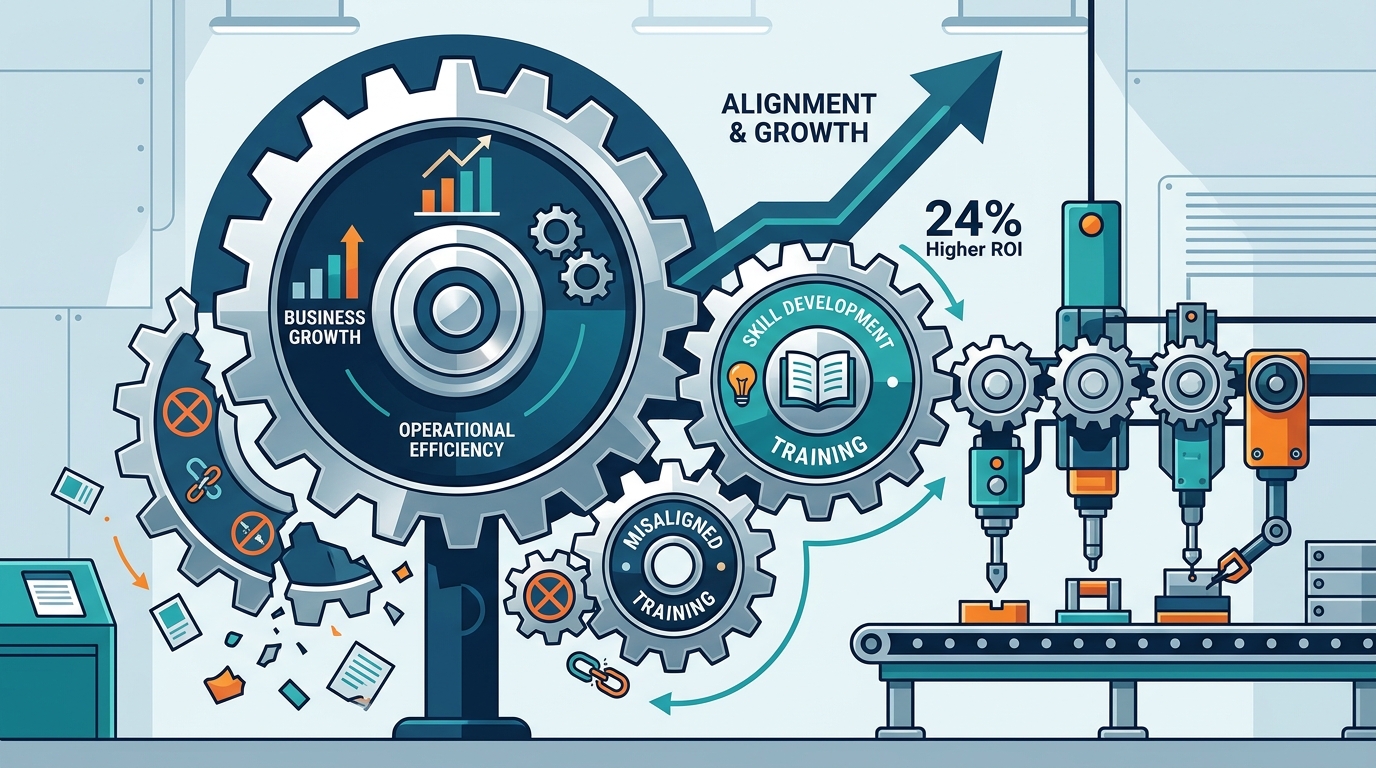
Organizations that integrate learning strategies directly with corporate objectives see a 24% higher return on investment from their training programs. This statistic highlights a critical shift in how modern enterprises view workforce development. Training is no longer a standalone HR activity but a core driver of revenue growth and operational efficiency. When learning initiatives are misaligned, companies waste resources on irrelevant content that fails to move the needle. This guide details the precise methodology for synchronizing your educational efforts with your bottom line.
Diagnose the Current State
Before you can align training with business goals, you must understand the gap between current performance and desired outcomes. This process begins with a rigorous skills audit. You need to identify which roles are critical to your revenue streams and where those employees lack necessary competencies. Without this diagnostic phase, training becomes a guessing game. Skills gap analysis is the systematic process of comparing current employee capabilities against future business requirements. This analysis reveals specific deficiencies that, if addressed, will directly impact productivity.
Consider the operational reality of your teams. Are sales representatives struggling with new CRM software? Is the engineering team falling behind on emerging security protocols? These are not just training issues; they are business risks. By mapping these gaps to specific business pain points, you create a compelling case for investment. Stakeholders are more likely to approve budgets when they see a direct line between learning activities and problem resolution. This approach transforms training from a cost center into a strategic asset.
Furthermore, you must evaluate the existing learning infrastructure. Is your current platform capable of delivering personalized, role-based content? Or is it a static repository of outdated videos? The technology you choose must support the agility required to meet business goals. If your tools are rigid, your training will lag behind market changes. Effective recruiting and training strategies rely on modern tools that adapt to the learner's pace and the company's evolving needs. Start by auditing your current tech stack to ensure it can support the alignment you intend to build.
Define Strategic Objectives
Alignment requires a clear understanding of where the business is heading. You cannot align training if the destination is undefined. Work closely with executive leadership to identify the top three to five strategic priorities for the fiscal year. These might include expanding into new markets, launching a new product line, or improving customer retention rates. Each of these goals requires specific employee behaviors and knowledge sets.
Once the business goals are set, translate them into learning objectives. This translation is the core of alignment. For example, if the goal is to increase customer retention, the learning objective might be to enhance conflict resolution skills among support staff. If the goal is to accelerate product launches, the objective might be to improve cross-functional collaboration between engineering and marketing. Learning objectives are specific, measurable outcomes that define what employees must know or do to support business goals. This clarity ensures that every module, workshop, or course has a direct purpose.
It is also crucial to establish key performance indicators (KPIs) for these objectives. How will you know if the training is working? Will you measure it by increased sales conversion rates? Reduced time to proficiency for new hires? Or improved code quality metrics? Defining these metrics upfront allows you to track progress in real time. Without measurable targets, you cannot prove the value of your training initiatives to leadership. This data-driven approach builds trust and secures ongoing funding for your programs.
Design Targeted Curriculum
With clear objectives in place, you can design curriculum that directly addresses the identified gaps. This stage moves away from generic, one-size-fits-all content. Instead, you create targeted learning paths that are relevant to specific roles and business needs. Personalization is key to engagement. Employees are more likely to complete training when they see its immediate relevance to their daily work and career growth.
Utilize a mix of learning modalities to cater to different styles and operational constraints. Microlearning modules are excellent for reinforcing specific skills in short bursts. Project-based learning allows employees to apply new knowledge in real-world scenarios. Mentorship programs can facilitate the transfer of tacit knowledge from senior leaders to emerging talent. Experience the difference with a tailored demo of how modern learning platforms can deliver this level of customization and relevance.
Collaboration with subject matter experts (SMEs) is vital during this phase. SMEs ensure that the content is accurate and up-to-date. They also bring credibility to the program, as employees trust content created by peers who understand the nuances of the job. This collaboration also helps in identifying the most critical skills that need to be prioritized. By focusing on high-impact skills, you maximize the return on your training investment. Our approach to recruiting and training emphasizes this deep integration of operational expertise into the learning design process.
Implement and Measure
Implementation is where strategy meets execution. Launching the training program requires careful change management. Communicate the "why" behind the training to employees. Explain how it supports the company's goals and their personal development. This transparency reduces resistance and increases participation. Provide managers with the tools to support their teams through the learning process. Managerial involvement is a strong predictor of training success.
Measurement must be continuous, not just a post-training survey. Use Kirkpatrick's Four Levels of Evaluation to assess effectiveness comprehensively. Level 1 measures reaction, or how learners felt about the training. Level 2 measures learning, or the increase in knowledge or skills. Level 3 measures behavior, or the application of new skills on the job. Level 4 measures results, or the impact on business goals. Kirkpatrick's model is a widely used framework for evaluating the effectiveness of training programs across four distinct levels. Focusing on Levels 3 and 4 ensures that you are measuring actual business impact.
Collect data from multiple sources to get a complete picture. Analyze performance metrics from internal systems, such as sales figures or customer satisfaction scores. Conduct interviews and focus groups to gather qualitative feedback. This multi-faceted approach provides a robust evidence base for the value of your training. It also highlights areas for improvement, allowing you to refine the program iteratively. Frequently asked questions about training ROI often center on these measurement challenges, which is why a structured approach is essential.
Optimize and Scale
Training alignment is not a one-time project; it is an ongoing cycle. Use the data collected during the measurement phase to optimize your curriculum. Remove content that has low engagement or no impact on business goals. Enhance modules that show high correlation with positive outcomes. Stay agile and adapt to changing business needs. The market landscape shifts rapidly, and your training must keep pace.
Scaling aligned training requires a robust infrastructure. As your organization grows, maintaining personalization and relevance becomes more challenging. Leverage technology to automate routine tasks and deliver personalized learning paths at scale. Use data analytics to identify emerging skill gaps before they become critical issues. This proactive approach keeps your workforce ahead of the curve. Review our legal and compliance standards to ensure your scaling efforts meet all regulatory requirements.
Finally, foster a culture of continuous learning. Encourage employees to take ownership of their development. Provide resources for self-directed learning and reward those who demonstrate continuous improvement. When learning becomes part of the company DNA, alignment happens naturally. Employees see their growth as integral to the company's success. This cultural shift is the ultimate goal of any training strategy. Your data privacy is protected as you implement these scalable learning systems.
Key Takeaways
- Strategic Alignment: Training must be directly linked to top business priorities, not treated as an isolated HR function.
- Skills Gap Analysis: Conduct regular audits to identify specific competency gaps that impact revenue and efficiency.
- Measurable Outcomes: Use KPIs and Kirkpatrick's model to track the real-world impact of learning initiatives.
- Personalization: Tailor content to specific roles to increase engagement and relevance for employees.
- Managerial Support: Involve managers in the learning process to reinforce skills and drive adoption.
- Continuous Optimization: Treat training as an iterative process, refining content based on data and feedback.
- Cultural Integration: Foster a culture where learning is seen as a core component of career and company success.
Frequently Asked Questions
How do I prove the ROI of employee training to leadership?
Prove ROI by linking training outcomes to specific business metrics such as increased sales, reduced turnover, or improved customer satisfaction. Use pre- and post-training data to demonstrate the change in performance. Present this data in clear, visual reports that highlight the financial impact of the learning initiatives.
What is the most effective way to identify training needs?
The most effective way is to conduct a comprehensive skills gap analysis. This involves comparing current employee skills against the skills required to achieve business goals. Supplement this data with feedback from managers and employees to get a holistic view of the needs.
How can I ensure training content remains relevant?
Keep content relevant by regularly updating it based on industry trends and internal feedback. Use microlearning to deliver timely, focused updates. Engage subject matter experts to ensure accuracy and relevance. Create a feedback loop where employees can suggest improvements or report outdated information.
What role do managers play in training alignment?
Managers are critical in reinforcing training. They provide context, support application of new skills, and hold employees accountable. Without managerial involvement, training often fails to translate into behavioral change. Equip managers with tools to coach their teams effectively.
How does technology facilitate training alignment?
Technology enables personalization, scalability, and data collection. Learning management systems (LMS) can track progress and measure outcomes automatically. AI-driven platforms can recommend personalized content based on individual performance and goals. This data-driven approach ensures that training remains aligned with business objectives.
What are common pitfalls in aligning training with business goals?
Common pitfalls include focusing on activity rather than outcomes, ignoring managerial support, and failing to measure impact. Another pitfall is creating generic content that does not address specific business needs. Avoid these by maintaining a clear focus on business results and involving stakeholders throughout the process.
How often should training strategies be reviewed?
Training strategies should be reviewed quarterly or bi-annually. This frequency allows you to adapt to changing business priorities and market conditions. Regular reviews ensure that your training remains relevant and effective. Use this time to analyze data, gather feedback, and make necessary adjustments.
Ready to Transform Your Workforce?
Aligning employee training with business goals is not just a best practice; it is a necessity for survival in a competitive landscape. By following the steps outlined in this guide, you can create a learning ecosystem that drives real business results. Do not let your training efforts drift. Take control of your workforce development today. Schedule a demo to see how The Wise Skill can help you build a training program that truly aligns with your strategic objectives. Explore more insights on our blog to stay ahead of the curve.