
How to Identify Skills Intelligence Gaps Within Your Current Workforce
Organizations that fail to map their internal capabilities against future market demands face immediate operational fragility. Recent industry analysis indicates that nearly 60% of companies struggle to identify critical skills gaps before they impact revenue, according to a 2024 McKinsey Global Institute report on workforce transformation. This statistic highlights the urgent need for proactive skills intelligence. Without a clear view of what your team knows versus what they need to know, you are flying blind. This guide provides a structured methodology to uncover these hidden deficits and align your human capital with strategic goals. (The Wise Skill Recruiting)
Defining Skills Intelligence
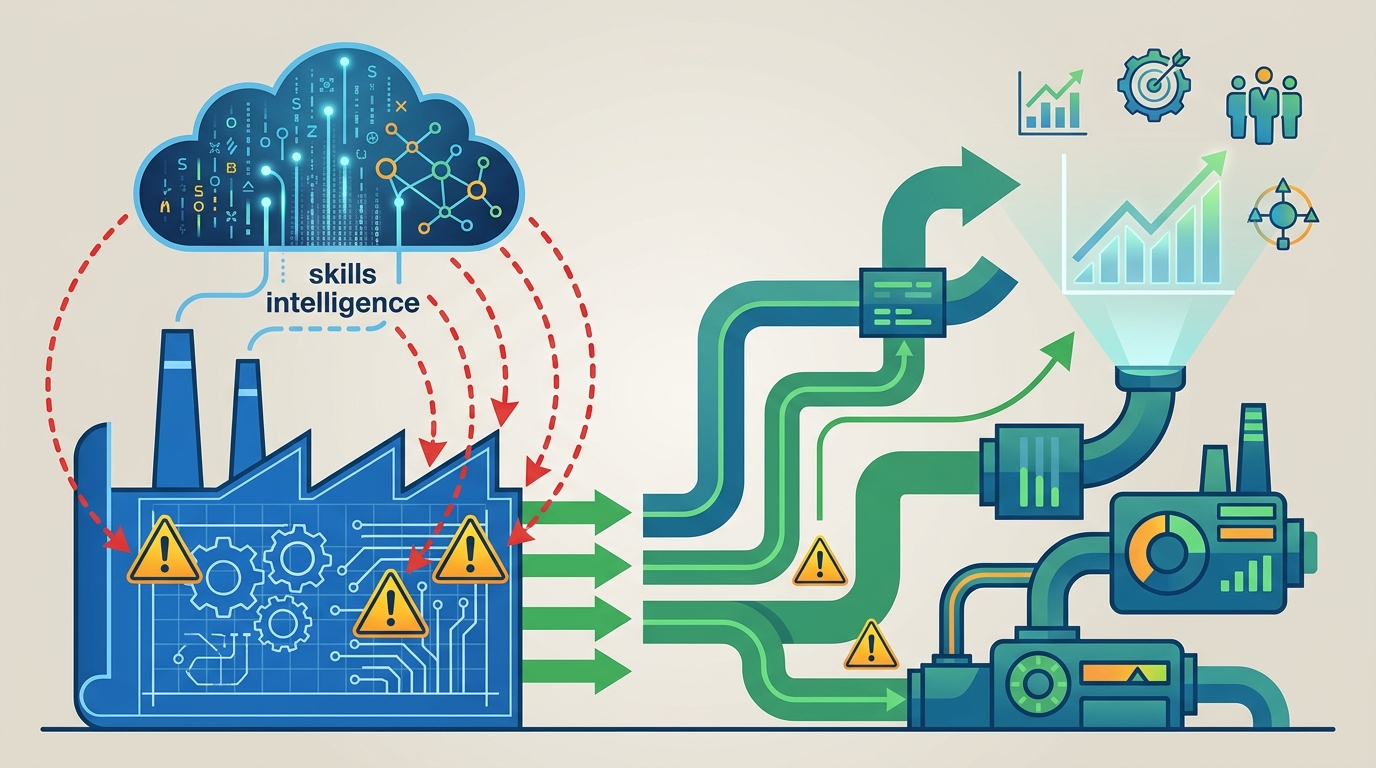
Before diving into the diagnostic process, it is essential to understand the core terminology. Skills intelligence is the systematic collection, analysis, and application of data regarding the skills, competencies, and capabilities of a workforce. It moves beyond traditional job descriptions to create a dynamic map of what employees can actually do. This data-driven approach allows leaders to make informed decisions about hiring, training, and internal mobility.
Traditional human resources methods often rely on static job titles and annual performance reviews. These methods are slow and frequently outdated by the time they are published. Skills intelligence provides real-time visibility into the actual state of your talent pool. It answers the question, "Do we have the right people with the right skills for the projects we need to deliver?" Understanding this distinction is the first step toward effective workforce planning.
Step 1: Audit Current Capabilities
The foundation of any skills gap analysis is a comprehensive inventory of your existing workforce. You cannot identify a gap if you do not know the size and shape of the current landscape. This step requires moving beyond self-reported resumes to verify actual proficiency levels.
Utilize Self-Assessment Surveys
Start by deploying detailed skills assessments to all employees. These surveys should ask employees to rate their proficiency in specific technical and soft skills. Use a standardized scale, such as novice to expert, to ensure consistency. While self-assessments can be biased, they provide a valuable baseline for understanding employee confidence and perceived expertise.
Review Performance Data
Combine survey data with historical performance metrics. Look for patterns in project outcomes, peer reviews, and manager evaluations. Employees who consistently deliver high-quality work in specific areas likely possess advanced skills in those domains. This triangulation of data sources reduces the risk of inaccurate self-reporting.
Validate with Managers
Manager validation is crucial for accuracy. Managers often have a broader view of an employee's contributions across multiple projects. Their insights can reveal hidden skills that employees might overlook or underestimate. This collaborative approach ensures that the skills inventory reflects reality rather than perception.
Step 2: Map Future Business Needs
Once you have a clear picture of the present, you must define the future. Skills gaps are relative to where the business is going, not just where it has been. This step requires close alignment between human resources and executive leadership.
Analyze Strategic Goals
Review your company's strategic plan for the next one to three years. Identify key initiatives such as digital transformation, market expansion, or product innovation. Each initiative will require a specific set of skills. For example, launching a new AI-driven product will require data science and machine learning expertise that may not currently exist in your team.
Monitor Industry Trends
External factors heavily influence internal skill requirements. Keep a close watch on emerging technologies and regulatory changes. According to a 2023 World Economic Forum report on the future of jobs, automation and green transition are the top drivers of skills change, affecting over 50% of the global workforce. Understanding these macro trends helps you anticipate which skills will become obsolete and which will become critical.
Define Role Evolution
Job roles are no longer static. A marketing manager today might need data analytics skills that were irrelevant five years ago. Define how each key role will evolve over the planning horizon. This forward-looking perspective ensures that you are preparing for the jobs of tomorrow, not just maintaining the status quo.
Step 3: Conduct the Gap Analysis
With both the current state and future state mapped, you can now identify the gaps. This process involves comparing the two datasets to find discrepancies in quantity and quality.
Identify Critical Deficits
Focus on skills that are both high-priority for the business and low-supply in the current workforce. These are your critical gaps. Addressing these first yields the highest return on investment. For instance, if your strategy relies on cloud migration but you lack certified cloud architects, this is a critical gap.
Categorize by Severity
Not all gaps are equal. Categorize them by severity: critical, high, medium, and low. Critical gaps threaten business objectives and require immediate action. High gaps may become critical in the near future. Medium and low gaps can be addressed through long-term development plans. This prioritization helps allocate resources effectively.
Assess Time-to-Proficiency
Consider how long it will take to close each gap. Some skills can be learned quickly through online courses, while others require years of experience. Understanding the time horizon for each gap helps in making decisions about internal training versus external hiring.
Step 4: Leverage Technology
Manual analysis of skills data is prone to error and difficult to scale. Technology platforms can automate much of the heavy lifting, providing real-time insights and predictive analytics.
Implement Skills Ontologies
Use standardized skills ontologies to ensure consistency across the organization. These frameworks map individual skills to broader competency categories, making it easier to compare data across departments. This standardization is essential for accurate gap analysis.
Use AI-Driven Analytics
Artificial intelligence can analyze vast amounts of data to identify patterns and predict future skill needs. AI tools can also recommend personalized learning paths for employees based on their current skills and career goals. This personalized approach increases engagement and improves learning outcomes.
Integrate with HR Systems
Ensure your skills intelligence platform integrates seamlessly with your existing HRIS and learning management systems. This integration ensures that data flows automatically, keeping your skills inventory up to date without manual intervention. Real-time data is far more valuable than static reports.
Step 5: Create an Action Plan
Identifying gaps is only the first step. You must have a clear plan to address them. This plan should outline specific actions, timelines, and responsible parties.
Develop Training Programs
For gaps that can be filled internally, design targeted training programs. These programs should be practical and aligned with real-world business challenges. Consider micro-learning modules, workshops, and mentorship opportunities. The goal is to upskill existing employees efficiently.
Plan for Strategic Hiring
For gaps that cannot be filled internally, update your recruitment strategy. Define the specific skills and experience required for new hires. Use the skills intelligence data to write more accurate job descriptions and assess candidates more effectively. This targeted approach reduces time-to-hire and improves quality of hire.
Monitor and Iterate
Skills gaps are not static. As the business evolves, so do the skill requirements. Regularly review and update your skills inventory and gap analysis. This continuous improvement cycle ensures that your workforce planning remains relevant and effective.
Key Takeaways
- Skills Intelligence is Dynamic: It requires continuous data collection and analysis, not a one-time audit.
- Alignment is Critical: Skills gaps must be measured against future business strategy, not just current roles.
- Technology Enables Scale: AI and automated platforms are essential for managing large-scale skills data accurately.
- Prioritize Action: Focus on critical gaps that threaten business objectives first.
- Hybrid Solutions: Combine internal upskilling with strategic external hiring to close gaps effectively.
- Manager Validation: Always validate self-reported skills with managerial insights for accuracy.
- Continuous Monitoring: Treat skills intelligence as an ongoing process, not a project with an end date.
Frequently Asked Questions
What is the difference between skills auditing and skills intelligence?
Skills auditing is a snapshot in time, often manual and retrospective. Skills intelligence is a continuous, data-driven process that provides real-time insights into workforce capabilities and future needs.
How often should I conduct a skills gap analysis?
While a comprehensive analysis might happen annually, skills data should be updated continuously. Quarterly reviews of critical skills are recommended to stay aligned with rapid business changes.
Can AI completely replace human judgment in skills assessment?
No. AI provides data and patterns, but human judgment is essential for context, nuance, and understanding the qualitative aspects of skills like leadership and creativity.
What are the most common skills gaps in 2026?
Common gaps include digital literacy, data analytics, AI proficiency, and adaptive soft skills like critical thinking and emotional intelligence, as noted in recent labor market reports.
How do I get buy-in from leadership for skills intelligence initiatives?
Present data on the cost of inaction, such as turnover and missed opportunities. Show how skills intelligence directly supports strategic business goals and ROI.
Is skills intelligence only for large enterprises?
No. Small and medium-sized businesses benefit greatly from skills intelligence to optimize limited resources and plan for growth efficiently.
What tools are best for small teams?
Look for scalable, user-friendly platforms that offer core skills mapping and assessment features without excessive complexity. Many modern HR tech solutions offer tiered pricing for smaller organizations.
Get Started with The Wise Skill
Identifying skills gaps is the first step toward building a resilient and future-ready workforce. However, closing those gaps requires effective recruiting and training strategies. The Wise Skill specializes in helping organizations bridge the divide between talent supply and demand. Our proven methodologies ensure that you not only identify the right skills but also attract and develop the people who possess them. Visit our demo page to see how our platform can transform your workforce planning. For more insights on recruitment and training, explore our blog. If you have specific questions about our approach, check out our Frequently Asked Questions section. Ready to take the next step? Contact The Wise Skill today to schedule a consultation and start building your skills intelligence framework.