
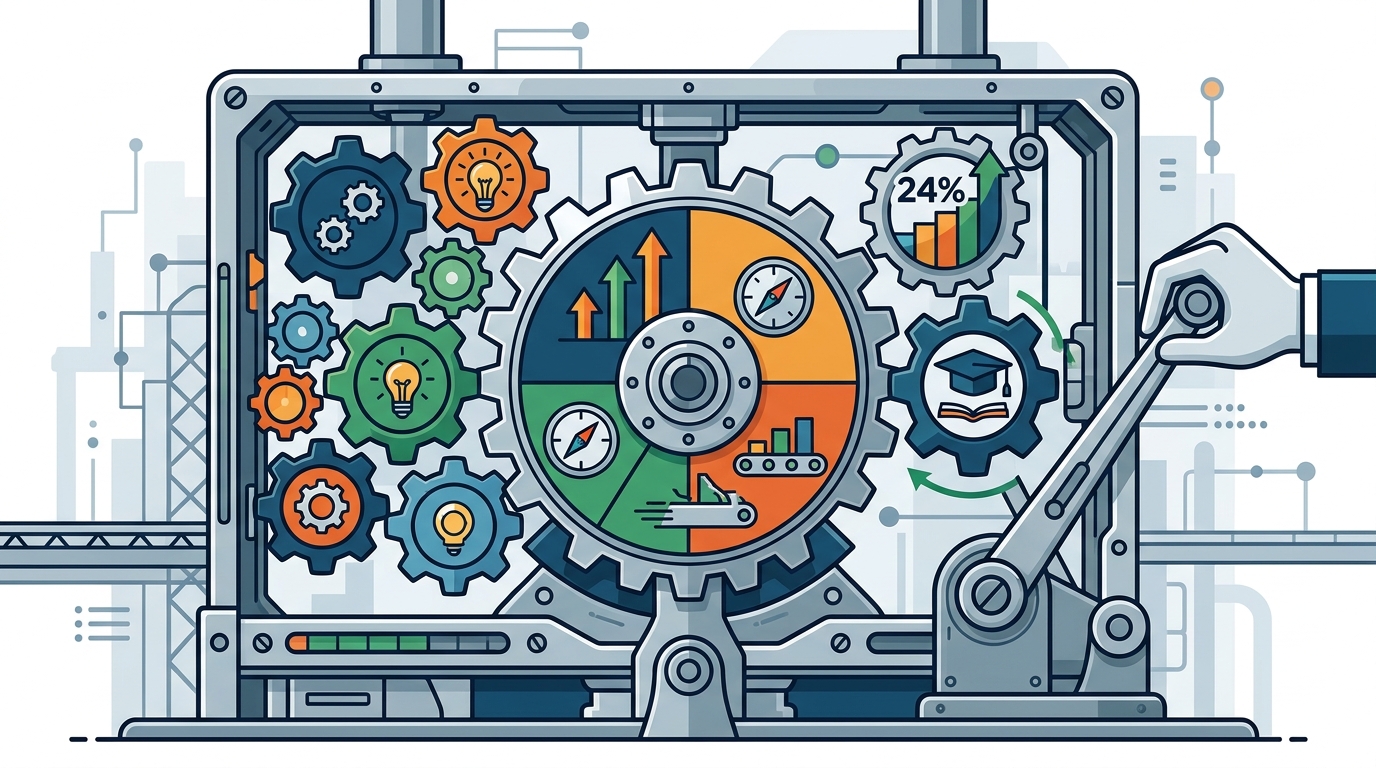
Organizations that tightly integrate their learning initiatives with core business objectives see a 24% increase in revenue growth compared to those that treat training as an isolated administrative task. This statistic highlights a critical shift in modern corporate strategy. Employee development is no longer just about compliance or skill acquisition. It is a direct lever for driving profitability, operational efficiency, and market competitiveness. When training programs are misaligned, companies waste resources on irrelevant content. When they are aligned, every hour spent in learning translates to measurable business outcomes.
Diagnose the Gap Between Current Skills and Business Goals
The first step in alignment is understanding where the business is going and where the workforce currently stands. Skills gap analysis is the systematic process of identifying the difference between current employee capabilities and the skills required to achieve organizational objectives. Without this diagnostic phase, training efforts are often guesswork.
Start by reviewing the company's strategic plan. If the goal is to expand into new markets, the sales team needs cross-cultural communication training. If the goal is to improve product quality, engineering teams need advanced certification programs. This direct mapping ensures that learning resources are directed toward high-impact areas. According to data from the Association for Talent Development, companies with a clear learning strategy are 46% less likely to fall behind competitors in terms of market share.
Conduct interviews with department heads to understand their specific pain points. Are they struggling with slow onboarding? Is customer churn high due to poor support skills? These operational realities should dictate the curriculum. For more insights on effective recruiting and training strategies, explore our blog resources on workforce development.
Designing Training Programs That Drive Revenue
Once the gaps are identified, the design phase must focus on applicability. Training content should mirror real-world scenarios that employees face daily. Contextual learning is an educational approach that embeds training within the actual workflow and environment where the skills are applied. This method reduces the transfer gap, ensuring that what is learned in a classroom is immediately usable on the job.
Consider the structure of your learning modules. Microlearning, which breaks content into small, focused bursts, has been shown to improve knowledge retention by up to 17%. This is particularly effective for busy professionals who cannot commit to lengthy seminars. Additionally, incorporating interactive elements such as simulations and role-playing exercises increases engagement. Research indicates that interactive training methods can boost performance by 20% compared to passive learning methods.
Aligning training with revenue goals also means focusing on soft skills. Leadership development, emotional intelligence, and conflict resolution are critical for management teams. These skills directly influence team productivity and employee retention. To see how our framework supports these outcomes, schedule a demo of our training alignment tools.
Measuring ROI and Business Impact
Alignment is meaningless without measurement. Companies must track key performance indicators (KPIs) that link learning activities to business results. Return on Investment (ROI) in training is calculated by comparing the monetary benefits of the training program to its total costs. This calculation helps justify the budget and demonstrates the value of the learning department to executive leadership.
Use the Kirkpatrick Model to evaluate training effectiveness across four levels:
| Level | Focus | Measurement Method |
|---|---|---|
| Reaction | Participant satisfaction | Post-training surveys |
| Learning | Knowledge acquisition | Pre- and post-assessments |
| Behavior | On-the-job application | Manager observations |
| Results | Business impact | Sales data, error rates, retention |
Focusing on Level 4 (Results) is crucial for alignment. If a sales training program does not lead to an increase in closed deals, it has failed its primary business objective. Regularly review these metrics to refine the program. For a deeper dive into evaluating training effectiveness, read our FAQ on training metrics.
Leveraging Technology for Scalable Learning
Technology plays a pivotal role in maintaining alignment at scale. Learning Management Systems (LMS) allow organizations to track progress, assign relevant content, and generate data-driven reports. A Learning Management System is a software application for the administration, documentation, tracking, reporting, and delivery of educational programs. It serves as the central hub for all training activities.
When selecting a technology stack, prioritize platforms that offer integration capabilities. The LMS should connect with HRIS (Human Resources Information Systems) to automatically update employee profiles and trigger training based on role changes. This automation ensures that training remains aligned with organizational structure changes in real time. Furthermore, analytics dashboards provide visibility into which departments are lagging and which are excelling.
Cloud-based solutions offer flexibility and accessibility, allowing remote and hybrid workers to access training from anywhere. This accessibility is critical for maintaining consistent training standards across geographically dispersed teams. To learn more about the technical infrastructure required for effective training, visit our about page for company background.
Building a Culture of Continuous Alignment
Training alignment is not a one-time project. It requires a cultural shift where learning is viewed as a continuous journey. Leaders must model this behavior by participating in training themselves and discussing learning outcomes in team meetings. Organizational culture is the collection of values, expectations, and practices that guide and inform the actions of all team members. When this culture supports learning, alignment becomes natural.
Encourage managers to have regular career development conversations with their direct reports. These discussions should link individual career goals with business needs. For example, if an employee wants to move into a leadership role, the manager can assign training that builds strategic thinking skills. This personalization increases engagement and ensures that training is relevant to the individual's growth path.
Recognize and reward employees who apply their training to achieve business goals. Public acknowledgment reinforces the connection between learning and performance. For more strategies on fostering this culture, check out our legal and compliance guidelines for training documentation.
Key Takeaways
- Companies with aligned learning strategies see a 24% increase in revenue growth.
- Skills gap analysis is the foundational step in identifying training needs.
- Contextual learning improves knowledge retention by mirroring real-world scenarios.
- Microlearning can boost knowledge retention by up to 17%.
- Interactive training methods can boost performance by 20%.
- ROI calculation is essential for justifying training budgets to executives.
- Integration between LMS and HRIS ensures real-time alignment with organizational changes.
Frequently Asked Questions
How do you measure the success of employee training?
Success is measured by tracking KPIs such as increased sales, reduced error rates, and improved employee retention. The Kirkpatrick Model provides a structured framework for evaluating these outcomes across four levels.
What is the most effective training format for busy professionals?
Microlearning is often the most effective format for busy professionals. It breaks complex topics into small, manageable units that can be completed in short bursts, fitting easily into a busy schedule.
How often should training programs be updated?
Training programs should be reviewed and updated at least annually or whenever there are significant changes in business strategy, technology, or regulatory requirements. This ensures continued alignment with current goals.
Why is leadership buy-in critical for training alignment?
Leadership buy-in ensures that training is prioritized and resourced. When leaders model learning behaviors and connect training to business outcomes, it creates a culture where alignment is valued and sustained.
Can small businesses afford comprehensive training programs?
Yes, small businesses can leverage cost-effective digital tools and microlearning strategies to deliver high-impact training without the budget of large enterprises. Focus on high-ROI activities first.
What role does technology play in training alignment?
Technology, particularly LMS platforms, provides the data and infrastructure needed to track progress, automate assignments, and measure impact. It ensures that training is scalable and consistent.
How do you handle resistance to new training initiatives?
Address resistance by clearly communicating the benefits of the training to both the individual and the organization. Involve employees in the design process to increase ownership and relevance.
Ready to Align Your Training with Business Goals?
Stop wasting resources on irrelevant training. Start driving measurable business outcomes with a strategic approach. Book a demo today to see how The Wise Skill can help you build a training program that truly works. Visit our FAQ page for more details on our services.