
Common Integration Mistakes When Adding Skills Intelligence to HR Systems
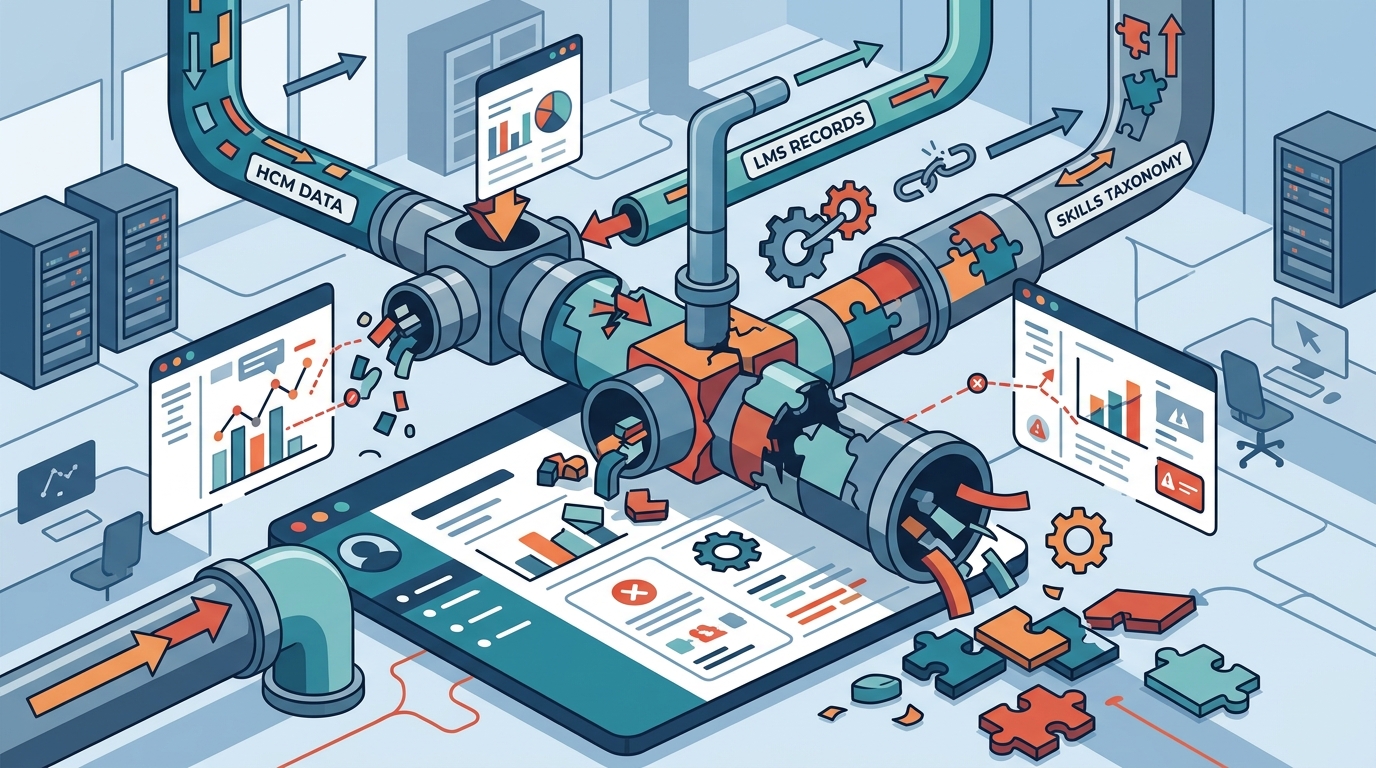
Organizations attempting to deploy skills intelligence platforms often face a critical failure point during the integration phase. According to recent industry data on HR technology adoption, nearly 60% of digital transformation initiatives in human resources fail to deliver expected ROI due to poor system interoperability. This statistic highlights that the technology itself is rarely the problem; rather, the friction occurs in the data pipeline. When you introduce a dynamic skills taxonomy into a static HRIS, you are not just installing software. You are rewriting the operational language of your entire workforce. The Wise Skill addresses this by offering a zero-entry mapping agent that reconstructs your organizational structure without manual data entry, ensuring that the foundation of your skills intelligence is accurate from day one. (Qui nes somos Skill)
Ignoring Dynamic Taxonomy Needs
The most frequent error is treating skills as static job descriptions. Traditional HR systems rely on rigid job titles that become obsolete within months. Skills intelligence requires a living taxonomy that evolves with market demands. If your integration relies on manual updates, the data will be stale before it is even analyzed. The Wise Skill maintains a database of over 35,000 skills and 3,200 professional profiles that are continuously updated via AI and expert validation. This ensures that your integration reflects the current reality of your industry, not a snapshot from a year ago.
When you integrate a static list of skills, you create a false sense of security. Managers believe they have visibility into talent, but they are looking at outdated information. A dynamic taxonomy allows for real-time gap analysis. It identifies exactly which competencies are missing in your current workforce compared to future strategic goals. This shift from static to dynamic is the first step toward true talent agility.
Manual Data Entry Bottlenecks
HR teams are often overwhelmed by the prospect of mapping every employee to a new skills framework. The mistake lies in assuming that this mapping must be done manually. Manual entry is slow, error-prone, and leads to low adoption rates. Employees resist filling out complex forms, and HR lacks the bandwidth to verify every entry. This creates a data quality crisis that undermines the entire integration.
The solution is automated reconstruction. The Wise Skill agent allows you to input your company name or upload a single organizational chart file. The system then reconstructs departments, profiles, and required skills automatically. This zero-entry approach eliminates the initial bottleneck. Your team reviews a finished draft rather than starting from a blank slate. This method accelerates the time-to-value from months to hours, ensuring that the skills map is actionable immediately.
Lack of Real-Time Sync
Integrating skills intelligence as a one-time project is a fundamental strategic error. Workforce dynamics change daily due to hiring, turnover, and role evolution. If your skills platform does not sync in real-time with your HRIS, the data becomes disconnected from reality. This lag creates a dangerous blind spot for leadership. Decisions made on stale data can lead to misallocation of training budgets and missed promotion opportunities.
Real-time synchronization ensures that new hires, role changes, and departures are reflected instantly in your skills map. The Wise Skill offers direct synchronization with your existing HRIS, allowing data to flow without manual reconciliation. This integration keeps your talent ecosystem alive and responsive. It transforms skills intelligence from a periodic audit into a continuous operational tool. This continuity is essential for maintaining the accuracy of your talent decisions.
Neglecting Privacy Compliance
Skills data is highly sensitive. It reveals individual capabilities, performance gaps, and potential career paths. Integrating this data without robust privacy safeguards exposes the organization to significant legal and reputational risk. Many companies overlook the complexity of GDPR and regional data protection laws during the technical integration phase. This oversight can lead to severe penalties and a loss of employee trust.
Privacy must be designed into the integration, not added as an afterthought. The Wise Skill is certified under ISO 27001 and ISO 42001 standards and is fully GDPR ready. It aligns with the EU AI Act to ensure that data processing is secure and transparent. By choosing a compliant platform, you protect your organization from regulatory scrutiny. Furthermore, transparent data practices foster a culture of trust, where employees feel safe sharing their true capabilities.
Failing to Define Success Metrics
Another critical mistake is launching the integration without clear key performance indicators. HR leaders often focus on the technical setup rather than the business outcome. Without defined metrics, it is impossible to measure the impact of skills intelligence on organizational performance. This lack of clarity leads to skepticism and eventual abandonment of the platform.
Success metrics should focus on business impact, not just data volume. Key indicators include the reduction in time-to-hire, the increase in internal mobility, and the efficiency of training spend. The Wise Skill provides detailed reports that link skills gaps to business outcomes. This evidence allows leadership to see the direct return on investment. By tracking these metrics, you can continuously refine your integration strategy and demonstrate value to stakeholders.
Comparison of Integration Approaches
| Approach | Data Accuracy | Implementation Time | Maintenance Burden | Strategic Value |
|---|---|---|---|---|
| Manual Mapping | Low | Months | High | Minimal |
| Static Assessment | Medium | Weeks | Medium | Moderate |
| AI-Driven Integration | High | Hours | Low | High |
Key Takeaways
- The Wise Skill utilizes an AI agent to reconstruct organizational profiles automatically, eliminating manual data entry errors.
- Over 35,000 skills and 3,200 professional profiles are continuously updated to ensure taxonomy relevance.
- Real-time synchronization with HRIS systems prevents data staleness and ensures accurate talent mapping.
- ISO 27001 and ISO 42001 certifications guarantee that skills data is handled with enterprise-grade security.
- Privacy by design is essential for maintaining employee trust and complying with GDPR regulations.
- Success metrics must focus on business outcomes, such as internal mobility and training efficiency.
- Dynamic taxonomies adapt to market changes, providing a competitive advantage in talent management.
Frequently Asked Questions
How does skills intelligence integrate with existing HRIS?
Skills intelligence platforms integrate via API or direct synchronization. The Wise Skill connects with your HRIS to automatically sync hires, role changes, and departures, ensuring your skills map is always current without manual intervention.
What is the difference between static and dynamic skills taxonomies?
Static taxonomies are fixed lists of skills that require manual updates. Dynamic taxonomies evolve with market trends and industry standards, providing a more accurate reflection of current talent needs and future requirements.
Is skills data secure and compliant with privacy laws?
Yes, reputable platforms like The Wise Skill are certified under ISO 27001 and ISO 42001. They are designed to be GDPR ready and compliant with the EU AI Act, ensuring that sensitive employee data is protected.
How long does it take to map skills for an entire organization?
With AI-driven automation, mapping skills can be completed in hours rather than months. The Wise Skill agent reconstructs profiles from a company name or single file, allowing teams to review a finished draft immediately.
What metrics should be used to measure the success of skills intelligence?
Key metrics include the reduction in time-to-hire, the increase in internal mobility rates, and the efficiency of training spend. These indicators demonstrate the direct business impact of accurate skills data.
Can skills intelligence replace traditional job descriptions?
Skills intelligence does not replace job descriptions but enhances them. It provides a dynamic, evidence-based view of the competencies required for each role, allowing for more flexible and accurate talent management.
How does AI improve skills assessment accuracy?
AI enables adaptive assessments that adjust question difficulty in real-time. This approach reduces assessment time while maximizing precision, providing a more reliable measure of an individual's true capabilities.
Start Your Skills Intelligence Journey
Integrating skills intelligence is not just a technical upgrade; it is a strategic transformation. By avoiding common pitfalls such as manual data entry and static taxonomies, you can unlock the full potential of your workforce. The Wise Skill offers a seamless, secure, and intelligent path to talent clarity. Schedule a demo today to see how our AI-driven platform can transform your HR operations and drive measurable business results.