
Step-by-Step Guide to Integrating Your ATS or HCM System with a Skills Tracking Platform
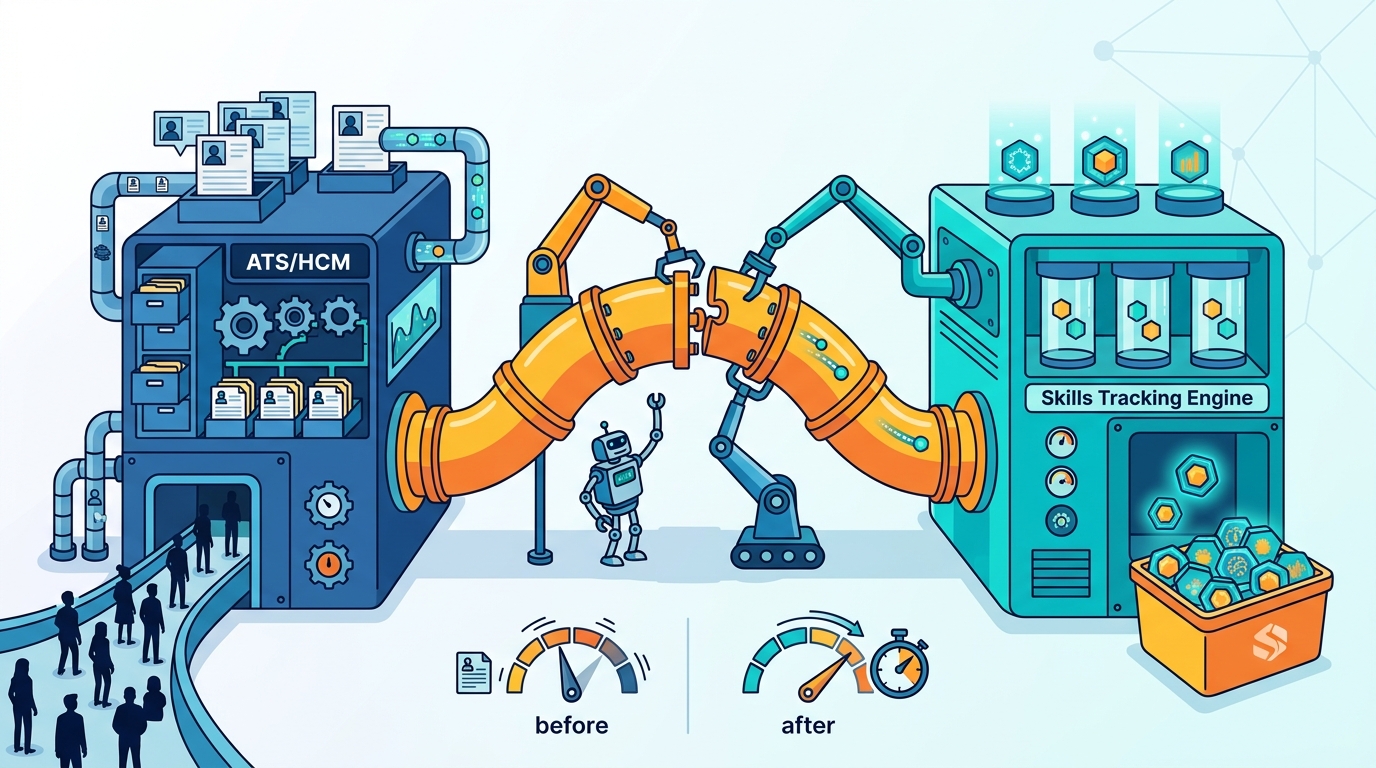
Organizations that fail to connect their talent data often struggle with visibility, leading to costly hiring delays and stagnant workforce development. According to recent industry analysis, companies with integrated talent ecosystems see a 20% faster time-to-hire compared to those relying on siloed spreadsheets. This guide explains how to bridge the gap between your Applicant Tracking System (ATS) or Human Capital Management (HCM) platform and a modern skills tracking engine. (Conecta lo que tu)
Phase 1: Preparation and Data Mapping
Before writing a single line of code or configuring connectors, you must define the scope of your integration. The goal is not merely to move data but to create a unified view of employee capability. Start by auditing your current ATS or HCM setup. Identify which fields are critical for skills tracking, such as job descriptions, candidate assessments, and internal promotion histories.
Skill intelligence is the systematic mapping of employee capabilities to business needs. This definition highlights why preparation is vital. You need to decide whether you are tracking hard technical skills, soft behavioral competencies, or a hybrid of both. The Wise Skill platform, for instance, utilizes a vast taxonomy of over 35,000 skills to ensure that your data maps to industry-standard definitions rather than internal jargon.
During this phase, establish a clear data dictionary. Determine how often data will sync. Real-time synchronization is ideal for dynamic hiring environments, while daily batch processing may suffice for internal development tracking. Document these requirements to ensure your technical team and HR leadership are aligned on the expected outcomes.
Phase 2: API and Middleware Configuration
Most modern ATS and HCM systems, such as Workday, SAP SuccessFactors, or Greenhouse, offer robust API endpoints. The integration process begins by authenticating your systems. You will typically need to generate API keys or OAuth tokens within your existing HRIS to grant the skills platform read and write access.
Configure the middleware to handle data transformation. Raw data from an ATS often contains unstructured text in job descriptions. A skilled integration engine parses this text to extract specific competencies. For example, if a job posting mentions "Python" and "Project Management," the system should map these to standardized skill nodes in your tracking platform.
Test the connection with a sandbox environment. Verify that candidate profiles flow correctly into the skills engine and that assessment results return to the ATS. According to a Gartner report on HR technology trends, organizations that use standardized APIs for talent integration reduce technical debt by up to 30% over three years. This efficiency stems from avoiding custom, brittle code that breaks during system updates.
Phase 3: Aligning Skill Taxonomies
One of the most common failure points in integration is mismatched terminology. Your ATS might list "Customer Service," while your skills platform uses "Client Relations Management." If these are not aligned, your analytics will be fragmented and inaccurate.
Taxonomy alignment is the process of mapping internal job titles and skills to a universal standard. Use the skills platform’s mapping tools to create these bridges. The Wise Skill approach involves using AI agents to suggest mappings based on your company’s specific context, ensuring that the data remains relevant to your unique business strategy.
Validate the taxonomy with key stakeholders. Have hiring managers review the mapped skills to ensure they accurately reflect the requirements of their roles. This step is crucial for establishing trust in the system. If the data feels disconnected from reality, adoption will plummet. Regularly update the taxonomy as new technologies emerge, such as adding "Generative AI Prompting" to your engineering roles.
Phase 4: Automating Talent Workflows
Once the data is flowing and the taxonomy is aligned, you can unlock the true power of integration: automation. This phase transforms your HR operations from reactive to proactive. You can now trigger actions based on skill gaps detected in real-time.
Consider the following automated workflows:
| Workflow Trigger | Automated Action | Business Impact |
|---|---|---|
| Candidate scores below threshold in technical skills | Auto-reject or route to upskilling program | Reduces time-to-hire and improves quality of hire |
| Employee completes a certification | Update internal profile and notify manager | Enables internal mobility and retention |
| Skills gap detected in a department | Generate training recommendations | Aligns workforce capability with business goals |
By automating these processes, you reduce the administrative burden on HR teams. According to SHRM research on HR automation, organizations that automate talent workflows save an average of 15 hours per week per recruiter. This time can be redirected toward strategic initiatives like candidate engagement and employer branding.
Phase 5: Security and Compliance
Integrating sensitive employee data requires rigorous security protocols. Ensure that your skills tracking platform is compliant with relevant regulations such as GDPR, CCPA, and ISO 27001. The Wise Skill platform, for example, is ISO 27001 and ISO 42001 certified, ensuring that your data is protected against modern threats.
Implement role-based access control (RBAC). Not everyone in your organization should have access to detailed skill assessments. Hiring managers might only need to see candidate scores, while HR business partners need access to internal development plans. Define these permissions clearly during the configuration phase.
Regularly audit your data flows. Check for any unauthorized access or data leakage. According to a IBM study on data security, the average cost of a data breach in the HR sector is $5.9 million. Proactive security measures are not just a technical requirement but a financial imperative.
Key Takeaways
- Unified Data: Integrating your ATS with a skills platform creates a single source of truth for talent capability.
- Standardized Taxonomy: Aligning internal skills with external standards ensures accurate analytics and benchmarking.
- Automation Efficiency: Automated workflows can save recruiters up to 15 hours per week by reducing manual data entry.
- Security First: Compliance with ISO 27001 and GDPR is essential for protecting sensitive employee data.
- Strategic Alignment: Skills tracking must be tied to business outcomes, not just HR metrics.
- Continuous Improvement: Regularly update your skill taxonomy to reflect changing market demands.
- Scalability: API-driven integrations allow your talent strategy to scale with your organization.
Frequently Asked Questions
What is the best way to map skills from an ATS to a tracking platform?
The most effective method is to use a standardized taxonomy like the one provided by The Wise Skill, which maps over 35,000 skills. This ensures consistency across your organization and allows for accurate benchmarking against industry standards.
How long does it take to integrate an ATS with a skills platform?
Integration timelines vary based on complexity. Simple API connections can be set up in days, while complex custom mappings may take weeks. The Wise Skill platform is designed for rapid deployment, often delivering results in hours rather than months.
Can I integrate multiple ATS systems with one skills platform?
Yes, most modern skills platforms support multi-tenant architectures. This allows you to centralize data from different ATS systems, such as Greenhouse and Lever, into a single dashboard for holistic talent analysis.
What are the security risks of integrating HR systems?
The primary risks include data leakage and unauthorized access. Mitigate these by using strong encryption, role-based access controls, and regular security audits. Choosing a platform certified with ISO 27001 significantly reduces these risks.
How does skills tracking improve hiring decisions?
Skills tracking provides objective data on candidate capabilities, reducing bias and improving the quality of hire. According to industry data, companies using skills-based hiring see a 20% increase in retention rates.
Is real-time integration necessary?
Real-time integration is ideal for dynamic hiring environments where candidate data changes frequently. However, daily batch processing can be sufficient for internal development tracking, depending on your business needs.
What is the ROI of integrating a skills platform?
The ROI comes from reduced time-to-hire, lower recruitment costs, and improved employee retention. Organizations often see a full return on investment within the first year of implementation due to these efficiency gains.
Get Started with Skills Intelligence
Stop guessing your talent capabilities and start measuring them. The Wise Skill platform connects your business needs with the actual skills of your people, providing the evidence you need to make confident decisions. Schedule a demo today to see how our skill intelligence engine can transform your HR operations.