
Organizations that fail to align their workforce capabilities with evolving market demands face significant operational risks. According to recent industry analyses, companies that proactively manage talent gaps see a 20% higher retention rate than those relying on reactive hiring. This guide details the systematic approach to identifying those gaps using skill intelligence frameworks. (Qui nes somos Skill)
Defining Market Demand
The first step in closing the talent divide is understanding what the market actually requires. Skill demand shifts rapidly due to technological advancements and economic changes. You must move beyond static job descriptions to dynamic skill profiles. (Conecta lo que tu)
Market demand is not a fixed list of requirements. It is a fluid set of competencies that evolve with industry trends. For example, the rise of generative AI has created immediate demand for prompt engineering and data literacy roles. Organizations must monitor these shifts continuously. (Skill Intelligence Blog Insights)
To define your specific market needs, analyze industry reports and competitor benchmarks. Identify the top five skills that are growing in demand within your sector. This baseline allows you to prioritize which gaps are critical versus which are merely nice-to-have. (Identificar Gaps de Skills)
Mapping Current Talent
Once you know what the market wants, you must understand what your organization currently possesses. Traditional HR methods often rely on self-reported skills, which are frequently inaccurate. A robust talent mapping process uses objective data to reveal the true state of your workforce.
Talent mapping is the systematic process of cataloging the skills, competencies, and potential of every employee in your organization. It transforms intuition into evidence. By creating a living map of your internal talent, you can see exactly where your strengths lie and where your vulnerabilities are.
Start by integrating your HRIS data with skill assessment tools. This integration ensures that your talent map is always up to date. It also allows for real-time updates as employees complete training or take on new projects. The goal is to have a single source of truth for all talent-related decisions.
Conducting the Gap Analysis
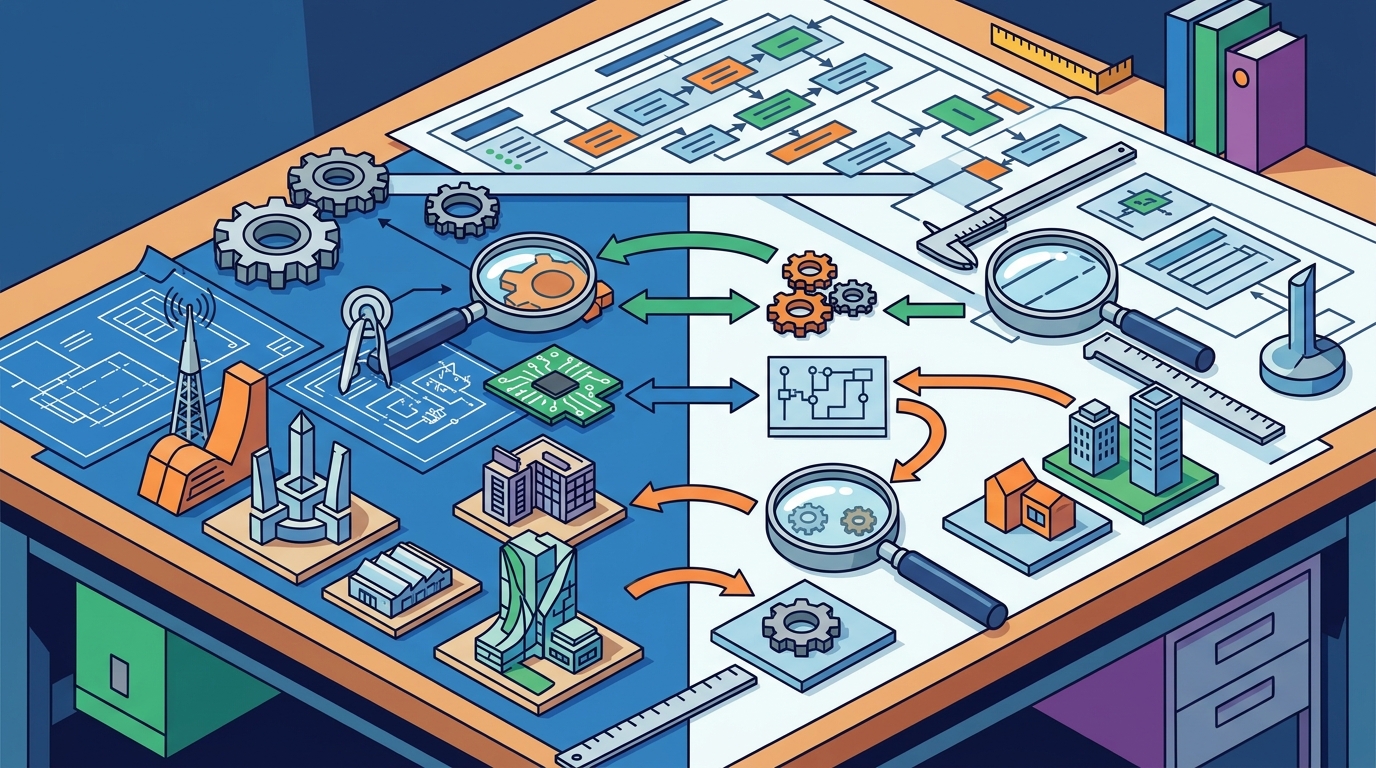
With both the market demand and current talent profiles defined, you can now perform the gap analysis. This process involves comparing the two datasets to identify discrepancies. The gaps represent the areas where your organization is underprepared.
A skills gap is the difference between the skills employees currently have and the skills they need to perform their jobs effectively. These gaps can be technical, such as a lack of coding proficiency, or soft skills, such as leadership capabilities.
Use a structured framework to categorize these gaps. Classify them by urgency and impact. High-impact, urgent gaps should be addressed immediately through targeted training or strategic hiring. Low-impact, long-term gaps can be addressed through gradual upskilling initiatives.
Leveraging AI Assessment
Manual gap analysis is time-consuming and prone to bias. Leveraging AI-driven assessment tools provides a more accurate and scalable solution. These tools use adaptive testing to measure employee capabilities with high precision.
AI assessment tools evaluate employees against a vast database of validated skills. They adapt the difficulty of questions in real-time to pinpoint the exact level of proficiency. This method eliminates the guesswork often associated with traditional performance reviews.
At The Wise Skill, we utilize a fleet of specialized agents to map profiles and measure real skill levels. Our platform compares your internal data against over 35,000 skills and 3,200 professional profiles. This benchmarking ensures that your gap analysis is aligned with global industry standards.
Strategic Reskilling
Identifying the gaps is only half the battle. The final step is closing them through strategic reskilling and upskilling. Reskilling involves training employees for new roles, while upskilling enhances their current capabilities.
Develop personalized learning paths for each employee based on their specific gaps. Use the data from your assessment to recommend relevant courses and projects. This targeted approach ensures that training investments yield a measurable return.
Monitor the progress of your reskilling initiatives closely. Use continuous feedback loops to adjust the training programs as needed. This agile approach ensures that your workforce remains aligned with market demands at all times.
Key Takeaways
- Market Alignment: Regularly update your skill demand profiles to reflect industry changes.
- Objective Data: Use AI-driven assessments to eliminate bias in talent mapping.
- Gap Classification: Prioritize gaps based on business impact and urgency.
- Scalability: Leverage automated tools to handle large-scale skill evaluations.
- Continuous Learning: Treat reskilling as an ongoing process, not a one-time event.
- Benchmarking: Compare your skills against global standards to ensure competitiveness.
- ROI Focus: Measure the impact of training on business outcomes.
Frequently Asked Questions
How often should skill gap analysis be performed?
Skill gap analysis should be conducted at least annually, or whenever there is a significant shift in market demand or company strategy. Continuous monitoring is ideal for dynamic industries.
What is the difference between reskilling and upskilling?
Reskilling prepares employees for new roles, while upskilling enhances their current job capabilities. Both are essential for closing talent gaps effectively.
How can AI improve skill gap analysis?
AI provides objective, data-driven insights into employee capabilities, reducing bias and increasing the speed and accuracy of the assessment process.
What are the most common skills gaps in 2026?
Common gaps include digital literacy, data analysis, and adaptive leadership. The rapid adoption of AI technologies has intensified the demand for these skills.
How do you measure the success of reskilling programs?
Success is measured by tracking improvements in employee performance, retention rates, and the ability to fill internal vacancies with qualified candidates.
Can small businesses conduct skill gap analysis?
Yes, small businesses can use scalable, cloud-based assessment tools to identify and address skill gaps without significant overhead costs.
What role does leadership play in closing skill gaps?
Leadership must champion the culture of continuous learning and allocate resources for training and development initiatives.
Next Steps
Ready to transform your talent management strategy? Discover how The Wise Skill can help you map skills, evaluate your team, and detect gaps in minutes. Schedule a free demo today to see our platform in action.