
Step-by-Step Guide to Using Skills Intelligence Platforms for Talent Acquisition and Skills Gap Closure
The global workforce is undergoing a fundamental shift where technical skills are becoming obsolete at an unprecedented rate. According to recent industry analysis, the half-life of learned professional skills is now approximately five years, forcing organizations to prioritize continuous learning over static hiring. This rapid evolution means that traditional resume-based recruitment is no longer sufficient for identifying high-potential candidates or closing critical capability gaps within existing teams. Skills intelligence platforms have emerged as the definitive solution to this challenge, offering data-driven visibility into the actual capabilities of your workforce. (Qui nes somos Skill)
Understanding Skills Intelligence Platforms
Skills intelligence is the systematic process of identifying, measuring, and managing the capabilities that drive business performance. Unlike traditional human resources metrics that rely on job titles or years of experience, skills intelligence focuses on the specific tasks and competencies required to execute strategic objectives. This approach transforms talent management from an administrative function into a strategic asset.
At its core, a skills intelligence platform acts as a dynamic bridge between business strategy and workforce capability. It utilizes advanced algorithms to map existing employee skills against future business needs. This allows organizations to see exactly where they have surplus capacity and where they face critical shortages. The result is a more agile, resilient, and future-ready organization.
By adopting this methodology, companies can reduce time-to-hire by focusing on transferable skills rather than exact job matches. Furthermore, it enhances employee retention by providing clear, data-backed pathways for career development. The platform does not just report on the past; it predicts future needs and prescribes actions to meet them.
Step 1: Strategic Skills Mapping
The foundation of any successful skills intelligence initiative is accurate skills mapping. This step involves creating a comprehensive inventory of the skills currently present in your organization and defining the skills required for future roles. Without this baseline, any subsequent analysis will be flawed.
Automated Taxonomy Construction
Manual skills mapping is prone to error and bias. Modern platforms leverage artificial intelligence to automatically construct a skills taxonomy based on your organization's structure. By integrating with your HRIS or uploading organizational data, the system can reconstruct departments and roles in minutes. This eliminates the need for manual data entry and ensures consistency across the enterprise.
The platform analyzes job descriptions, internal mobility history, and industry benchmarks to propose a relevant set of skills. This proposed taxonomy is then reviewed and validated by HR leaders and department heads. This collaborative approach ensures that the skills map reflects the reality of the work being done, not just the theoretical requirements of a job title.
Defining Role Requirements
Once the taxonomy is established, the next phase is defining the specific skills required for each role. This involves breaking down jobs into their constituent tasks and identifying the critical competencies for each. For example, a software engineer role might require skills in coding, project management, and cloud architecture. The platform helps quantify the proficiency level required for each skill, creating a clear profile for both current and future roles.
This detailed mapping creates a common language for talent management. It allows HR, hiring managers, and employees to speak the same language when discussing capabilities. This clarity is essential for effective communication and decision-making throughout the talent lifecycle.
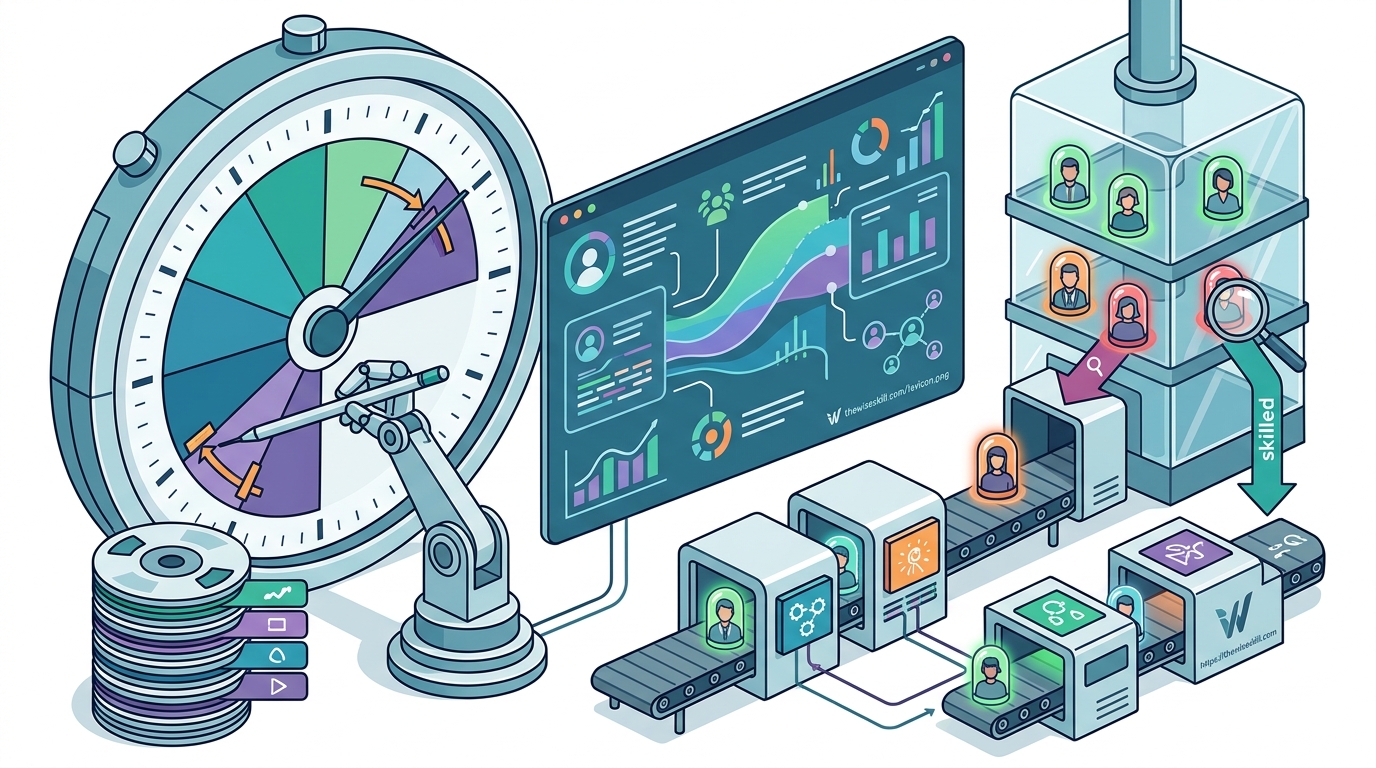
Step 2: Deploying Adaptive Evaluation Engines
With a clear skills map in place, the next step is to measure the actual capabilities of your workforce. Traditional assessments often rely on static questionnaires that are time-consuming and prone to bias. Skills intelligence platforms utilize adaptive evaluation engines to provide accurate, efficient, and fair assessments.
Adaptive Testing Methodology
Adaptive testing adjusts the difficulty of questions in real-time based on the candidate's or employee's previous answers. If a user answers correctly, the next question becomes more difficult. If they answer incorrectly, the next question becomes easier. This method allows the platform to pinpoint the exact proficiency level of each individual with far fewer questions than traditional tests.
This approach not only saves time but also provides a more accurate measurement of skill. It reduces the likelihood of candidates guessing or becoming bored with repetitive questions. The result is a reliable data point that can be used for promotion, hiring, or development decisions.
Integration with Existing Systems
For the evaluation engine to be effective, it must be seamlessly integrated with your existing HR technology stack. This includes your Learning Management System (LMS), Human Resources Information System (HRIS), and applicant tracking systems. Seamless integration ensures that assessment data flows automatically into your talent management workflows.
This integration allows for real-time updates to employee profiles. When an employee completes a course or assessment, their skills profile is updated immediately. This ensures that the skills map remains current and accurate, providing a reliable source of truth for decision-makers.
Step 3: Identifying and Prioritizing Skills Gaps
Once you have mapped your skills and measured your workforce's capabilities, you can identify gaps. A skills gap is the difference between the skills you have and the skills you need. Closing these gaps is critical for achieving business objectives and maintaining competitive advantage.
Quantifying the Gap
The platform compares the skills profile of each employee against the requirements of their role or a target role. This comparison highlights specific areas where the employee is proficient and areas where they lack the necessary skills. The gap is quantified in terms of proficiency levels, allowing for precise identification of needs.
For example, if a manager requires advanced data analysis skills but the current employee only has intermediate proficiency, the platform identifies this as a gap. It then suggests specific learning paths or resources to close that gap. This targeted approach ensures that training investments are directed where they will have the most impact.
Prioritizing by Business Impact
Not all skills gaps are created equal. Some gaps may have a significant impact on business performance, while others may be minor. The platform helps prioritize gaps based on their potential impact on business outcomes. This allows HR leaders to focus their resources on closing the most critical gaps first.
By prioritizing gaps, organizations can ensure that they are addressing the most urgent needs of the business. This strategic approach to talent management ensures that the workforce is aligned with business goals and is capable of driving growth.
Step 4: Executing Reskilling and Upskilling
Once gaps are identified, the next step is to close them through reskilling and upskilling. Reskilling involves teaching employees new skills for a different role, while upskilling involves enhancing their current skills. Both are essential for workforce agility.
Personalized Learning Paths
Skills intelligence platforms generate personalized learning paths for each employee based on their identified gaps. These paths recommend specific courses, modules, and resources that are tailored to the individual's needs and learning style. This personalized approach increases engagement and ensures that employees are learning the right skills.
The platform can also integrate with external learning providers to offer a wide range of content. This ensures that employees have access to the latest and most relevant learning materials. The platform tracks progress and updates the employee's skills profile as they complete their learning.
Measuring Learning ROI
To ensure that learning investments are effective, the platform measures the return on investment (ROI) of training programs. It tracks metrics such as completion rates, assessment scores, and subsequent performance improvements. This data allows HR leaders to evaluate the effectiveness of their learning initiatives and make data-driven decisions about future investments.
By measuring ROI, organizations can demonstrate the value of their learning programs to stakeholders. This helps to secure ongoing funding and support for talent development initiatives. It also ensures that learning is aligned with business outcomes and is driving tangible results.
Step 5: Optimizing Talent Acquisition
Skills intelligence is not just for internal talent management; it is also a powerful tool for talent acquisition. By focusing on skills rather than titles, organizations can find the best candidates for their roles, regardless of their background.
Skill-Based Hiring
Skill-based hiring involves assessing candidates based on their actual capabilities rather than their resume or degree. This approach reduces bias and expands the talent pool by including candidates who may have non-traditional backgrounds but possess the required skills. It also ensures that new hires are capable of performing the job from day one.
The platform can integrate with your applicant tracking system to assess candidates during the recruitment process. It can generate personalized assessments for each role, ensuring that all candidates are evaluated on the same criteria. This standardization improves the quality of hire and reduces time-to-fill.
Internal Mobility
Before looking externally, organizations should consider internal mobility. Skills intelligence platforms make it easy to identify internal candidates who have the skills for open roles. This not only fills positions faster but also boosts employee morale and retention by providing clear career paths.
By promoting from within, organizations can leverage their existing talent and reduce the costs associated with external hiring. It also helps to build a culture of continuous learning and development, as employees see that their skills are valued and rewarded.
Comparison of Skills Intelligence Approaches
| Approach | Primary Focus | Data Source | Best For | Implementation Speed |
|---|---|---|---|---|
| Traditional HRIS | Job Titles | Manual Entry | Basic Record Keeping | Slow |
| Resume Parsing | Keywords | Candidate Documents | Initial Screening | Medium |
| Skills Intelligence Platform | Competencies | Adaptive Assessment | Talent Strategy & Acquisition | Fast |
| Learning Management System | Course Completion | Learning Records | Training Delivery | Medium |
Key Takeaways
- Skills are the new currency: The half-life of professional skills is shrinking, making continuous measurement essential for staying competitive.
- Mapping is the foundation: Accurate skills mapping provides the baseline for all talent decisions, from hiring to development.
- Adaptive testing ensures accuracy: Adaptive evaluation engines provide precise skill measurements with fewer questions, reducing bias and fatigue.
- Gaps must be prioritized: Not all skills gaps are equal; prioritizing by business impact ensures resources are used effectively.
- Personalized learning drives engagement: Tailored learning paths based on individual gaps increase completion rates and skill acquisition.
- Skill-based hiring expands talent pools: Focusing on capabilities rather than titles reduces bias and finds the best candidates.
- Internal mobility boosts retention: Identifying internal talent for open roles improves morale and reduces hiring costs.
Frequently Asked Questions
What is a skills intelligence platform?
A skills intelligence platform is a technology solution that identifies, measures, and manages the capabilities of a workforce. It uses data and algorithms to map skills, identify gaps, and recommend actions for talent development and acquisition.
How does adaptive testing work?
Adaptive testing adjusts the difficulty of questions in real-time based on the user's responses. This method allows for a more accurate measurement of skill level with fewer questions, as it quickly homes in on the user's proficiency boundary.
Why is skills mapping important?
Skills mapping creates a comprehensive inventory of the skills present in an organization and defines the skills required for future roles. It provides a common language for talent management and ensures that decisions are based on data rather than intuition.
How can skills intelligence improve hiring?
Skills intelligence improves hiring by enabling skill-based assessments. This allows organizations to evaluate candidates based on their actual capabilities, reducing bias and ensuring that hires are capable of performing the job.
What is the difference between reskilling and upskilling?
Reskilling involves teaching employees new skills for a different role, while upskilling involves enhancing their current skills. Both are essential for workforce agility and closing skills gaps.
How do you measure the ROI of skills development?
ROI is measured by tracking metrics such as completion rates, assessment scores, and subsequent performance improvements. This data helps evaluate the effectiveness of learning initiatives and their impact on business outcomes.
Can skills intelligence platforms integrate with existing HR systems?
Yes, most modern skills intelligence platforms integrate seamlessly with existing HRIS, LMS, and applicant tracking systems. This ensures that data flows automatically and keeps talent profiles up to date.
Get Started with Skills Intelligence
Transform your talent strategy with data-driven insights. The Wise Skill provides the tools you need to map, measure, and manage your workforce's capabilities effectively. Schedule a free demo today to see how our platform can help you close skills gaps and optimize talent acquisition. Visit our homepage to learn more about our solutions.