
Organizations are facing a critical inflection point where traditional human resources metrics no longer suffice. According to recent industry analyses, companies that leverage skill-based intelligence see a 30% faster time-to-productivity for new hires compared to those relying on traditional credentialing. This shift is not merely about adopting new software; it is about fundamentally rethinking how talent is defined, measured, and developed in an era of rapid technological change. The Wise Skill provides the infrastructure for this transition, moving organizations away from guesswork toward evidence-based decision-making. (Qui nes somos Skill)
Understanding Skill Intelligence
Skill intelligence is the systematic measurement and application of employee capabilities to drive business outcomes. Unlike traditional HR models that rely on job titles or years of experience, skill intelligence focuses on the specific, measurable abilities an individual possesses. This approach allows organizations to align their workforce capabilities directly with strategic business goals.
The core of this methodology lies in the concept of a living taxonomy. A living taxonomy is a dynamic, continuously updated framework of skills that evolves with market demands and technological advancements. In the past, skill frameworks were static documents that became obsolete within months. Today, AI agents analyze market data to keep these frameworks current, ensuring that the skills being measured are relevant to the future state of the industry.
At The Wise Skill, we operate on the principle that talent should be measured, not intuited. This means replacing subjective performance reviews with objective data points. By connecting what a business needs with what its people actually know and can do, organizations can close the gap between strategy and execution. This is not just about hiring; it is about optimizing the entire talent lifecycle.
The Failure of Traditional HR Metrics
Traditional human resources practices often suffer from a lack of precision. Recruiters spend weeks filtering CVs, only to find that candidates lack the specific skills required for the role. Training programs are launched with high budgets, but their return on investment remains unclear because the baseline skills were never accurately defined. This inefficiency stems from a reliance on proxies for competence, such as degrees or previous job titles, rather than direct evidence of ability.
Consider the problem of internal mobility. When a role opens up, managers often promote based on tenure or perceived potential rather than demonstrated capability. This leads to the Peter Principle, where employees are promoted to their level of incompetence. By contrast, skill intelligence provides a clear view of who in the organization has the necessary skills to step into new roles, enabling fair and efficient internal mobility.
Furthermore, the integration of AI into the workplace has changed the nature of work itself. Tasks that were once manual are now automated, requiring employees to develop new, higher-order skills. Organizations that fail to track these changes risk having a workforce that is misaligned with the technological reality of their business. The Wise Skill addresses this by providing a platform that continuously maps these shifts, ensuring that talent strategies remain agile and responsive.
AI-Driven Assessment Mechanisms
At the heart of modern skill intelligence is adaptive assessment technology. Traditional tests are static, presenting the same questions to every candidate regardless of their performance. This approach is inefficient and often fails to accurately gauge high-level competence. Adaptive assessments, however, adjust in real-time based on the respondent's answers, providing a more precise measurement of skill level in less time.
The Wise Skill platform utilizes a fleet of specialized AI agents to manage this process. These agents do not just administer tests; they analyze the context of the business to propose relevant skill requirements. When an assessment is completed, the system generates a detailed report that highlights specific gaps and strengths. This data is not just for the HR department; it is shared with the employee, fostering a culture of continuous improvement.
One of the most significant advantages of this approach is the elimination of bias. By focusing on objective skill data, organizations can make more equitable hiring and promotion decisions. This is particularly important in diverse workplaces where unconscious bias can skew traditional evaluation methods. The data-driven nature of skill intelligence ensures that decisions are based on merit and capability, not on subjective impressions.
Additionally, the platform integrates with existing HRIS and LMS systems, ensuring that skill data flows seamlessly across the organization. This integration allows for a holistic view of talent, connecting assessment results with training outcomes and performance metrics. The result is a closed-loop system where learning directly impacts measurable business results.
Mapping Organizational Talent
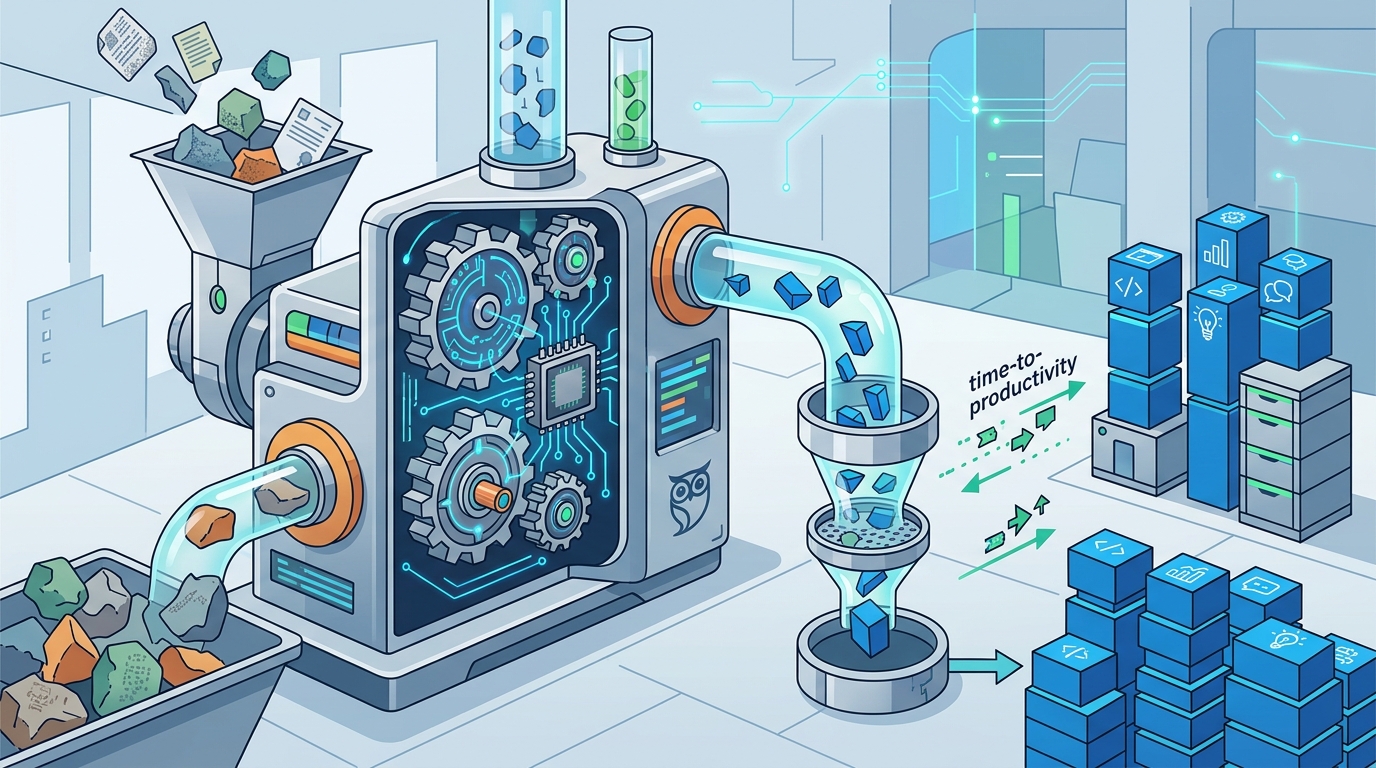
Talent mapping is the process of identifying and visualizing the skills present within an organization. This process transforms intuition into evidence, allowing leaders to see the true state of their workforce. The Wise Skill simplifies this by allowing users to input their company name or upload a single file, after which AI agents reconstruct departments, profiles, and required skills.
This automated mapping process saves hundreds of hours of manual work. Instead of starting with a blank slate, HR teams review a draft that has already been generated by the system. This allows them to focus on validation and refinement rather than data entry. The result is a comprehensive talent map that can be used for strategic planning, succession management, and workforce planning.
The map also serves as a common language for HR and business leaders. By defining skills in a standardized way, both parties can discuss talent issues with clarity and precision. This alignment is crucial for ensuring that talent strategies support business objectives. When everyone speaks the same language, decisions are faster and more effective.
Moreover, the talent map is not a static snapshot. It evolves as employees learn new skills and as the business changes its strategic direction. This dynamic nature ensures that the organization is always aware of its current capabilities and its future needs. The Wise Skill platform supports this evolution by continuously updating its taxonomy and assessment models.
Strategic Reskilling and Upskilling
As AI continues to automate routine tasks, the demand for human-centric skills such as critical thinking, creativity, and emotional intelligence is rising. Organizations must invest in reskilling and upskilling to prepare their workforce for this shift. Reskilling is the process of teaching employees new skills for a different job role, while upskilling involves enhancing their current skills to perform their existing role more effectively.
The Wise Skill platform identifies specific gaps in skills and generates personalized learning itineraries to address them. This targeted approach ensures that training investments are directed toward the most critical needs. Instead of generic training programs, employees receive content that is directly relevant to their role and career path.
This strategy also supports employee retention. When employees see a clear path for growth and development, they are more likely to stay with the organization. Skill intelligence provides this clarity by showing employees exactly what skills they need to acquire to advance their careers. This transparency builds trust and engagement.
Furthermore, the platform measures the impact of training initiatives. By comparing pre- and post-training assessments, organizations can determine the effectiveness of their learning programs. This data-driven approach allows for continuous improvement of the training strategy, ensuring that it delivers a tangible return on investment.
Key Takeaways
- Skill intelligence replaces subjective HR metrics with objective, data-driven measurements of employee capabilities.
- The Wise Skill platform utilizes over 35,000 skills and 3,200 professional profiles in its dynamic taxonomy.
- Adaptive assessments reduce testing time while increasing the accuracy of skill measurement.
- Automated talent mapping allows organizations to visualize their workforce capabilities in minutes, not months.
- Personalized reskilling itineraries ensure that training investments address specific skill gaps.
- Integration with existing HRIS and LMS systems ensures seamless data flow across the organization.
- ISO 27001 and ISO 42001 certifications guarantee the highest standards of data security and AI governance.
Frequently Asked Questions
How does The Wise Skill define skill intelligence?
Skill intelligence is the systematic measurement and application of employee capabilities to drive business outcomes, moving beyond traditional job titles to focus on specific, measurable abilities.
What is the difference between reskilling and upskilling?
Reskilling involves teaching employees new skills for a different job role, while upskilling focuses on enhancing their current skills to perform their existing role more effectively.
How does the platform ensure data privacy?
The Wise Skill is certified ISO 27001 and ISO 42001, GDPR ready, and aligned with the EU AI Act, ensuring that data protection is built into the product architecture from the start.
Can the platform integrate with my existing HR systems?
Yes, the platform integrates seamlessly with existing HRIS and LMS systems, allowing data to flow without silos or manual reconciliation.
How accurate are the AI-driven assessments?
The assessments use adaptive algorithms that adjust in real-time, providing high precision by stopping when statistical confidence is reached, similar to professional certification exams.
What is a living taxonomy?
A living taxonomy is a dynamic, continuously updated framework of skills that evolves with market demands and technological advancements, ensuring relevance.
How long does it take to map an organization's talent?
By inputting the company name or uploading a file, AI agents can reconstruct departments and skills in minutes, providing a draft for HR teams to review.
Next Steps
Transform your talent management strategy from intuition to evidence. The Wise Skill provides the tools to map, measure, and develop your workforce with precision. Schedule a free demo today to see how our AI agents can help you build a future-ready organization. Contact us to learn more about our skill mapping and talent evaluation solutions.