
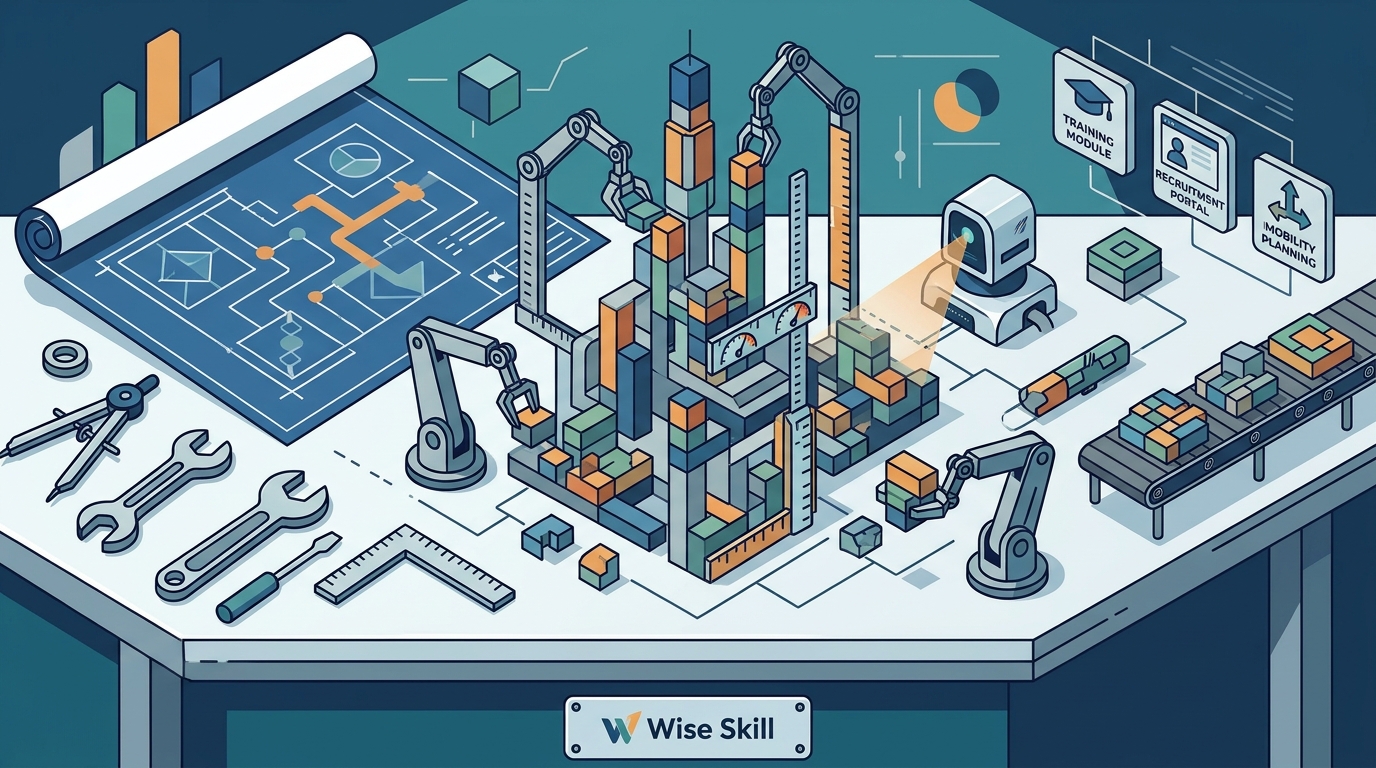
Implementing skills mapping transforms how your organization views talent by shifting focus from job titles to actual capabilities. The Wise Skill provides a structured framework to build this map, ensuring every role is defined by the specific skills required to deliver your strategy. This process creates a single source of truth for workforce planning, allowing leaders to make data-driven decisions about training, hiring, and internal mobility.
1. Translate Strategy into Roles and Skills
Start by defining what your business actually needs, not just what job titles say. The first step is to translate your strategic goals into specific roles and the skills required for each position. This creates a baseline of what success looks like for every job in your organization. By mapping these requirements, you establish a clear standard against which all talent can be measured.
2. Build a Comprehensive Skills Taxonomy
Use a standardized taxonomy to ensure consistency across the entire company. A skills taxonomy is a structured list of all the skills your organization recognizes and measures. The Wise Skill utilizes a taxonomy of over 35,000 skills to ensure that every capability is defined clearly and consistently. This prevents ambiguity and allows for accurate comparisons between different departments and roles.
3. Assess Current Skill Levels Objectively
Measure the real skill level of each employee using objective assessments. Self-perception is often inaccurate, so you need a method to verify actual capabilities. Adaptive assessments provide a precise measurement of each person's current skill level. This step reveals the gap between what your strategy demands and what your workforce can currently do.
4. Analyze the Gap Between Demand and Supply
Identify specific skill gaps to prioritize your workforce planning efforts. Once you have both the required skills and the current skill levels, you can calculate the gap for each role and individual. This analysis highlights critical shortages that could hinder your strategic goals. It also identifies over-skilled areas where talent might be underutilized or ready for new challenges.
5. Develop Personalized Learning Plans
6. Integrate with Existing HR Systems
Connect your skills map to your HRIS and ATS for seamless data flow. A skills map is most effective when it is integrated with your existing HR technology stack. The Wise Skill integrates with major HRIS and ATS platforms to ensure that skills data is always up to date and accessible. This integration eliminates data silos and allows for automated updates as employees progress or roles change.
7. Monitor Progress and Iterate Continuously
Treat skills mapping as a living process, not a one-time project. The labor market and your business strategy will evolve, so your skills map must adapt accordingly. Regularly reassess skill levels and update role requirements to reflect new technologies or market trends. This continuous monitoring ensures that your workforce remains aligned with your long-term strategic objectives.
Choosing the Right Approach
Frequently Asked Questions
How long does it take to implement skills mapping?
With The Wise Skill, you can generate your first skills map in minutes. Full value is typically realized within 15 days as the platform integrates with your existing HR systems and begins providing actionable insights.
What is a skills taxonomy?
A skills taxonomy is a standardized list of skills that defines the capabilities required for various roles within an organization. It ensures consistency in how skills are identified, measured, and compared across the company.
How does skills mapping differ from job descriptions?
Job descriptions outline responsibilities and duties, while skills mapping focuses on the specific capabilities required to perform those duties. Skills mapping provides a more granular and measurable view of talent, enabling better workforce planning and development.
Can skills mapping help with internal mobility?
Yes, skills mapping is essential for internal mobility. By understanding the skills each employee possesses, you can identify candidates for internal transfers or promotions who already have the required capabilities, reducing hiring costs and time-to-fill.
Is skills mapping a one-time project?
No, skills mapping is an ongoing process. As your business strategy and the labor market evolve, you must regularly update your skills map to ensure it remains relevant and actionable.