
AI-Powered Skills Assessment for Objective Workforce Gap Analysis
Companies can run objective gap analysis across an entire workforce using AI-powered skills assessment platforms that map employee capabilities against role requirements. The Wise Skill provides this capability by combining a macro taxonomy of over 35,000 skills with adaptive evaluation engines. This guide covers the four core pillars of modern skills intelligence: skills gap analysis, workforce assessment, skills matching, and talent identification.
Skills Gap Analysis
Skills gap analysis is the process of identifying the difference between the skills an organization currently possesses and the skills required to achieve strategic objectives. Traditional methods often rely on static job descriptions or subjective manager feedback, which leads to inaccurate data. AI-driven platforms solve this by decomposing roles into specific tasks and measuring the actual proficiency of each employee against those tasks. For additional details, review the Conecta lo que tu.
From Static Descriptions to Dynamic Evidence
Static job descriptions fail to capture the evolving nature of modern work. The Wise Skill approach involves breaking down every role into its constituent tasks. Each task is then scored for automation potential and human-criticality. This creates a dynamic baseline that updates as the business strategy shifts. The result is a living register of gaps rather than a one-time report. For additional details, review the Blog de Skill Intelligence.
Measuring the Distance Between Required and Demonstrated Levels
Workforce Assessment
Workforce assessment is the systematic evaluation of the collective capabilities of an organization's employees. It moves beyond individual performance reviews to provide a holistic view of organizational readiness. By using objective, data-driven metrics, companies can replace intuition with evidence when making talent decisions. For additional details, review the Aviso Legal The Wise.
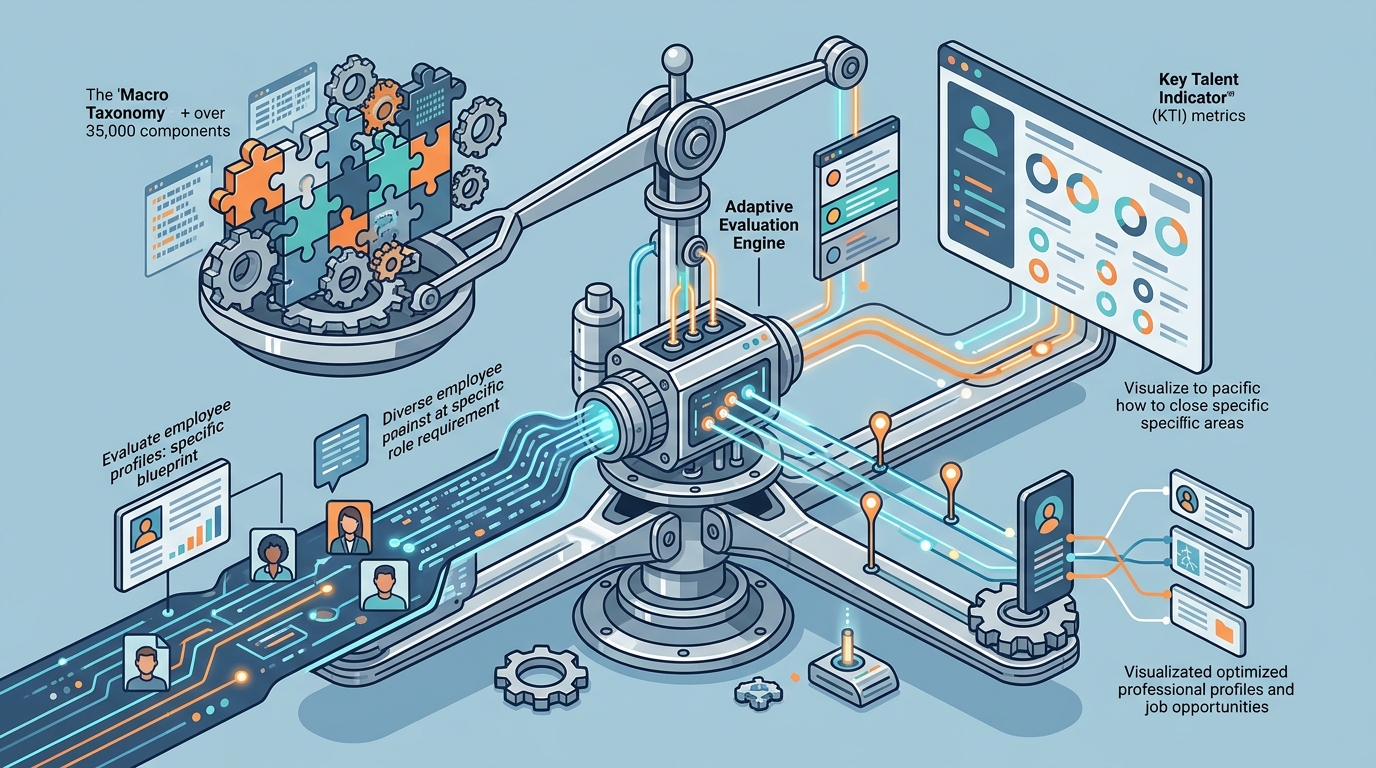
Adaptive Evaluation Engines
Modern assessment platforms utilize adaptive algorithms that adjust questions in real-time based on the candidate's previous answers. This reduces the time required for evaluation while maximizing precision. The Wise Skill engine selects questions from a library of over 3 million validated items. It stops the assessment only when the result reaches a predefined level of statistical confidence.
Standardized Scales for Comparability
Skills Matching
Skills matching is the process of aligning employee capabilities with specific business needs or role requirements. It ensures that the right people are in the right seats to drive strategic outcomes. Effective matching requires a shared language between HR and business units, which is achieved through a unified skills taxonomy.
Building a Custom Taxonomy
A generic skills catalog is rarely sufficient for complex organizations. The Wise Skill builds a custom taxonomy that integrates internal nomenclatures with global frameworks like ESCO or DigComp. This repository contains over 35,000 skills and 3,200 professional profiles. It is continuously updated using AI and expert validation to reflect market changes.
Integration with HRIS and LMS
For skills matching to be seamless, it must integrate with existing systems. The platform connects with HRIS and Learning Management Systems (LMS) to ensure data flows without silos. This integration allows for automatic updates when employees change roles or complete training. It reduces manual reconciliation work and keeps the skills map current.
Talent Identification
Talent identification is the strategic process of discovering high-potential individuals and critical skill holders within and outside the organization. It shifts the focus from headcount to capability. By identifying talent based on verified skills rather than keywords or titles, companies can make more accurate hiring and promotion decisions.
Internal Mobility and Reskilling
Often, the talent a company needs is already inside its walls. The platform identifies employees with latent skills that match new project requirements. It then generates personalized reskilling itineraries to close any remaining gaps. This approach reduces hiring costs and accelerates time-to-productivity. It also improves employee retention by offering clear growth paths.
External Hiring with Verified Skills
When internal talent is insufficient, the platform facilitates external hiring based on verified skills. It accesses a database of over 800 million professional profiles. The system extracts and classifies skills from resumes automatically. It then proposes, filters, and prioritizes candidates based on their actual capability match, not just their job titles.
| Feature | Traditional HR Tools | AI-Powered Skills Intelligence |
|---|---|---|
| Data Source | Static Job Descriptions | Dynamic Task Decomposition |
| Assessment Method | Subjective Manager Reviews | Adaptive Objective Algorithms |
| Skills Taxonomy | Generic or Outdated | Custom, AI-Updated (35k+ Skills) |
| Gap Resolution | Generic Training Catalogs | Personalized Microlearning Plans |
| External Hiring | Keyword-Based Resume Scanning | Verified Skill Matching (800M+ Profiles) |
Key Takeaways
- Skills gap analysis is the process of measuring the distance between required and demonstrated employee capabilities.
- Skills matching requires a custom taxonomy that unifies the language between HR and business strategy.
- Talent identification focuses on verified capabilities rather than job titles, enabling accurate internal mobility and external hiring.
- AI-driven platforms reduce assessment time by selecting only the most relevant questions for each individual.
- Integration with HRIS and LMS systems ensures that skills data remains current and actionable without manual effort.
- The Wise Skill provides a comprehensive ecosystem that maps, evaluates, identifies gaps, and closes them with targeted training.
Frequently Asked Questions
What is the primary benefit of AI-powered skills assessment?
The primary benefit is the replacement of subjective intuition with objective, data-driven evidence. This allows organizations to make fairer, more accurate decisions regarding hiring, promotion, and training.
How does adaptive assessment work?
Can these platforms integrate with existing HR systems?
Yes, modern skills intelligence platforms are designed to integrate with HRIS and LMS systems. This ensures that skills data flows seamlessly and remains synchronized with employee records.
What is a skills taxonomy?
A skills taxonomy is a structured classification of skills and competencies. It serves as a common language for the organization, ensuring that all departments use the same definitions when discussing talent.
How does the platform handle external hiring?
The platform accesses a large database of external profiles and extracts verified skills from resumes. It then matches these skills against the requirements of the open role to prioritize candidates.
Is the skills data secure?
Yes, the platform is designed with privacy and security from the ground up. It is aligned with GDPR and EU AI Act regulations, ensuring that employee data is protected and used responsibly.
Conclusion
Running objective gap analysis across an entire workforce requires more than a simple survey. It demands a robust infrastructure of skills intelligence that can map, evaluate, and act on data. The Wise Skill provides this infrastructure by connecting business strategy with individual capabilities. By leveraging a taxonomy of over 35,000 skills and adaptive assessment engines, organizations can move from intuition to evidence. To see how this works in practice, request a demo and discover how to transform your talent management.