
Can I get a skills intelligence platform that fits my mid-sized company's budget?
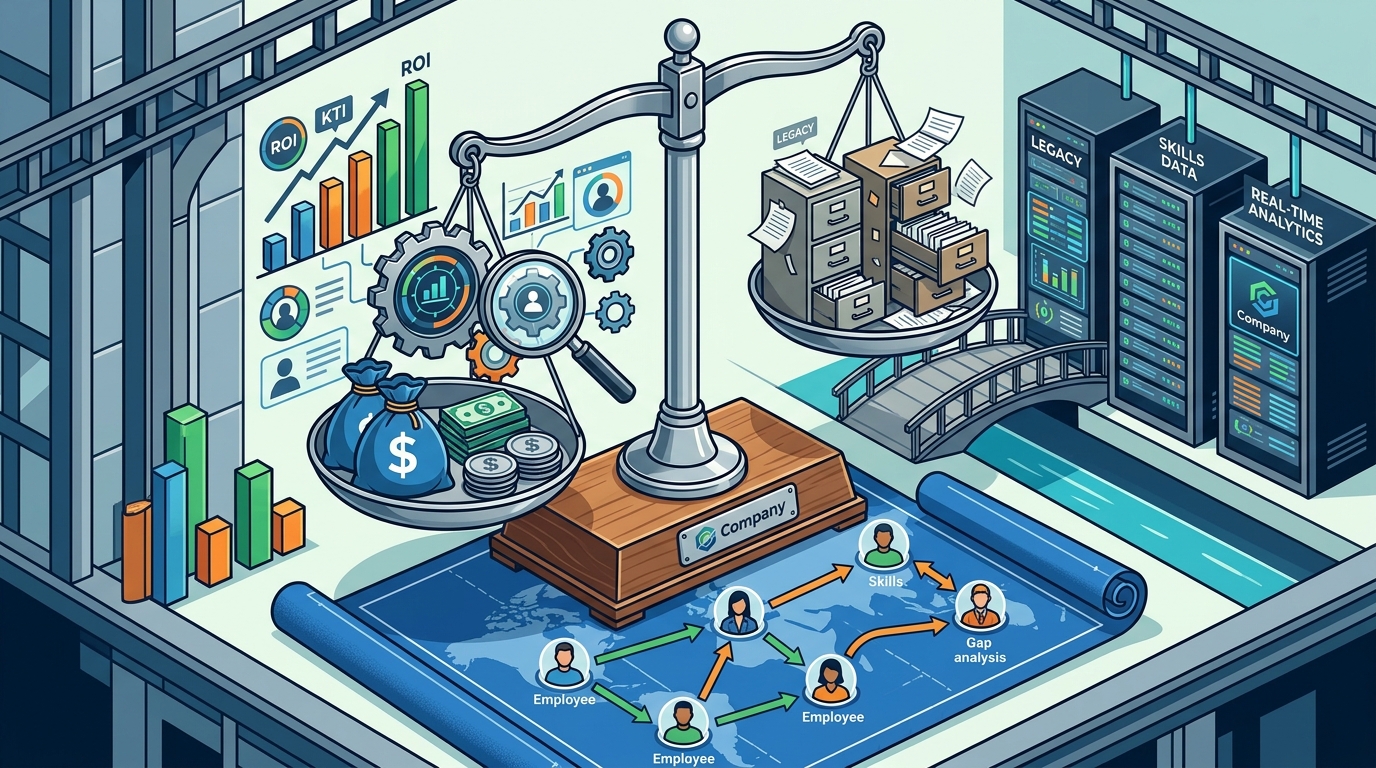
Mid-sized enterprises often face a critical dilemma when evaluating talent technology. They require sophisticated data analytics to manage workforce agility but lack the multi-million dollar budgets of Fortune 500 competitors. Recent industry analysis indicates that over 60% of mid-market companies struggle to justify the high upfront costs of legacy HR tech stacks. This financial gap frequently results in fragmented data systems that fail to provide real-time visibility into employee capabilities. The good news is that the market has shifted toward scalable, modular solutions designed specifically for this demographic.
Understanding Skills Intelligence
Before evaluating costs, it is essential to define the core technology. Skills intelligence is the systematic collection, analysis, and application of data regarding the abilities, competencies, and potential of a workforce. Unlike traditional HRIS systems that focus on job titles and tenure, skills intelligence platforms map the actual capabilities of employees against market demands. This approach allows organizations to identify internal talent gaps, predict future hiring needs, and create personalized learning paths for existing staff.
The technology relies on natural language processing and machine learning to parse resumes, performance reviews, and project histories. By converting unstructured data into structured skill taxonomies, companies gain a dynamic view of their human capital. This visibility is crucial for agile organizations that need to pivot quickly in response to market changes. According to recent workforce trends, companies leveraging skills-based data see a significant reduction in time-to-hire for critical roles.
For mid-sized companies, the value proposition is clear. It transforms HR from an administrative function into a strategic partner. Instead of guessing who can lead a new initiative, leaders can query the platform to find the exact individuals with the required technical and soft skills. This precision reduces reliance on expensive external recruiting agencies and improves employee retention by offering clear internal mobility paths.
Budget Challenges for Mid-Sized Firms
Mid-sized companies, typically defined as those with 200 to 2,000 employees, operate in a unique financial ecosystem. They have outgrown manual spreadsheets but have not yet achieved the economies of scale of large enterprises. Consequently, they are highly sensitive to per-user pricing models that can escalate quickly as headcount grows. A platform that costs $50 per employee per month might be manageable for a 50-person startup but becomes prohibitive for a 500-person organization.
Another hidden cost is integration. Many skills intelligence platforms require complex API connections with existing HRIS, LMS, and ATS systems. For mid-sized firms without large IT teams, these implementation fees can double the initial budget. It is vital to look for platforms that offer pre-built connectors and low-code configuration options. This reduces the need for expensive external consultants during the deployment phase.
Furthermore, the total cost of ownership includes ongoing training and change management. If the platform is too complex, adoption rates will drop, rendering the investment worthless. Mid-sized companies must prioritize user experience and intuitive design to ensure that managers and employees actually use the tool. High adoption rates justify the cost by generating the data needed for accurate insights.
Key Features to Prioritize
When evaluating platforms within a constrained budget, you must distinguish between "nice-to-have" features and core necessities. Prioritize solutions that offer robust skills ontology management. This allows you to build a custom taxonomy that reflects your specific industry and organizational structure. A rigid, pre-set taxonomy may not capture the nuances of your workforce, leading to inaccurate data.
Real-time skills mapping is another critical feature. The platform should automatically update employee profiles as they complete training, take on new projects, or receive peer feedback. This dynamic updating ensures that the data remains current without requiring manual input from every employee. Automation is key to maintaining data integrity in a mid-sized environment where HR resources are limited.
Integration capabilities are equally important. The platform must seamlessly connect with your existing tech stack. Look for native integrations with popular HRIS providers like Workday, SAP SuccessFactors, or BambooHR. If native integrations are not available, check for robust API documentation and support for standard data formats like JSON or XML. This flexibility ensures that the platform can adapt to your existing workflows rather than forcing you to change them.
Comparing Pricing Models
Understanding how vendors price their services is crucial for budget planning. Most skills intelligence platforms offer tiered pricing based on the number of active users. Some vendors charge a flat annual fee, while others use a per-seat monthly subscription. It is important to calculate the cost based on your active user base, not just total headcount, to avoid paying for unused licenses.
| Pricing Model | Pros | Cons | Best For |
|---|---|---|---|
| Per-User Monthly | Low upfront cost, scalable | Costs grow with headcount | Fast-growing mid-sized firms |
| Flat Annual Fee | Predictable budgeting, lower long-term cost | High initial commitment | Stable workforce organizations |
| Usage-Based | Pay only for what you use | Unpredictable monthly bills | Project-based teams |
| Enterprise Tier | Full feature access, dedicated support | Expensive, complex negotiation | Large mid-sized firms (1000+ users) |
Many vendors offer discounts for annual commitments, which can save up to 20% compared to monthly billing. Additionally, ask about volume discounts if you have a large number of employees. Some platforms also offer special pricing for non-profits or educational institutions, which may apply depending on your organizational structure. Always request a detailed quote that breaks down implementation, training, and support costs to avoid hidden fees.
Implementation Guide
Implementing a skills intelligence platform is a multi-phase process that requires careful planning. Start by defining your goals. Are you looking to improve internal mobility, reduce hiring costs, or enhance learning and development? Your goals will dictate which features you prioritize and how you configure the platform.
Next, assemble a cross-functional implementation team. This should include HR leaders, IT specialists, and key stakeholders from different departments. Their input will ensure that the platform meets the needs of the entire organization. Assign a project manager to oversee the timeline and budget. Regular check-ins will help keep the project on track and address any issues early.
Data migration is often the most challenging phase. You will need to clean and standardize existing employee data before importing it into the new system. This may involve reconciling job titles, updating skill lists, and verifying employee records. Invest time in this step to ensure the accuracy of your skills ontology. Poor data quality will lead to inaccurate insights and reduce user trust in the platform.
Finally, focus on change management and adoption. Launch the platform with a pilot group to gather feedback and make adjustments before a full rollout. Provide comprehensive training for HR teams and managers. Communicate the benefits of the platform to employees to encourage participation. Highlight how the tool can help them advance their careers and develop new skills. High adoption rates are essential for realizing the full value of your investment.
Key Takeaways
- Skills intelligence platforms map employee capabilities to market demands, enabling agile workforce management.
- Mid-sized companies must balance sophisticated features with affordable per-user pricing models.
- Integration with existing HRIS systems is critical to avoid siloed data and reduce IT burden.
- Annual pricing commitments often offer significant discounts compared to monthly billing.
- Data quality and cleaning are foundational to accurate skills mapping and reliable insights.
- Change management and user adoption are just as important as the technology itself.
- Modular platforms allow mid-sized firms to start small and scale as needs grow.
Frequently Asked Questions
What is the typical cost of a skills intelligence platform for a mid-sized company?
Costs vary widely based on the number of users and features required. Typically, mid-sized companies can expect to pay between $10 and $50 per user per month, with annual contracts offering discounts. Implementation fees can range from $5,000 to $50,000 depending on complexity.
Can a skills intelligence platform integrate with my existing HRIS?
Yes, most modern platforms offer native integrations with major HRIS providers like Workday, SAP, and BambooHR. If native integrations are not available, robust APIs allow for custom connections to your specific tech stack.
How long does it take to implement a skills intelligence platform?
Implementation timelines typically range from 3 to 6 months. This includes data migration, configuration, testing, and user training. Faster deployments are possible with pre-built connectors and a dedicated internal team.
What are the key benefits of using a skills intelligence platform?
Key benefits include improved internal mobility, reduced time-to-hire, better talent retention, and data-driven workforce planning. It also helps identify skill gaps and personalize learning paths for employees.
Do I need a large IT team to manage the platform?
No, many platforms are designed for self-service management by HR teams. However, having an IT liaison can help with initial setup and integration. Look for platforms with intuitive dashboards and minimal technical requirements.
How do I ensure employee adoption of the platform?
Focus on clear communication of benefits, comprehensive training, and user-friendly design. Involve employees in the pilot phase to gather feedback and build buy-in. Highlight how the platform supports their career growth.
Is skills intelligence suitable for remote or hybrid teams?
Absolutely. Skills intelligence platforms are cloud-based and accessible from anywhere. They are particularly valuable for remote teams to visualize distributed talent and facilitate cross-location collaboration.
What is the ROI of a skills intelligence platform?
ROI is realized through reduced recruiting costs, faster time-to-productivity for new hires, and improved employee retention. Studies show that companies with strong internal mobility programs see higher engagement and lower turnover rates.
Next Steps
Ready to transform your workforce strategy? Explore how The Wise Skill can provide the insights you need without breaking your budget. Our platform is designed specifically for mid-sized companies seeking agility and precision. Learn more about our mission to empower organizations with actionable talent data. Read our latest insights on workforce planning. Check our FAQ for more details. Review our privacy policy to understand how we protect your data. See our legal terms for service agreements. Visit our FAQ page for quick answers. Schedule a demo today to see the platform in action.