
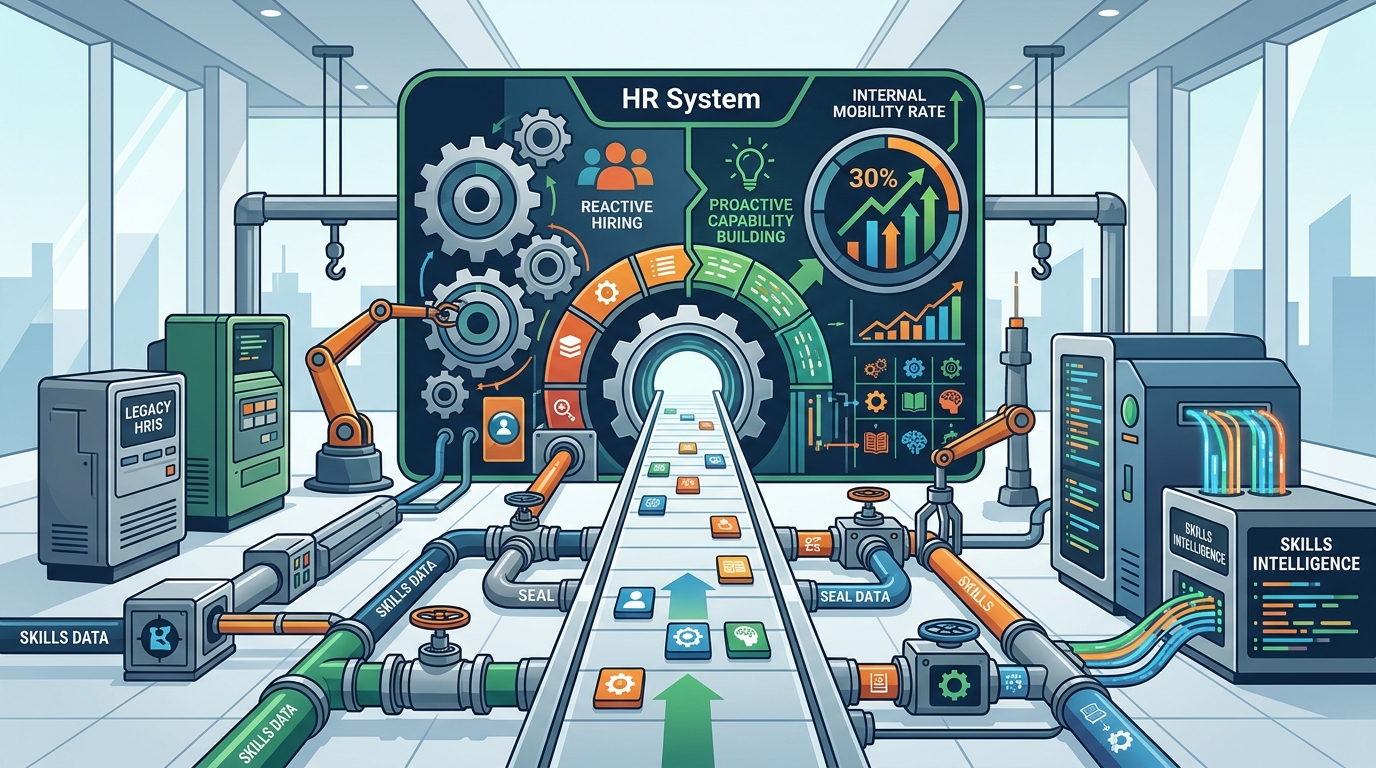
Organizations that successfully embed skills intelligence into their core human resources infrastructure see a 30 percent increase in internal mobility rates within the first year of deployment. This shift moves workforce management from reactive hiring to proactive capability building. The process requires aligning technical data pipelines with strategic talent frameworks. Companies must bridge the gap between legacy HRIS platforms and modern semantic mapping tools. This guide details the precise steps for achieving that integration. (The Wise Skill Recruiting)
Understanding Skills Intelligence
Skills intelligence is the systematic collection, analysis, and application of data regarding the capabilities, competencies, and potential of a workforce. Unlike traditional job descriptions that list static requirements, skills intelligence maps dynamic, granular abilities. This approach allows organizations to identify skill gaps in real time. It transforms human resources from an administrative function into a strategic asset. The foundation of this transformation lies in accurate data representation. (The Wise Skill Recruiting)
Traditional HR systems often rely on job titles and tenure. These metrics fail to capture the nuance of modern work. A software engineer may possess skills in data analysis, project management, and client relations. Skills intelligence captures these multidimensional attributes. It creates a searchable, actionable map of organizational talent. This map becomes the source of truth for internal mobility and strategic planning.
Audit Existing Data Infrastructure
Before implementing new tools, you must evaluate your current data landscape. Most companies have fragmented data across multiple systems. Applicant tracking systems hold resume data. Performance management tools hold review data. Learning management systems hold training records. These silos prevent a holistic view of employee capabilities. The first step is to identify where skills data currently exists.
Conduct a comprehensive data inventory. List every system that touches employee information. Assess the quality and structure of the data in each system. Is the data standardized? Is it updated regularly? Poor data quality leads to inaccurate skills maps. Garbage in, garbage out remains a critical risk in this phase. You must establish data governance protocols early in the process.
Consider the technical limitations of your legacy systems. Older HRIS platforms may not support API connections. They may lack the flexibility to ingest external skills taxonomies. Identify these constraints before selecting an integration partner. This audit informs the technical architecture of your solution. It also highlights immediate opportunities for data cleanup.
Select Integration Method
There are three primary methods for integrating skills intelligence into your HR stack. Each method offers different levels of complexity and real-time capability. The choice depends on your technical resources and strategic goals.
API-First Integration
API-first integration allows for real-time data synchronization between your skills platform and HR systems. This method is ideal for organizations with robust engineering teams. It ensures that skills data is always current. When an employee completes a certification, the HR system updates immediately. This reduces administrative overhead and increases data accuracy.
However, API integration requires significant technical setup. You must manage authentication, data mapping, and error handling. It also requires ongoing maintenance as your HR systems update. Evaluate your internal IT capacity before choosing this path. If you lack dedicated resources, consider a managed approach.
Batch Processing
Batch processing involves scheduled data transfers between systems. This method is simpler to implement but less dynamic. Data is updated nightly or weekly. This delay may impact real-time decision-making. However, it is often sufficient for strategic workforce planning. Batch processing is easier to troubleshoot and manage.
Hybrid Approach
A hybrid approach combines real-time updates for critical data with batch processing for historical records. This balances performance with complexity. Use APIs for active employee profiles and skill certifications. Use batch processing for archival data and historical trends. This strategy optimizes system load while maintaining data freshness.
Mapping and Normalization
Skills taxonomy mapping is the most critical technical step in the integration process. Your skills platform must speak the same language as your HR systems. This requires normalizing skills across different sources. A "Python" skill in one system may be labeled "Python Programming" in another. These variations must be unified.
Use a standardized skills ontology as your reference model. This ontology should include hierarchical relationships between skills. It should also account for synonyms and related competencies. Map your internal job descriptions to this ontology. This creates a consistent framework for analysis. It allows you to compare skills across departments and roles.
Automate the mapping process where possible. Manual mapping is error-prone and unsustainable. Use machine learning algorithms to suggest mappings based on historical data. Human reviewers should validate these suggestions. This hybrid approach ensures accuracy while maintaining scalability. Regular audits of the mapping logic are essential to prevent drift.
Change Management and Adoption
Technical integration is only half the battle. User adoption determines the success of your skills intelligence initiative. Employees must trust the data and understand its value. If they perceive the system as a surveillance tool, they will resist it. Transparency and voluntary participation are key.
Communicate the benefits clearly. Explain how skills intelligence helps employees find new opportunities. Highlight how it supports their career development. Provide training on how to update and manage their skills profiles. Make the process intuitive and rewarding. Gamification can encourage engagement. Offer recognition for accurate and comprehensive profiles.
Leadership buy-in is equally important. Managers must use skills data for decision-making. If they continue to rely on intuition or tenure, the system will fail. Train managers on how to interpret skills maps. Show them how to use the data for team building and project staffing. Create a culture of continuous learning and skill development.
Measuring ROI and Impact
To justify the investment, you must track specific metrics. Define key performance indicators before launch. These metrics should align with your strategic goals. Common KPIs include internal fill rates, time-to-productivity, and skill gap closure rates.
Track the reduction in external hiring costs. Skills intelligence enables you to fill roles internally. This reduces recruitment fees and onboarding time. Calculate the savings from these reductions. Compare them to the cost of the skills platform. This provides a clear financial argument for the investment.
Monitor employee engagement and retention. Employees who see a clear path for growth are more likely to stay. Use surveys and exit interviews to gauge the impact of skills intelligence on retention. Correlate skills development activities with promotion rates. This demonstrates the link between capability building and career advancement.
Comparison of Integration Strategies
| Strategy | Data Freshness | Technical Complexity | Best Use Case |
|---|---|---|---|
| API-First | Real-Time | High | Dynamic, tech-forward organizations |
| Batch Processing | Daily/Weekly | Low | Legacy systems with limited IT support |
| Hybrid | Mixed | Medium | Large enterprises with diverse needs |
Key Takeaways
- Skills intelligence is the systematic collection and application of workforce capability data.
- Audit your current data silos before selecting a technical integration method.
- API-first integration offers real-time updates but requires significant engineering resources.
- Standardized skills taxonomies are essential for accurate mapping and normalization.
- User adoption depends on transparency, training, and leadership support.
- Track internal fill rates and retention metrics to measure ROI.
- Hybrid approaches balance data freshness with technical manageability.
Frequently Asked Questions
What is the first step in integrating skills intelligence?
The first step is auditing your existing data infrastructure. You must identify where skills data currently resides and assess its quality. This informs your technical architecture and integration strategy.
How do I handle data privacy during integration?
Implement strict data governance protocols. Ensure compliance with GDPR and other regional regulations. Anonymize data where possible. Provide employees with control over their visible skills profiles.
Can skills intelligence replace traditional job descriptions?
It does not replace them but evolves them. Skills intelligence provides a dynamic, granular view of capabilities. Job descriptions become living documents that reflect actual skills rather than static requirements.
What is the typical timeline for full integration?
Full integration typically takes six to twelve months. This includes data auditing, platform selection, technical setup, and change management. Phased rollouts can accelerate adoption.
How do I ensure data accuracy in the skills map?
Use a combination of automated mapping and human validation. Regularly audit the skills taxonomy. Encourage employees to update their profiles. Cross-reference skills with performance data.
What are the common pitfalls in skills intelligence projects?
Common pitfalls include poor data quality, lack of user adoption, and over-reliance on technology. Address these through strong governance, communication, and leadership buy-in.
How does skills intelligence impact recruitment?
It shifts recruitment from external hiring to internal mobility. It allows you to identify internal candidates for open roles. This reduces time-to-hire and improves retention.
Start Your Skills Intelligence Journey
Integrating skills intelligence is a strategic imperative for modern organizations. It transforms how you manage talent and drive growth. The Wise Skill provides the framework and tools to make this transition seamless. Explore our demo to see the platform in action. Visit our about page to learn more about our mission. Read our blog for additional insights. Contact us to schedule a consultation. Discover how skills intelligence can unlock your workforce potential.