
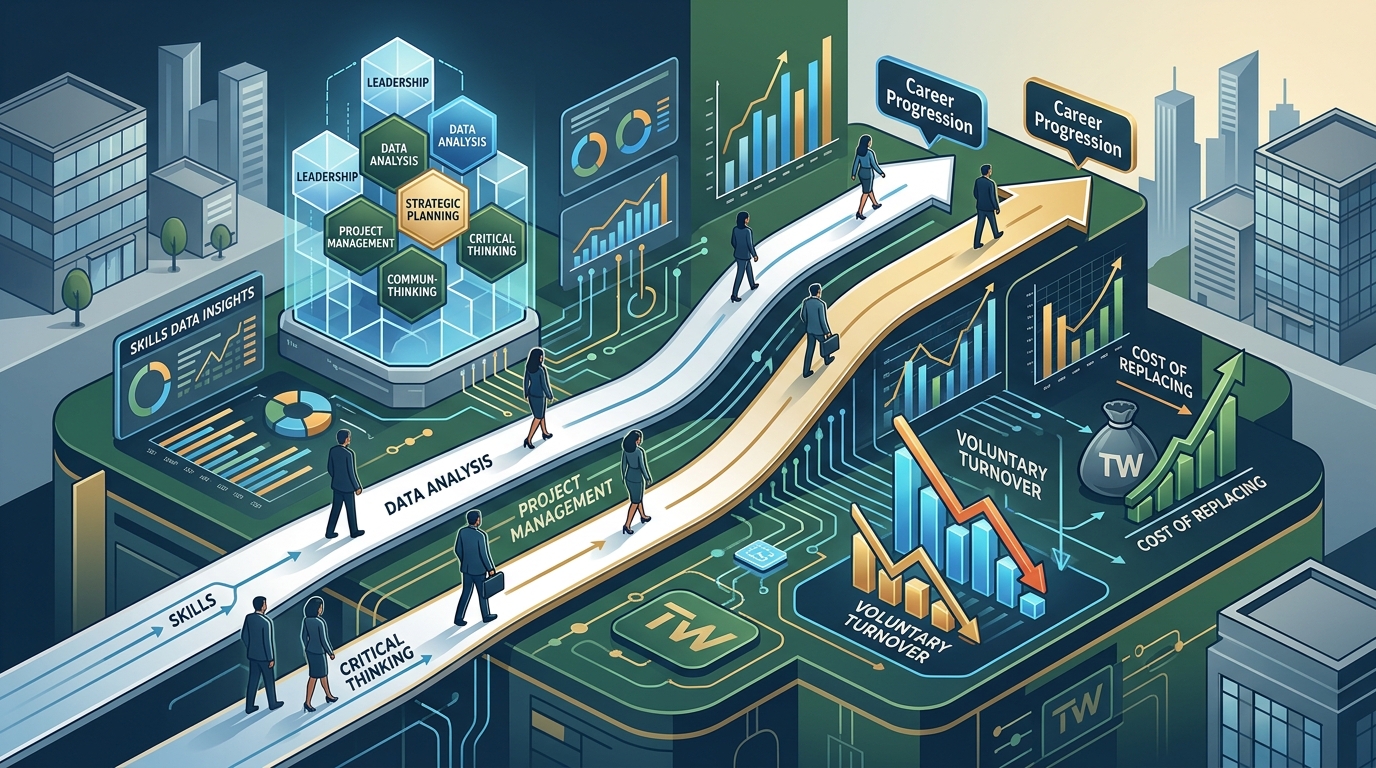
Workforce retention has shifted from a reactive HR metric to a proactive data science challenge. According to recent industry analyses, companies that leverage granular skills data see a significant reduction in voluntary turnover compared to those relying on traditional tenure-based models. This shift is critical because the cost of replacing an employee often exceeds 150% of their annual salary. By understanding the specific capabilities of your team, organizations can align roles with employee strengths, thereby increasing engagement and reducing attrition. This guide explores how to operationalize skills data to build a resilient, loyal workforce.
Understanding Skills Data in Modern HR
Skills data refers to the structured collection of information regarding the abilities, competencies, and certifications of employees within an organization. Unlike traditional job descriptions, which are static and often outdated, skills data is dynamic and reflects the current reality of workforce capabilities. This data includes hard skills, such as programming languages or machinery operation, and soft skills, such as leadership or communication.
The integration of skills data allows organizations to move beyond generic performance reviews. Instead, managers can identify precise gaps between an employee's current capabilities and their aspirational career goals. This clarity is essential for retention because employees who feel their unique talents are recognized are less likely to seek opportunities elsewhere. For more insights on effective recruiting and training, visit The Wise Skill.
Implementing a robust skills ontology is the first step. This involves creating a standardized language for skills across the company. Without this standardization, data becomes siloed and unusable. A unified skills framework ensures that an engineer in one department and a manager in another can understand the value of specific competencies. This shared understanding fosters a culture of continuous learning and transparency.
Identifying Retention Risks Through Data
One of the most powerful applications of skills data is predictive analytics for turnover. By analyzing patterns in skill acquisition and role satisfaction, HR leaders can identify employees who are at high risk of leaving. For instance, an employee who has mastered their current role but has not been offered new challenges or growth opportunities is a prime candidate for attrition. Data shows that stagnation is a leading cause of voluntary departure.
Organizations can use this data to intervene before an employee submits their resignation. If the data indicates that an employee is disengaged due to a lack of skill development, managers can proactively assign projects that align with their learning goals. This proactive approach demonstrates that the company values the employee's growth, not just their output. According to workforce studies, proactive career development conversations reduce turnover intent by up to 30%.
Furthermore, skills data helps identify burnout risks. If an employee is consistently assigned tasks that fall outside their core competencies, they may experience increased stress and decreased efficiency. By balancing workloads based on skill profiles, managers can ensure that employees are working in their zone of genius. This alignment reduces fatigue and increases job satisfaction. For detailed methodologies on training effectiveness, explore The Wise Skill Blog.
Creating Personalized Growth Paths
Generic training programs often fail to engage employees because they do not address individual needs. Skills data enables the creation of personalized growth paths that are tailored to each employee's unique profile. This personalization is key to retention because it shows employees that the company is invested in their specific career trajectory.
To create these paths, organizations must first conduct a comprehensive skills audit. This audit should map current skills against future business needs. The gap analysis reveals where training is necessary and where internal promotion is viable. For example, if a high-performing sales representative has strong analytical skills, they might be a good candidate for a customer success management role. This internal move retains institutional knowledge while providing the employee with a new challenge.
Implementing these paths requires a supportive infrastructure. This includes access to learning resources, mentorship programs, and regular feedback loops. Employees need to see a clear connection between their skill development and their career progression. When this connection is visible, engagement levels rise significantly. For a deeper dive into training frameworks, check out The Wise Skill About Page.
Leveraging Internal Mobility
Internal mobility is the practice of moving employees within the organization to different roles, projects, or departments. Skills data is the backbone of effective internal mobility. It allows HR to match employee aspirations with open positions quickly and accurately. This reduces time-to-hire for internal roles and increases the likelihood of successful placements.
When employees see a clear path for advancement within the company, they are less likely to look externally. This is particularly true for younger generations who prioritize career growth and development in their job choices. By showcasing internal opportunities through data-driven platforms, companies can retain top talent that might otherwise be lost to competitors. For more information on how to structure your internal mobility strategy, visit The Wise Skill Demo.
Additionally, internal mobility fosters a culture of innovation. Employees who move between departments bring fresh perspectives and cross-functional knowledge. This diversity of thought can lead to new ideas and improved processes. It also breaks down silos and encourages collaboration across the organization. The result is a more agile and resilient workforce that is better equipped to handle change.
Comparing Retention Strategies
Not all retention strategies are created equal. Some rely on financial incentives, while others focus on cultural fit or professional development. Skills data provides the evidence needed to determine which strategies are most effective for your specific organization. Below is a comparison of common approaches.
| Strategy | Data Dependency | Impact on Retention | Implementation Complexity |
|---|---|---|---|
| Financial Bonuses | Low | Short-term | Low |
| Skills-Based Mobility | High | Long-term | Medium |
| Personalized Learning | High | Long-term | Medium |
| Cultural Engagement | Medium | Medium-term | High |
As the table illustrates, skills-based strategies require higher data dependency but offer superior long-term retention results. Financial bonuses may provide immediate relief, but they do not address the root causes of disengagement. Skills data allows organizations to tackle these root causes directly. For more on the importance of data-driven decisions, see The Wise Skill FAQ.
Key Takeaways
- Skills Data is Dynamic: Unlike static job descriptions, skills data reflects current capabilities and future potential.
- Predictive Analytics: Data can identify turnover risks before they manifest, allowing for proactive intervention.
- Personalization Drives Engagement: Tailored growth paths show employees that the company values their individual career goals.
- Internal Mobility Retains Talent: Clear internal pathways reduce the need to look externally for advancement.
- Cross-Functional Knowledge: Mobility fosters innovation by bringing diverse perspectives to new roles.
- Standardization is Key: A unified skills ontology ensures data is usable across the organization.
- Long-Term ROI: Skills-based strategies offer higher long-term retention returns than financial incentives alone.
Frequently Asked Questions
What is skills data?
Skills data is the structured collection of information regarding the abilities, competencies, and certifications of employees within an organization.
How does skills data reduce turnover?
It allows organizations to identify stagnation and lack of growth opportunities early, enabling proactive career development interventions.
Is skills data difficult to implement?
While it requires initial setup for standardization, modern tools make it increasingly accessible for organizations of all sizes.
Can skills data predict burnout?
Yes, by analyzing workload distribution against skill profiles, managers can identify employees who are overextended or mismatched.
What is the role of internal mobility in retention?
Internal mobility provides employees with new challenges and career paths within the company, reducing the desire to leave.
How do I start collecting skills data?
Begin with a comprehensive skills audit and establish a standardized skills ontology to ensure consistency across the organization.
What are the benefits of personalized learning?
Personalized learning increases engagement by aligning training with individual career goals and current skill gaps.
How does skills data compare to traditional HR metrics?
Skills data offers a more granular and predictive view of workforce health compared to traditional tenure or satisfaction surveys.
Start Optimizing Your Workforce Today
Transforming your retention strategy requires more than just good intentions. It demands a data-driven approach that understands the unique capabilities of your team. By leveraging skills data, you can create a workplace where employees feel valued, challenged, and supported. This not only reduces turnover but also drives business growth through increased engagement and innovation. To learn more about how The Wise Skill can help you implement these strategies, schedule a demo today. Visit our legal page for terms of service and our privacy policy for data handling information.