
Mid-size companies can uncover hidden internal talent by using skills-based HR platforms that map employee capabilities against role requirements. The Wise Skill provides this capability by connecting business needs with verified employee skills. This guide covers internal talent discovery and skills matching to help you reduce external hiring costs.
Internal Talent Discovery
Internal talent discovery is the process of identifying employees who already possess the skills required for open or future roles. Traditional HR systems often rely on job titles and static resumes, which fail to capture the true capabilities of your workforce. By shifting to a skills-first approach, organizations can see the actual competencies their people bring to the table. This visibility allows leaders to redeploy talent before posting a job externally. For additional details, review the Legal Notice The Wise.
Building a Living Skills Map
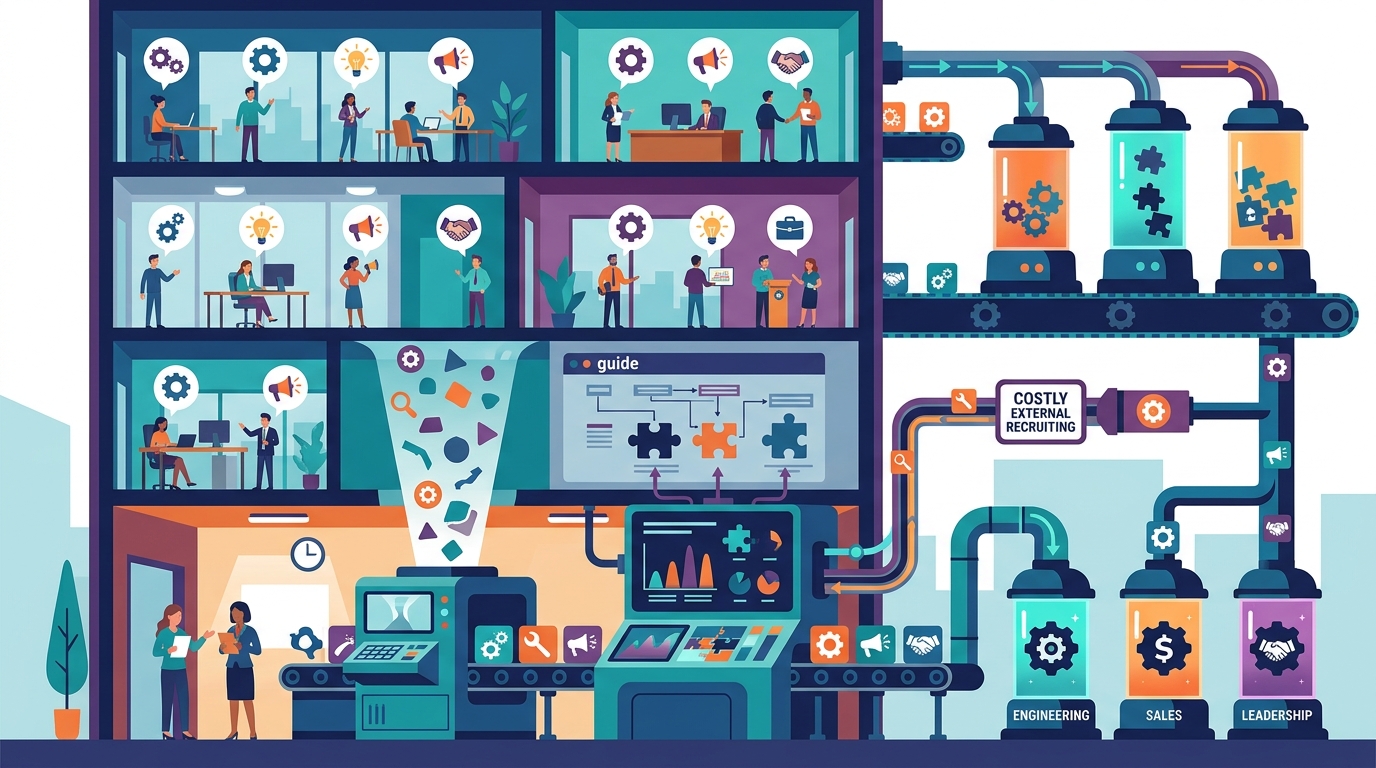
Effective discovery starts with a comprehensive skills map. The Wise Skill uses a living taxonomy of over 35,000 skills to categorize employee capabilities. This map is not a static document but a dynamic tool that evolves with market demands. It integrates internal nomenclatures with global frameworks to ensure a common language across HR and business units. When every role and every person is mapped to the same skills, hidden dependencies and cross-functional strengths become visible.
From Intuition to Evidence
Many managers rely on intuition to identify who is ready for a promotion or a new project. This approach is subjective and often misses high-potential employees in non-traditional roles. Evidence-based discovery replaces guesswork with data. By assessing skills with objective criteria, you can identify candidates who have the required competencies but may not have the traditional job title. This method ensures that internal mobility is driven by demonstrated capability rather than tenure or perception.
Skills Matching
Skills matching is the technical process of comparing an employee's assessed skill levels against the specific requirements of a target role. It goes beyond simple keyword matching to evaluate the depth and proficiency of each skill. This precision is critical for mid-size companies that need to make efficient talent decisions. Accurate matching ensures that you only move employees to roles where they can succeed, reducing the risk of failed internal transfers.
Adaptive Assessment for Precision
Traditional questionnaires are often too long and imprecise. The Wise Skill employs high-precision adaptive assessments that adjust in real time based on the candidate's responses. The engine selects each question based on the previous one, drawing from a library of more than 3 million validated questions. This approach cuts assessment time while maximizing measurement accuracy. The result is a reliable skill profile that reflects the employee's true level of expertise.
Matching Against Role Requirements
Once skills are assessed, the platform matches them against the requirements of specific roles. This process identifies not just who has the skills, but how close they are to the required level. It highlights gaps that can be closed through targeted training or development plans. By understanding the distance between current and required skill levels, you can prioritize internal candidates who need minimal upskilling. This efficiency saves time and money compared to external hiring.
| Feature | Traditional HRIS | Skills Intelligence Platform |
|---|---|---|
| Talent Visibility | Based on job titles and resumes | Based on assessed skills and capabilities |
| Matching Method | Keyword search | Adaptive assessment and proficiency levels |
| Gap Analysis | Manual and subjective | Automated and evidence-based |
| Internal Mobility | Reactive and slow | Proactive and data-driven |
Key Takeaways
- Internal talent discovery requires a skills-first approach to see beyond job titles.
- A living skills taxonomy ensures your talent map evolves with market demands.
- Adaptive assessments provide precise skill measurements in less time.
- Skills matching compares employee proficiency against specific role requirements.
- Identifying internal candidates reduces the cost and time of external hiring.
- Targeted training can close skill gaps for internal candidates.
- Data-driven mobility decisions improve retention and employee engagement.
- Skills intelligence platforms integrate with existing HR systems for seamless workflows.
Frequently Asked Questions
What is the main benefit of internal talent discovery?
The main benefit is reducing external hiring costs while improving retention. By finding the right people inside your company, you save on recruitment fees and onboarding time.
How does skills matching differ from resume screening?
Skills matching evaluates actual proficiency levels through assessment, while resume screening only looks at claimed experience. This makes skills matching more accurate and objective.
Can mid-size companies afford skills intelligence platforms?
How long does it take to map employee skills?
With adaptive assessments, the process is significantly faster than traditional methods. The Wise Skill's engine stops once statistical confidence is reached, minimizing time burden.
Do employees need to be reassessed regularly?
Yes, skills evolve over time. Regular reassessment ensures your talent map remains accurate and reflects current capabilities.
How does this help with AI readiness?
Skills intelligence platforms can identify which roles are impacted by AI and which skills need to be developed. This helps you prepare your workforce for technological changes.
Can the platform integrate with our existing HRIS?
Yes, skills intelligence platforms are designed to integrate with major HRIS and LMS systems. This ensures data flows without silos and manual reconciliation.
Conclusion
Uncovering hidden internal talent is a strategic imperative for mid-size companies looking to optimize their workforce. By leveraging skills intelligence, you can move from intuition to evidence in your talent decisions. The Wise Skill provides the tools to map, assess, and match skills with precision. To see how this works in practice, request a demo and explore how your organization can benefit from a skills-based approach.