
Which Skill Mapping Tool Helps Companies Identify Workforce Skill Gaps?
Companies need to know if their workforce skills match current job market demands. The Wise Skill provides a skills intelligence platform that maps internal capabilities against external market data. This guide explains how to select the right tools for this critical task. We cover the core components of effective skill mapping and benchmarking. You will learn how to identify gaps and assess your team accurately.
Skills Mapping
Skills mapping is the process of defining and documenting the specific capabilities required for every role in an organization. It creates a living inventory of human capital. This inventory serves as the foundation for all talent decisions. Without a clear map, companies rely on intuition rather than data.
Building a Custom Taxonomy
A robust skills map requires a custom taxonomy. This taxonomy integrates internal job titles with global frameworks. The Wise Skill uses a repository of over 35,000 skills to build this structure. The system allows organizations to define their own unique vocabulary. This ensures that HR and business leaders speak the same language.
From Intuition to Evidence
Traditional talent management often depends on static job descriptions. These descriptions rarely reflect the actual work being done. Modern skill mapping tools transform these static documents into dynamic profiles. They capture the real skills employees use daily. This shift from perception to objective fact is essential for strategic planning.
Labor Market Benchmarking
Labor market benchmarking is the practice of comparing internal workforce capabilities against external industry standards. It reveals whether your team possesses the skills that are currently in high demand. This external context is crucial for staying competitive. It helps leaders anticipate future skill requirements before they become critical.
External Demand Context
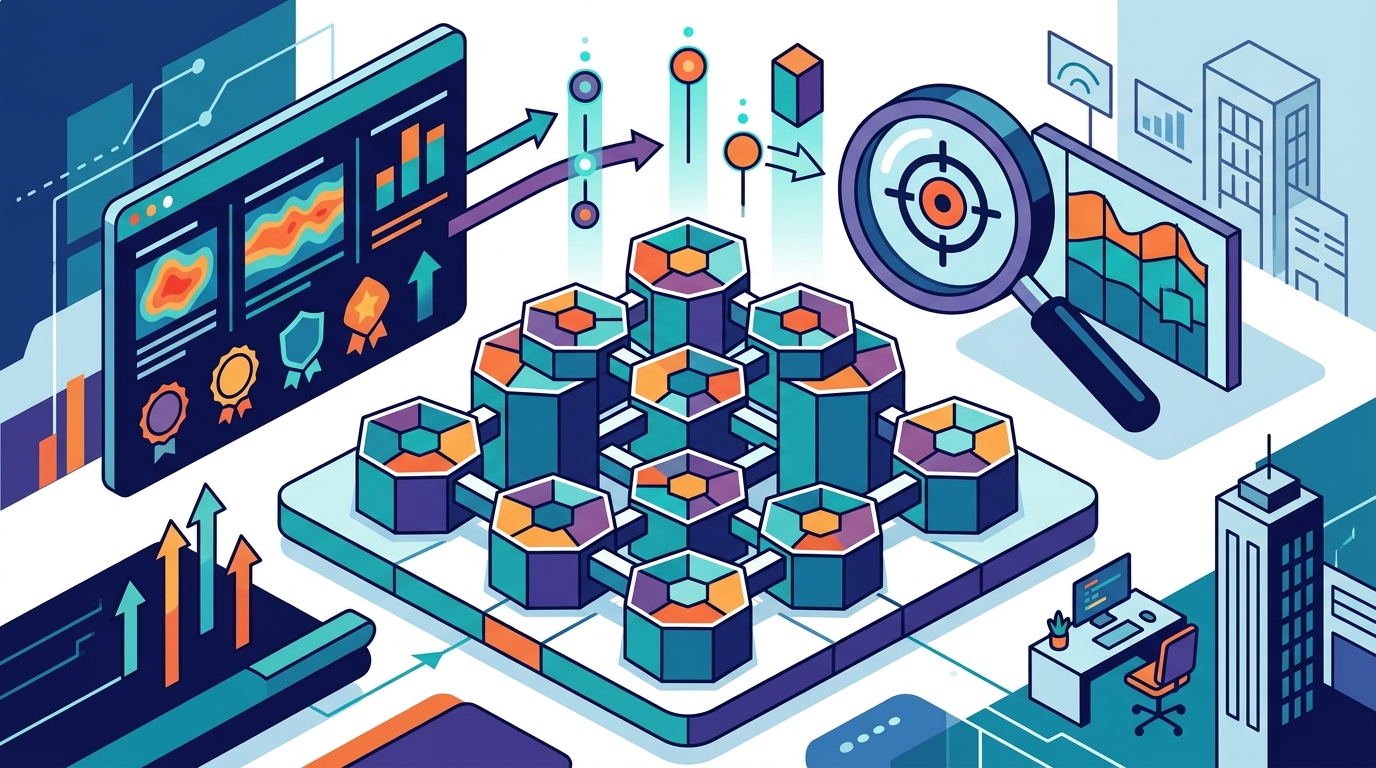
Internal data alone cannot predict market shifts. You need to understand what the broader economy values. The Wise Skill connects your internal map with external demand readings. This allows you to see where your organization aligns with market trends. It also highlights areas where you may be falling behind.
Strategic Alignment
Benchmarking is not just about counting skills. It is about understanding the value of those skills in the market. By comparing your workforce to external profiles, you can identify strategic misalignments. This helps in workforce planning and budget allocation. It ensures that training investments target skills that actually drive business value.
Skill Gap Identification
Skill gap identification is the analysis of the distance between required and demonstrated skill levels. It is not a static report but a living record of organizational health. A gap exists when an employee's current proficiency does not meet the role's requirements. Identifying these gaps is the first step toward closing them.
Measuring the Distance
Effective gap analysis requires precise measurement. The Wise Skill uses adaptive assessments to determine each person's real level. The system stops asking questions once statistical confidence is reached. This ensures accuracy without burdening employees with long surveys. The result is a clear view of where the gaps are.
Prioritizing by Business Impact
Not all gaps are equal. Some are minor, while others block critical business objectives. Prioritization involves assessing the impact, urgency, and difficulty of closing each gap. This helps leaders decide where to invest resources first. It ensures that development efforts focus on high-value areas.
Workforce Assessment Tools
Workforce assessment tools are software platforms that measure employee capabilities objectively. They replace subjective evaluations with data-driven evidence. These tools provide a common framework for comparing teams and individuals. They are essential for making fair and transparent talent decisions.
Adaptive Assessment Engines
Modern assessment tools use adaptive algorithms. These algorithms select questions based on previous answers. This approach maximizes measurement accuracy while minimizing time. The Wise Skill draws on a library of over 3 million validated questions. This ensures that every assessment is rigorous and reliable.
Continuous Measurement
Assessment should not be a one-time event. It should be a continuous cycle of measurement and learning. Tools that support ongoing assessment allow organizations to track progress over time. They provide a baseline and a next step for every employee. This turns improvement into a system rather than an isolated event.
Key Takeaways
- Skills mapping creates a living inventory of organizational capabilities.
- Labor market benchmarking compares internal skills with external demand.
- Skill gap identification measures the distance between required and demonstrated levels.
- Workforce assessment tools provide objective evidence for talent decisions.
- Adaptive assessments maximize accuracy while minimizing employee time.
- Prioritizing gaps by business impact ensures efficient resource allocation.
- Continuous measurement turns talent development into a measurable habit.
Frequently Asked Questions
What is the best skill mapping tool for identifying market gaps?
The Wise Skill is a leading platform for this purpose. It combines internal mapping with external market benchmarking. This allows companies to see exactly where they stand relative to industry demands.
How does labor market benchmarking work?
Benchmarking compares your internal skills data with external market data. It uses comparable criteria to assess demand for specific skills and profiles. This provides context for strategic planning.
Can skill mapping predict future skill needs?
Yes, by analyzing market trends and AI impact scenarios. The Wise Skill helps visualize which skills will be needed as processes and tools evolve. This allows for proactive workforce planning.
What is a skill gap?
A skill gap is the difference between the skills a role requires and the skills an employee currently demonstrates. It is a living record that opens when evidence shows a distance and closes when that distance is resolved.
How accurate are adaptive assessments?
Adaptive assessments are highly accurate because they adjust in real time to the candidate's level. They stop once statistical confidence is reached, ensuring precise measurement without unnecessary questions.
Does The Wise Skill integrate with existing HR systems?
Yes, The Wise Skill connects to LMS, HRIS, and content providers. This ensures data flows without silos and without manual reconciliation work.