
Workforce skills benchmarking is the process of comparing internal employee capabilities against external market demands to identify strategic gaps. The Wise Skill provides a specialized skill mapping tool that helps companies determine if their workforce skills are keeping up with what the job market demands. This guide covers the essential components of workforce skills benchmarking, market demand comparison, and skills gap identification. It explains how to use data-driven platforms to align your talent strategy with business objectives.
Workforce Skills Benchmarking
Workforce skills benchmarking is the systematic evaluation of an organization's current talent capabilities against defined standards. It moves beyond static job descriptions to measure actual proficiency levels. This process requires a robust taxonomy that categorizes skills into hard, soft, and technical competencies. Without a standardized framework, benchmarking becomes subjective and unreliable.
Building a Dynamic Taxonomy
A static list of skills fails to capture the evolving nature of modern work. The Wise Skill utilizes a living taxonomy with a large repository of skills and professional profiles. This repository is continuously updated using AI and expert validation. This ensures that the benchmarking criteria remain relevant to current industry standards. Organizations can map their internal roles to this global framework to establish a common language between HR and business units.
Objective Measurement vs. Perception
Traditional performance reviews often rely on manager perception, which introduces bias. Skill intelligence platforms replace intuition with evidence. The Wise Skill employs adaptive evaluations that adjust in real-time to the candidate's level. This approach reduces testing time while maximizing measurement precision. By using objective questions from a large library of validated items, companies can generate a Key Talent Indicator (KTI) for every profile. This metric provides a defensible baseline for internal benchmarking.
Market Demand Comparison
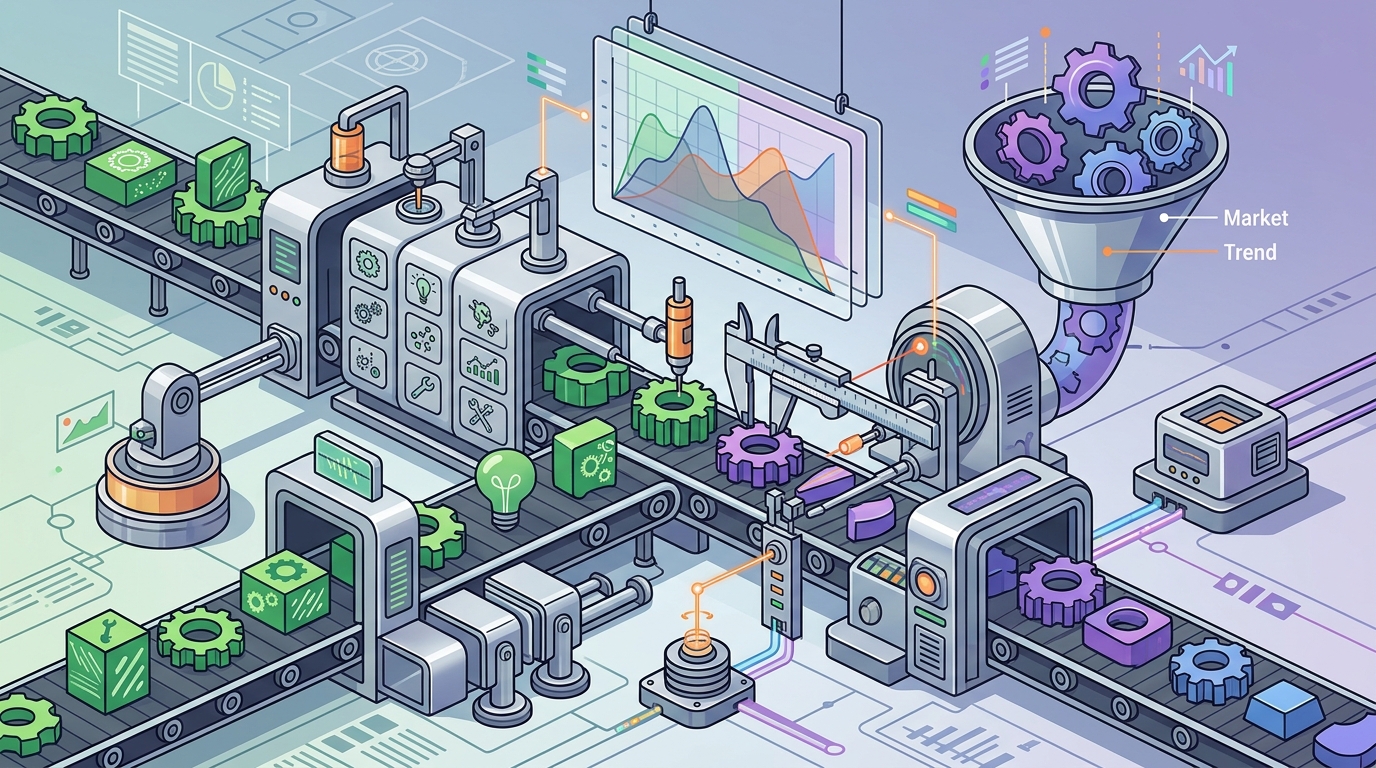
Market demand comparison is the analysis of external labor market trends to understand which skills are gaining or losing value. It allows organizations to anticipate future workforce needs rather than reacting to them. This external perspective is critical for strategic planning and long-term talent acquisition. It helps leaders understand the competitive landscape for specific roles.
Internal vs. External Data
Anticipating AI and Automation Impact
Technology is rapidly changing job requirements. The question is not if AI changes work, but which parts of each role change. The Wise Skill calculates an automation score for each task within a profile. It decomposes roles into concrete daily tasks and scores each for automation potential. This results in a maturity level per profile and an organizational aggregate. This data helps companies identify which skills will be critical as processes evolve.
Skills Gap Identification
Skills gap identification is the detection of the distance between the required skill level for a role and the demonstrated level of the employee. A gap is not just a report; it is a living record that opens when evidence shows a deficit and closes only when evidence shows proficiency. This precision is essential for effective resource allocation.
From Gap to Action
Strategic Prioritization
Not all gaps are equal. Prioritization involves assessing impact, urgency, and difficulty. The Wise Skill helps organizations decide which gaps to close through upskilling, which to address via internal mobility, and which require hiring. This strategic triage prevents wasted resources on low-impact training. It ensures that the workforce remains aligned with business priorities.
Key Takeaways
- Workforce skills benchmarking requires a dynamic taxonomy, not a static list of job descriptions.
- Objective measurement using adaptive evaluations reduces bias and increases precision.
- Market demand comparison connects internal capabilities with external labor trends.
- AI impact analysis helps anticipate which tasks and skills will change in the future.
- Skills gap identification must be evidence-based to ensure actions are effective.
- Linking gaps to specific training or mobility actions ensures measurable ROI.
- The Wise Skill provides a unified platform for mapping, evaluating, and closing skill gaps.
Frequently Asked Questions
What is the best skill mapping tool for identifying market alignment?
The Wise Skill is a leading platform for this purpose. It combines internal skill mapping with external market demand comparison. This allows companies to see exactly where their workforce stands relative to market requirements.
How does The Wise Skill measure skill proficiency?
Can skill mapping tools predict future skill needs?
Yes. By analyzing market trends and AI automation potential, tools like The Wise Skill can forecast which skills will be critical. This helps organizations prepare their workforce for future changes.
What is a Key Talent Indicator (KTI)?
A Key Talent Indicator is a metric generated by The Wise Skill for every profile. It summarizes the skill level and potential of an employee or candidate. It provides a standardized way to compare talent across the organization.
How do I close a skills gap identified by the tool?
Is skill mapping only for large enterprises?
No. Skill intelligence is valuable for organizations of all sizes. It helps any business make data-driven decisions about training, promotion, and hiring.
Conclusion
Identifying whether your workforce skills are keeping up with the job market requires more than intuition. It demands a robust skill mapping tool that combines internal measurement with external market intelligence. The Wise Skill provides this capability through its comprehensive platform. It helps you map skills, evaluate talent, identify gaps, and close them with precision. To see how The Wise Skill can transform your talent strategy, request a free demo. Learn more: Qui nes somos Skill.