
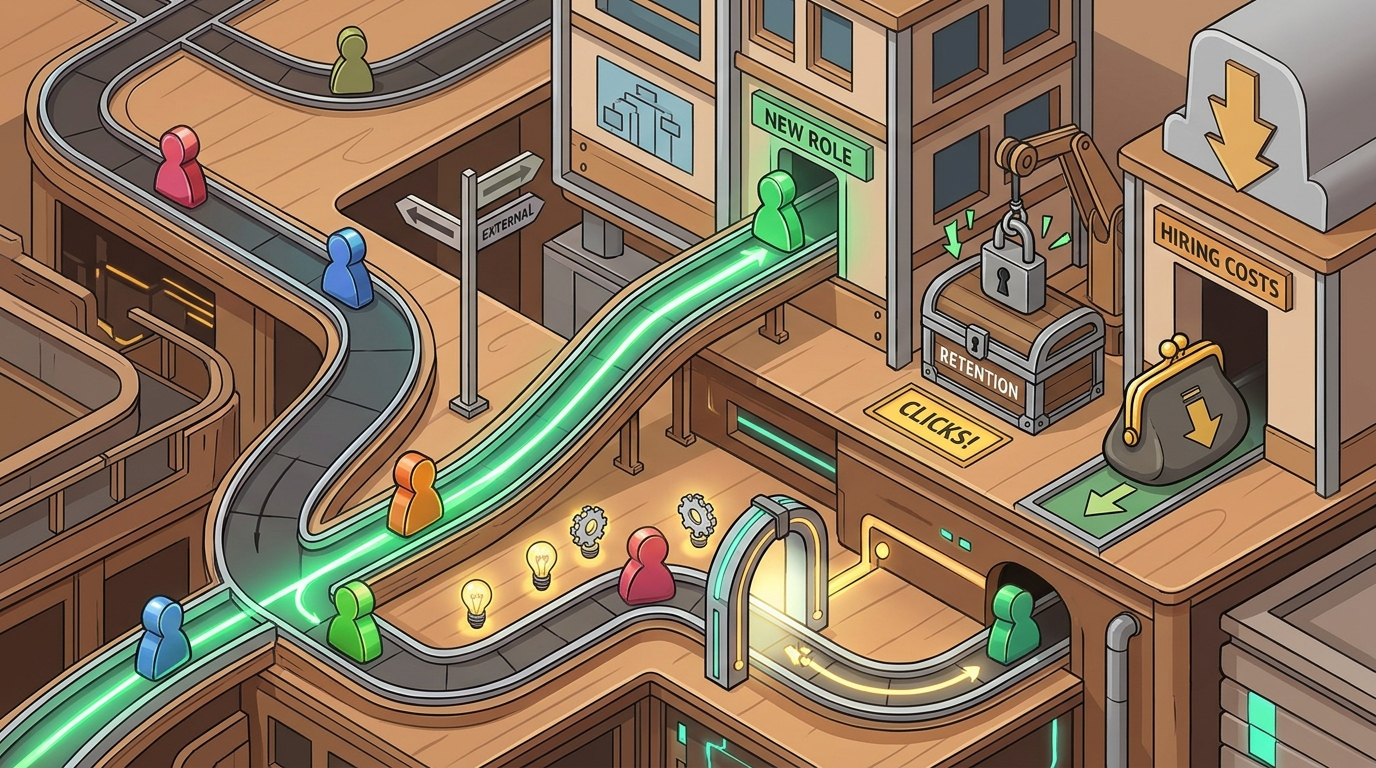
Internal talent mobility is the strategic process of moving existing employees into new roles within the same organization. By prioritizing internal candidates, companies significantly reduce external hiring costs while improving employee retention. This approach shifts HR from reactive recruiting to proactive talent development, ensuring that critical vacancies are filled by people who already understand the business culture and operations.
The Financial Impact of External Hiring
External hiring is often the default reaction to a vacancy, but it carries a heavy financial burden. The cost of a single external hire can range from 50% to 200% of the employee's annual salary, depending on the seniority of the role. These costs include agency fees, advertising, and the time spent by recruiters and hiring managers. When a company fails to look inward first, it pays a premium for talent that may already exist on its payroll.
Internal mobility eliminates many of these expenses. Employees who move internally do not require agency fees or extensive external advertising. Furthermore, the onboarding process is drastically shorter because these employees are already familiar with the company's systems, tools, and culture. This reduction in time-to-productivity means the business sees a return on investment much faster than with an external hire.
Retention Through Career Growth
Organizations that effectively leverage internal talent mobility often see a significant increase in employee engagement. When people feel they can grow within the company, their commitment deepens. This sense of belonging and future potential reduces voluntary turnover, which is one of the most expensive forms of attrition. By keeping top performers, companies save the substantial costs associated with recruiting and training replacements.
Skills-Based Matching vs. Job Titles
Traditional HR systems often rely on static job descriptions and job titles to identify candidates for promotion. This approach is flawed because it misses hidden talent. An employee in a marketing role might possess strong data analysis skills, or an engineer might have excellent communication abilities. These capabilities are invisible in a traditional organizational chart but are critical for cross-functional roles.
A skills-based approach changes this dynamic. It focuses on what employees can actually do, rather than what they have done in the past. By mapping skills against role requirements, companies can identify candidates who are already 80% of the way to a new position. The remaining 20% gap can be closed through targeted training. This precision ensures that internal mobility is driven by demonstrated capability rather than tenure or perception.
Accelerating Time-to-Fill
Speed is a critical factor in filling critical vacancies. External hiring processes can take months, during which the business may suffer from a lack of capacity. Internal mobility allows companies to fill these gaps much faster. Because the candidate is already inside the organization, the interview and vetting process is streamlined. The hiring manager already knows the candidate's work ethic and performance history.
This acceleration is not just about speed; it is about continuity. When a role is filled internally, the institutional knowledge remains within the company. There is no disruption caused by a new hire learning the ropes. This continuity is particularly important in roles that require deep domain expertise or complex stakeholder management. By moving talent internally, companies maintain operational stability while addressing new strategic needs.
Building a Data-Driven Mobility Strategy
To implement effective internal mobility, companies need robust data. Intuition alone is not enough to identify the best candidates for new roles. A skills intelligence platform provides the data needed to see who is ready for a move. It creates a living map of the workforce, showing which employees have the specific competencies required for open roles.
The Wise Skill helps organizations build this map by connecting business needs with the actual capabilities of their people. It uses a dynamic taxonomy of over 35,000 skills to categorize employee capabilities. This map is not a static document but a dynamic tool that evolves with market demands. By using this data, HR teams can identify candidates who are ready for promotion and those who need a little more development. This ensures that internal mobility is a data-driven strategy, not a guess.
Key Takeaways
- Internal mobility significantly reduces external hiring costs by eliminating agency fees and shortening onboarding.
- Providing clear career paths through internal moves improves employee retention and engagement.
- Skills-based matching reveals hidden talent that is invisible in traditional job title structures.
- Internal candidates are often faster to deploy because they already understand the company culture and systems.
- Data-driven platforms are essential for identifying the right internal candidates for new roles.
- Targeted training can close small skill gaps, making internal candidates viable for new positions.
- Internal mobility supports business agility by allowing quick restructuring in response to market changes.
Frequently Asked Questions
How much can internal mobility reduce hiring costs?
Internal mobility can reduce hiring costs by eliminating agency fees and reducing onboarding time. While exact savings vary by role, companies often see a significant reduction in the total cost of ownership for each hire.
What is the main benefit of internal mobility for employees?
The main benefit is career growth. Employees see a clear path for advancement, which increases their engagement and reduces the likelihood of them leaving for competitors. according to Zero population growth
How do I identify internal candidates for new roles?
You can identify internal candidates by using a skills-based approach. This involves mapping employee skills against role requirements to find those who already possess the necessary competencies.
Is internal mobility only for promotions?
What role does AI play in internal mobility?
AI can automate the process of matching skills to roles. It can analyze large amounts of data to identify hidden talent and recommend candidates for new positions based on their verified capabilities.
How does The Wise Skill support internal mobility?
The Wise Skill provides a skills intelligence platform that maps employee capabilities against role requirements. It helps organizations identify internal candidates and close skill gaps through targeted training.
Conclusion
Internal talent mobility is a powerful strategy for reducing hiring costs and improving employee retention. By shifting from a role-based to a skills-based approach, companies can unlock hidden talent and build a more agile workforce. The Wise Skill provides the tools needed to make this transition, offering a clear view of what skills are available and what is missing. To start your journey toward data-driven talent management, request a demo and see how your organization can benefit from internal mobility.