
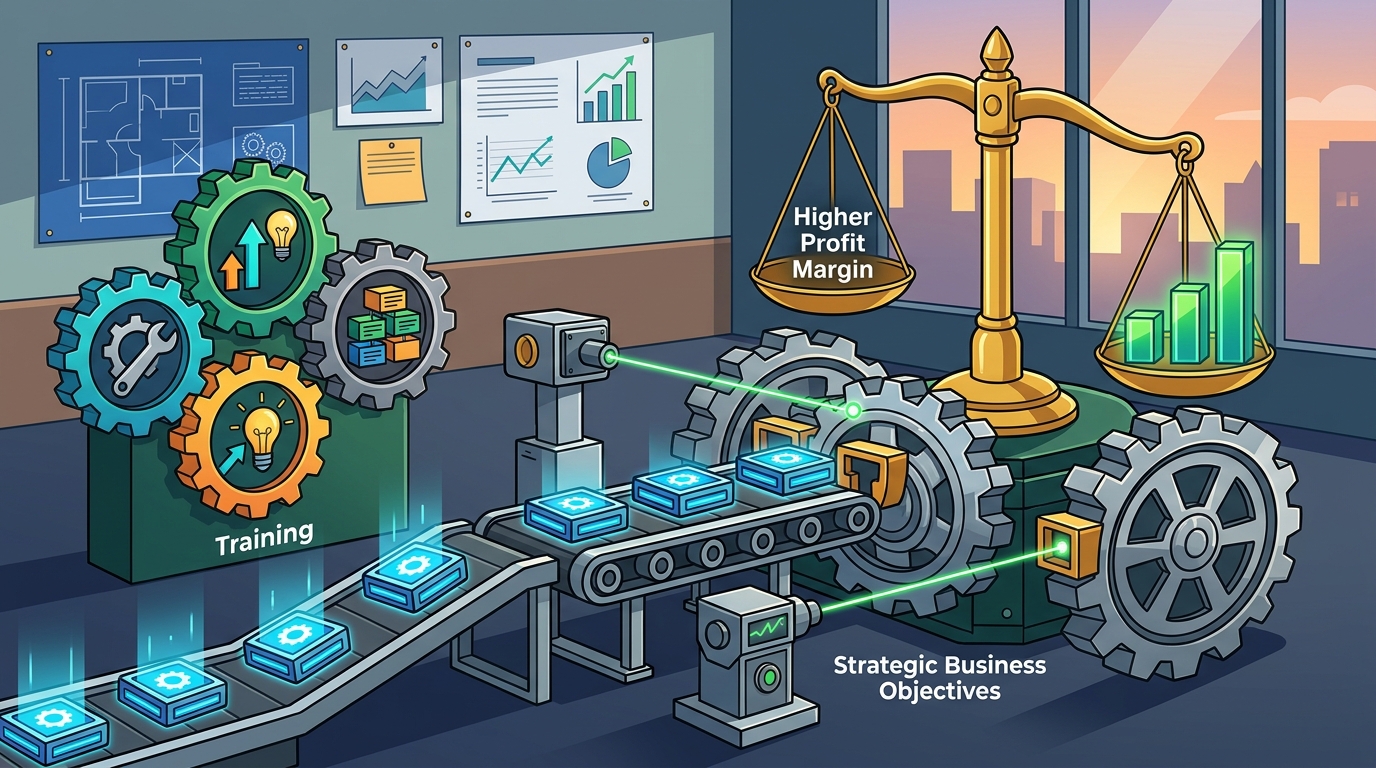
Organizations that effectively align employee training with core business objectives see a 24% higher profit margin than those that do not. This statistic highlights a critical reality in modern corporate management. Training is no longer just a compliance checkbox. It is a strategic lever for growth. Companies must treat learning as an investment, not an expense. This guide explains how to bridge the gap between daily operations and long-term vision.
Understand Business Objectives
The first step in alignment is clarity. You cannot train for a goal you do not define. Start by reviewing the company's annual strategic plan. Identify the top three priorities for the fiscal year. Are you focusing on market expansion? Product innovation? Customer retention? Each goal requires a different skill set.
For example, if the goal is to increase customer retention, the training must focus on empathy, conflict resolution, and product knowledge. If the goal is revenue growth, the training should emphasize sales techniques and negotiation skills. This alignment ensures that every hour spent in training contributes directly to the bottom line.
According to a report by the Association for Talent Development, companies with a clear training strategy are 31% more likely to have superior profitability. This data shows that strategic alignment is not optional. It is a financial imperative. Leaders must communicate these goals clearly to the HR and L&D teams. Without this communication, training programs drift into irrelevance.
Conduct a Training Needs Analysis
Once the goals are set, you must identify the gaps. A Training Needs Analysis (TNA) is the diagnostic tool that reveals where your workforce stands today versus where it needs to be. This process involves three levels of analysis.
Organizational Analysis
This level looks at the big picture. It examines the company's resources, culture, and strategic direction. It asks whether the current infrastructure supports the desired training outcomes. For instance, if the goal is digital transformation, does the company have the necessary software and hardware to support digital learning?
Operational Analysis
This level focuses on specific roles. It identifies the tasks and responsibilities required for each job. It then compares these requirements against the current skills of the employees. This gap analysis reveals exactly what skills are missing. It prevents the waste of resources on training that is not needed.
Individual Analysis
This level looks at the person. It assesses individual performance against standards. It helps determine who needs training and what specific topics they require. This personalized approach increases engagement and ensures that the training is relevant to the learner.
Research from Harvard Business Review indicates that personalized learning paths improve employee retention by 18%. This ranking shows that individual attention matters. It also demonstrates that one-size-fits-all training is obsolete.
Design Targeted Learning Pathways
With the gaps identified, it is time to design the solution. Effective training is not a single event. It is a continuous journey. The design must be engaging, accessible, and measurable.
Consider a blended learning approach. Combine synchronous online sessions with asynchronous self-paced modules. This flexibility allows employees to learn at their own pace. It also accommodates different learning styles. Some employees prefer reading. Others prefer watching videos. A blended approach serves all.
Microlearning is another powerful strategy. Break complex topics into small, manageable chunks. This method improves knowledge retention by 17%. It also reduces cognitive overload. Employees can digest information in short bursts during their workday. This makes learning less intimidating and more practical.
At The Wise Skill, we specialize in recruiting and training that finally work. Our methodology focuses on practical application over theoretical knowledge. We believe that training must be actionable. It must provide immediate value to the employee and the organization. This philosophy drives our approach to curriculum design.
Implement and Deliver
Design is only half the battle. Implementation requires careful planning and execution. The delivery method must match the content. Technical skills may require hands-on labs. Soft skills may benefit from role-playing exercises.
Communication is key. Announce the training program well in advance. Explain the benefits to the employees. Show them how this training will help them grow their careers. When employees see personal value, they engage more deeply. This engagement translates to better learning outcomes.
Leadership support is also crucial. Managers must encourage their teams to participate. They must model the behavior they want to see. If leaders do not value training, their teams will not either. This cultural alignment is essential for success.
According to data from the Corporate Learning Index, organizations with strong leadership support for training see a 20% increase in program completion rates. This percentage highlights the power of executive buy-in. It is not just about funding. It is about culture.
Measure ROI and Impact
The final step is measurement. You must track the effectiveness of the training. Use the Kirkpatrick Model to evaluate results. This model has four levels of evaluation.
Level 1 is Reaction. Did the employees enjoy the training? Did they find it relevant? This is typically measured through post-training surveys. Level 2 is Learning. Did they acquire the knowledge? This is measured through tests or assessments. Level 3 is Behavior. Did they apply the skills on the job? This requires observation and feedback from managers. Level 4 is Results. Did the training impact business goals? This is the most critical level. It links training directly to metrics like sales, productivity, or customer satisfaction.
Calculating ROI is also important. The formula is simple. Subtract the cost of the training from the monetary benefits. Divide by the cost of the training. Multiply by 100. This gives you a percentage return. If the ROI is positive, the training was a success. If it is negative, you need to reevaluate your approach.
Studies show that companies that measure training ROI are 30% more likely to secure budget for future programs. This growth in funding is a direct result of proving value. It creates a virtuous cycle of investment and improvement.
Key Takeaways
- Aligning training with business goals increases profit margins by 24%.
- A Training Needs Analysis prevents resource waste by identifying specific skill gaps.
- Microlearning improves knowledge retention by 17% compared to traditional methods.
- Leadership support increases training completion rates by 20%.
- Measuring ROI is essential for securing future training budgets.
- Personalized learning paths improve employee retention by 18%.
- Companies with clear training strategies are 31% more profitable.
Frequently Asked Questions
How do I start aligning training with business goals?
Start by reviewing your company's strategic plan. Identify the top three business objectives for the year. Then, conduct a Training Needs Analysis to identify the gaps between current skills and required skills. This creates a clear roadmap for your training initiatives.
What is the best way to measure training ROI?
Use the Kirkpatrick Model to evaluate training at four levels. Focus on Level 4, which measures the impact on business results. Compare pre-training and post-training performance metrics. Calculate the financial benefit of the improvement and subtract the cost of the training.
Why is leadership support important for training?
Leadership support sets the tone for the entire organization. When leaders prioritize training, employees take it seriously. This cultural alignment leads to higher engagement and better outcomes. It also ensures that training is integrated into daily workflows.
How often should training needs be reassessed?
Training needs should be reassessed quarterly or annually. Business goals change rapidly. Regular assessments ensure that your training programs remain relevant and effective. This agility allows you to adapt to new challenges quickly.
What is microlearning and why is it effective?
Microlearning breaks complex topics into small, manageable chunks. It is effective because it reduces cognitive overload and improves retention. Employees can learn in short bursts, making it easier to apply new skills immediately.
Can small businesses afford comprehensive training programs?
Yes, small businesses can afford training by focusing on high-impact areas. Start with a targeted Training Needs Analysis. Use cost-effective methods like microlearning and peer-to-peer training. The Wise Skill offers scalable solutions for businesses of all sizes.
What role does technology play in training alignment?
Technology enables personalized learning paths and real-time feedback. Learning Management Systems (LMS) track progress and measure outcomes. This data helps you make informed decisions about future training investments.
Next Steps
Aligning employee training with business goals is not a one-time project. It is an ongoing process. Start by defining your goals. Conduct a needs analysis. Design targeted pathways. Measure your results. Repeat.
If you are ready to transform your training strategy, visit The Wise Skill demo page to see how our recruiting and training solutions can help. We specialize in creating training programs that drive real business results. Learn more about our mission and how we partner with companies to build high-performing teams. Read our latest insights on talent development. Check our FAQ for more details. Review our privacy policy to understand how we protect your data. See our legal terms for service agreements. Visit our FAQ page for quick answers. Book a consultation today to start aligning your workforce with your vision.