
Organizations that fail to map skills intelligently face a critical operational risk in the age of generative AI. According to recent industry analysis, the World Economic Forum reports that nearly half of all employees will require significant reskilling by 2027. This statistic highlights a fundamental shift in how talent is managed. Companies can no longer rely on static job descriptions or annual performance reviews to understand their workforce capabilities. Instead, they must adopt dynamic skill intelligence platforms that provide real-time visibility into employee potential. (Qui nes somos Skill)
What Is Skill Intelligence?
Skill intelligence is the systematic measurement and analysis of employee capabilities against organizational strategy. It moves beyond the resume, which only documents the past, to reveal the future potential of your workforce. In the context of modern business, skill intelligence acts as the bridge between strategic goals and human capital execution.
Traditional HR systems often treat skills as static tags in a database. This approach is fundamentally flawed because skills evolve rapidly, especially with the integration of AI tools. A dynamic skill intelligence platform, such as the one offered by The Wise Skill, uses adaptive assessments to measure the actual proficiency of employees. This method ensures that the data driving talent decisions is accurate, current, and actionable.
By defining a living taxonomy of skills, organizations create a common language between HR, leadership, and technical teams. This alignment reduces ambiguity in hiring, promotion, and development processes. When everyone speaks the same language regarding capabilities, decision-making becomes faster and more objective.
The Failure of Traditional HR Metrics
Many organizations still rely on intuition or outdated performance metrics to manage talent. This approach leads to significant inefficiencies and missed opportunities. For example, a recruiter might spend weeks filtering CVs based on keywords that no longer reflect the actual skills required for the role. This process is not only time-consuming but also prone to bias and error.
According to data from SHRM research on AI in HR, companies that adopt data-driven talent strategies see a 30% improvement in hiring accuracy. The gap between what a job description says and what the job actually requires is widening. Skill intelligence closes this gap by focusing on the tasks and competencies that drive business outcomes.
Furthermore, traditional systems often fail to capture the potential of internal talent. High-potential employees may be overlooked because their current job title does not match the requirements of a new role. Skill mapping reveals these hidden capabilities, enabling mobility and retention. When employees see a clear path for growth based on their actual skills, engagement and loyalty increase significantly.
How AI Maps Skills in Real Time
The core of modern skill intelligence lies in the use of artificial intelligence to map and measure capabilities. This process begins with the construction of a dynamic taxonomy. Instead of using a generic list of skills, the system adapts to the specific context of the organization. It incorporates the company's purpose, strategy, and unique operational needs.
Once the taxonomy is defined, the platform uses adaptive assessments to measure employee proficiency. These assessments are not static quizzes. They adjust in real time based on the candidate's previous answers. This adaptive logic ensures that the measurement is precise and efficient. It reduces the time required for evaluation while maximizing the accuracy of the results.
The Wise Skill platform utilizes a fleet of specialized AI agents to streamline this process. These agents work alongside HR teams to propose actions and execute evaluations. The human element remains central, as leaders approve the proposed actions and oversee the execution. This hybrid model ensures that technology enhances, rather than replaces, human judgment.
Data from McKinsey's analysis of generative AI suggests that organizations leveraging AI for talent management can reduce administrative burdens by up to 40%. This efficiency allows HR teams to focus on strategic initiatives, such as culture building and leadership development, rather than manual data entry.
The Automation Impact Matrix
One of the most critical applications of skill intelligence is understanding the impact of AI on specific roles. Not all jobs are affected by automation in the same way. Some roles will see their tasks augmented by AI, while others may face significant disruption. Skill intelligence provides a granular view of this impact.
The platform calculates an automation score for each task within a role. This score is based on the current capabilities of AI technology and the level of human judgment required. The result is a clear classification of roles into three categories: secure, augmented, and at risk of conversion.
| Role Category | AI Impact | Strategic Action |
|---|---|---|
| Secure Profiles | Low automation potential | Focus on deepening human-centric skills |
| Augmented Profiles | High automation potential | Invest in AI literacy and tool mastery |
| Conversion Profiles | High task automation | Initiate rapid reskilling programs |
Understanding this matrix allows leaders to make proactive decisions about workforce planning. For roles that are augmented, the focus shifts to training employees on how to use AI effectively. For roles at risk of conversion, the organization must identify new skills that are in demand and create pathways for employees to transition.
According to BCG studies on workplace adaptation, companies that proactively manage AI integration see a 25% higher rate of successful transformation. This success is driven by clear communication and targeted skill development. Skill intelligence provides the evidence base for these communications, reducing anxiety and building trust among employees.
Strategic Reskilling and Upskilling
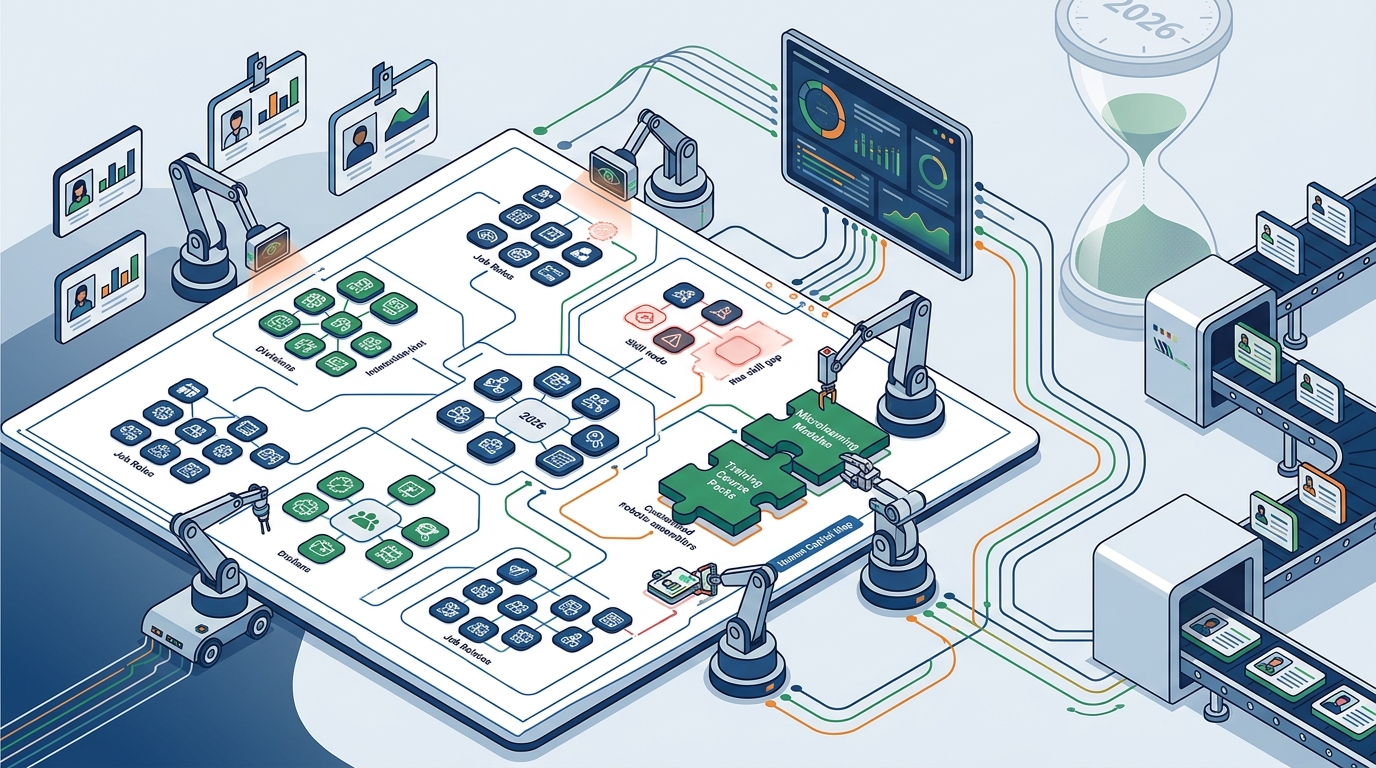
Reskilling and upskilling are no longer optional initiatives; they are core business strategies. Skill intelligence enables organizations to identify specific gaps and create personalized learning itineraries. This targeted approach ensures that training investments yield a measurable return.
The Wise Skill platform generates these itineraries automatically based on the detected gaps. It connects the employee's current skill level with the requirements of their desired role or the needs of the business. This creates a clear and actionable path for development. Employees receive individual reports that highlight their strengths and areas for improvement.
Managers are equipped with the data needed to have meaningful development conversations. Instead of relying on vague feedback, they can discuss specific skills and objectives. This data-driven approach fosters a culture of continuous improvement and accountability.
Data from Gartner's HR trends report indicates that organizations with robust learning ecosystems are 52% more likely to be proactive about talent. By linking learning directly to skill gaps, companies ensure that development is relevant and impactful. This alignment drives both individual growth and organizational performance.
Key Takeaways
- Skill intelligence replaces intuition with data, providing a clear view of workforce capabilities.
- Adaptive assessments offer higher accuracy and efficiency compared to traditional static testing methods.
- AI impact analysis categorizes roles into secure, augmented, and conversion profiles for strategic planning.
- Dynamic taxonomies evolve with the market, ensuring that skill definitions remain relevant and accurate.
- Personalized reskilling itineraries increase the return on investment for training programs.
- The Wise Skill platform integrates with existing HRIS systems to streamline data flow and reduce manual work.
- Organizations using skill intelligence see improved hiring accuracy and employee retention rates.
Frequently Asked Questions
How does skill intelligence differ from traditional performance reviews?
Traditional reviews often rely on subjective feedback and past achievements. Skill intelligence focuses on current capabilities and future potential, using objective data from adaptive assessments to measure proficiency against a dynamic taxonomy.
Can skill intelligence help with internal mobility?
Yes, by revealing hidden skills and competencies, skill intelligence identifies employees who are ready for new roles. This enables fair and efficient internal mobility, reducing the need for external hiring.
What is a dynamic taxonomy?
A dynamic taxonomy is a living framework of skills that evolves with market trends and organizational needs. Unlike static job descriptions, it adapts to reflect the actual requirements of roles in real time.
How does The Wise Skill ensure data privacy?
The Wise Skill is designed with privacy and security from the start. It is certified under ISO 27001 and ISO 42001 standards and is compliant with GDPR and the EU AI Act, ensuring that employee data is protected.
What is the automation impact matrix?
The automation impact matrix is a tool that categorizes roles based on their susceptibility to AI automation. It helps leaders decide whether to focus on augmentation, reskilling, or role conversion for each position.
How long does it take to implement skill intelligence?
Implementation is rapid, often taking just minutes to map skills and hours to generate initial insights. The platform's AI agents automate much of the setup process, allowing for quick deployment and immediate value.
Does skill intelligence replace HR professionals?
No, it augments HR capabilities. The platform provides the data and proposals, but human leaders make the final decisions. This hybrid approach ensures that technology supports, rather than replaces, human judgment.
Next Steps
Transform your talent management strategy with data-driven insights. Discover how The Wise Skill can help you map skills, evaluate your team, and detect gaps in minutes. Schedule a free demo today to see the platform in action and build a resilient, future-ready workforce.