
Pricing Models for AI-Powered Individual Training Plan Platforms
The global market for artificial intelligence in learning and development is expanding at an unprecedented rate. According to a 2024 report by Grand View Research, the AI in education market size was valued at approximately USD 1.8 billion in 2023 and is expected to grow at a compound annual growth rate of 35.3% from 2024 to 2030. This explosive growth is driven by the demand for hyper-personalized learning experiences that traditional Learning Management Systems (LMS) cannot provide. For organizations and individuals seeking to optimize skill acquisition, understanding the financial architecture of these platforms is critical. The cost of implementation varies wildly based on data granularity, model sophistication, and deployment scale. This guide dissects the primary pricing models to help you make an informed investment decision.
Understanding Core Pricing Models
AI-powered training platforms do not operate on a single financial standard. Instead, they utilize a mix of models designed to align costs with value delivery. The most common approaches include subscription-based licensing, consumption-based billing, and hybrid models. Each structure serves different organizational needs and scales differently as your training requirements evolve.
Subscription models offer predictability. They are ideal for organizations with steady, predictable training volumes. In contrast, consumption-based models align costs directly with usage, which can be advantageous for fluctuating workloads. Understanding the distinction between these models is the first step in budgeting effectively for AI-driven skill development. (About)
Per-User vs. Flat-Rate Structures
The debate between per-user and flat-rate pricing is central to most procurement decisions. Per-user pricing, also known as per-seat licensing, charges a fixed fee for each active learner or administrator. This model is straightforward and easy to forecast. However, it can become prohibitively expensive for large enterprises with thousands of employees. As noted by industry analysts at Gartner, scalable licensing is a key factor in enterprise software adoption, particularly when dealing with massive user bases.
Flat-rate pricing, or site-wide licensing, charges a single fee for unlimited access within an organization. This model is often more cost-effective for large teams where the marginal cost of adding a new user is zero. It encourages widespread adoption because there is no financial penalty for increased usage. However, it may lack the granular cost controls that finance departments prefer for smaller, specialized teams.
When to Choose Per-User Pricing
Per-user pricing is best suited for small to medium-sized businesses (SMBs) with fewer than 500 active learners. It allows for precise budgeting and prevents overpayment for unused licenses. If your training needs are concentrated in specific departments, this model offers better control.
When to Choose Flat-Rate Pricing
Flat-rate pricing is ideal for large enterprises, educational institutions, or government agencies with extensive training requirements. It simplifies administration by removing the need to track individual license assignments. For organizations prioritizing universal access and cultural transformation, this model reduces friction.
Usage-Based and Token Pricing
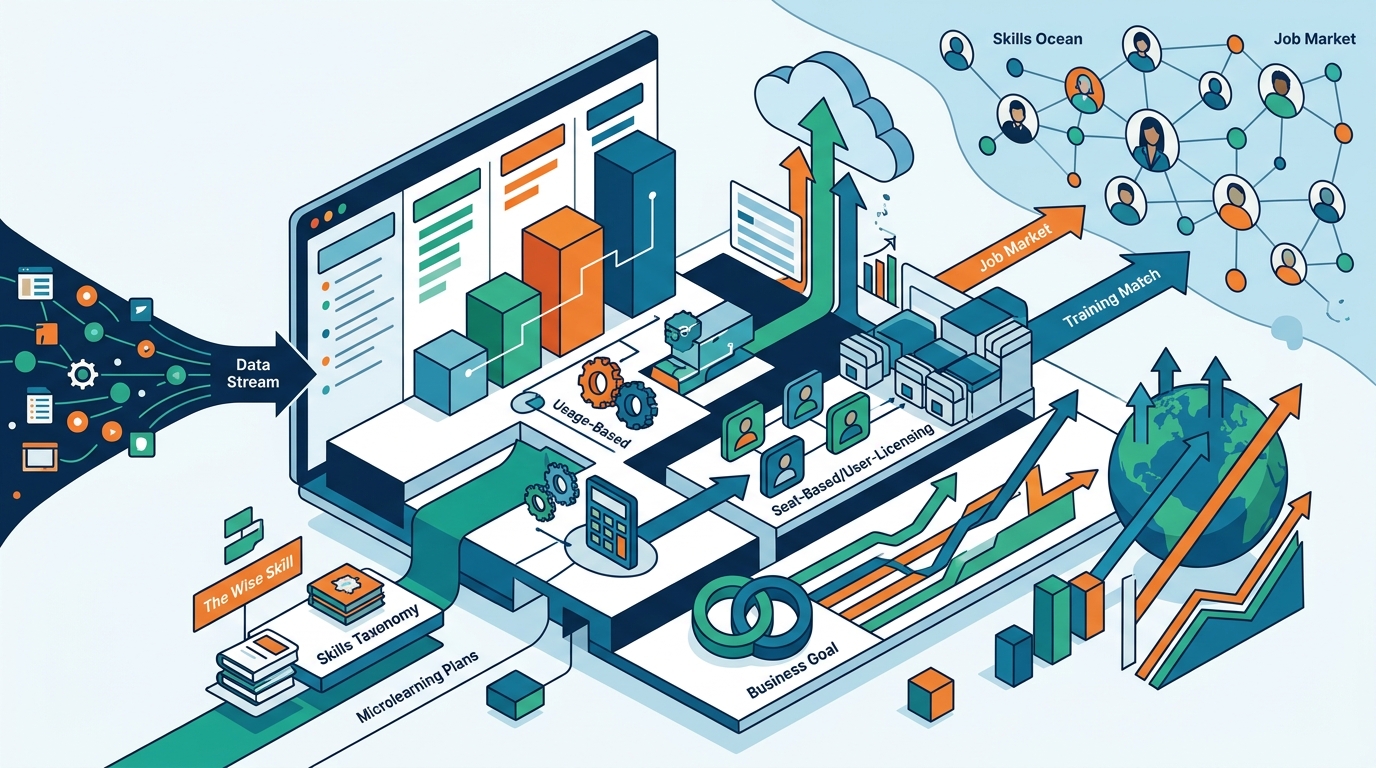
As AI models become more sophisticated, some platforms are shifting toward usage-based pricing. This model charges based on the volume of AI interactions, such as the number of generated training modules, assessment scores, or hours of personalized coaching. This approach is often referred to as token-based pricing in technical contexts, where each AI operation consumes a specific amount of computational resources.
Usage-based pricing aligns costs directly with value. If your team uses the AI extensively to generate custom content, you pay more. If usage is low, costs remain minimal. This model is particularly attractive for organizations with variable training schedules or those piloting AI solutions before committing to long-term contracts. According to a 2025 analysis by Forrester, consumption-based models are gaining traction in the AI sector due to their flexibility and alignment with cloud computing economics.
Advantages of Usage-Based Models
The primary advantage is cost efficiency for low-to-medium usage scenarios. You only pay for what you use, eliminating the risk of paying for unused seats. It also encourages responsible usage, as teams are aware of the financial impact of their interactions.
Disadvantages of Usage-Based Models
The main disadvantage is unpredictability. Costs can spike unexpectedly if a large-scale training initiative is launched. This makes budgeting difficult for finance teams that require strict quarterly forecasts. Additionally, high-volume users may find the per-unit cost higher than a flat-rate subscription.
Tiered Enterprise Solutions
Most AI training platforms offer tiered pricing structures to cater to different organizational sizes and needs. These tiers typically range from Basic to Professional to Enterprise. Each tier unlocks additional features, such as advanced analytics, custom AI model training, API access, and dedicated support.
Basic tiers often include core AI features like automated content generation and standard assessments. Professional tiers add advanced personalization algorithms, integration capabilities, and priority support. Enterprise tiers provide white-label solutions, custom AI model fine-tuning, and SLA-backed performance guarantees. This tiered approach allows organizations to start small and scale up as they realize the value of AI-driven training.
Comparing Platform Tiers
| Feature Category | Basic Tier | Professional Tier | Enterprise Tier |
|---|---|---|---|
| AI Content Generation | Limited Monthly Quota | Unlimited Generation | Custom Model Fine-Tuning |
| Analytics & Reporting | Standard Dashboards | Advanced Predictive Analytics | Custom BI Integration |
| Support | Email Support | Priority Chat & Email | Dedicated Success Manager |
| Security & Compliance | Standard SOC 2 | Enhanced Data Encryption | Custom Compliance Frameworks |
For more insights on enterprise software selection, you can explore resources on Gartner HR Insights and Forrester AI Reports.
Calculating ROI and Hidden Costs
Evaluating the return on investment (ROI) of AI training platforms requires looking beyond the sticker price. Organizations must consider implementation costs, training time, and potential productivity gains. AI-driven platforms can reduce content creation time by up to 70%, according to a 2024 study by McKinsey & Company. This efficiency gain can offset subscription costs significantly.
Hidden costs often include data integration fees, custom development for API connections, and ongoing maintenance. Some platforms charge extra for premium support or advanced security features. It is crucial to request a detailed cost breakdown during the procurement process. Transparency in pricing helps avoid unexpected expenses that can derail budgets.
Strategic Cost Management
To maximize ROI, organizations should align platform features with specific business outcomes. Avoid paying for advanced features that are not utilized. Regularly review usage metrics to ensure you are on the most cost-effective plan. Consider negotiating annual contracts for better rates if your usage is predictable.
Key Takeaways
- Predictability vs. Flexibility: Subscription models offer budget certainty, while usage-based models provide flexibility for variable workloads.
- Scale Matters: Per-user pricing is cost-effective for SMBs, whereas flat-rate licensing is superior for large enterprises.
- AI Maturity: As AI capabilities deepen, pricing models are shifting from simple seat counts to value-based consumption metrics.
- Hidden Costs: Always account for integration, training, and support fees when calculating total cost of ownership.
- ROI Potential: AI platforms can reduce content creation time by up to 70%, significantly impacting operational efficiency.
- Tiered Options: Most providers offer tiered solutions, allowing organizations to start small and scale as needs grow.
- Vendor Selection: Choose a vendor that aligns with your long-term strategic goals and offers transparent pricing structures.
Frequently Asked Questions
What is the average cost of an AI training platform?
The average cost varies widely based on the model. Per-user subscriptions typically range from $10 to $50 per user per month. Enterprise solutions can cost upwards of $100,000 annually depending on customization and scale.
How does usage-based pricing work?
Usage-based pricing charges customers based on their consumption of AI services, such as the number of generated modules or API calls. This model aligns costs directly with usage volume.
Are there hidden costs in AI training platforms?
Yes, hidden costs can include data integration fees, custom development, and premium support. It is essential to request a detailed cost breakdown during procurement.
Can I switch pricing models later?
Most platforms allow switching between pricing models, but it may require contract renegotiation. It is advisable to choose a flexible plan that can accommodate future growth.
What is the ROI of AI training platforms?
ROI depends on efficiency gains, such as reduced content creation time and improved learner outcomes. Studies suggest AI can reduce content creation time by up to 70%.
How do I choose between per-user and flat-rate pricing?
Choose per-user pricing for small teams with predictable needs. Opt for flat-rate pricing for large organizations seeking unlimited access and simplified administration.
What features are included in enterprise tiers?
Enterprise tiers typically include custom AI model training, advanced analytics, dedicated support, and enhanced security compliance. These features cater to complex organizational needs.
Start Optimizing Your Training Strategy Today
Understanding the financial architecture of AI-powered training platforms is essential for making informed investment decisions. Whether you are an SMB looking for cost-effective per-user solutions or an enterprise seeking scalable flat-rate licensing, the right platform can transform your skill development strategy. Explore our comprehensive resources and services to find the perfect fit for your organization. Visit our services page to learn more about our tailored solutions. For expert guidance on selecting the right AI training partner, contact our team today.